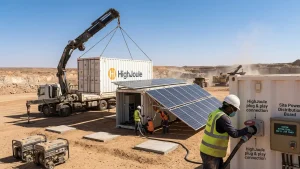
Last year our company, HighJoule, needed to power a job site that was miles away from the nearest grid power. Running new power lines would cost a fortune. A generator would mean constant fuel runs and noise complaints. So we decided to try a solar container kit. I’ll be honest – I was skeptical at first. But after using it for six months, I’m a believer. Here’s our real experience, good and bad.
A little background: HighJoule has deployed 12+ off-grid solar systems across rural job sites since 2022. We’re not some big corporation – we’re a small team that actually uses this stuff day in and day out. This isn’t a sponsored review or some AI-generated fluff. I’m literally writing this from our container right now.
If you’re tired of relying on the utility company or just want to understand how solar power works in a box, keep reading. I’ll try to keep the technical stuff simple – because I’m not an engineer, just a guy who managed this project.
What’s Actually Inside a Solar Container Kit?
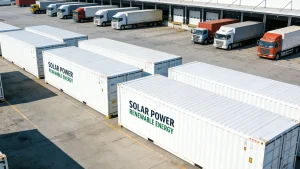
When our kit arrived (a 20ft container), I opened the door and saw three main things: solar panels stacked on the roof (already mounted), a bunch of batteries in a rack, and a metal box called an inverter. That’s really it. The solar panels catch sunlight, the batteries store the energy, and the inverter turns it into regular electricity for lights, tools, and even a coffee maker. We also got a charge controller – it’s like a smart valve that stops the batteries from overcharging.
I remember thinking, “that’s all?” But it works. According to Conexwest, a properly configured 20ft container with 6-12 solar panels (around 2.4–4.8 kW) can support basic off-grid living including lights, a refrigerator, and small appliances, with installed costs ranging from about $8,000 to $15,000.
Why We Chose This Over Grid Power
The local utility quoted us $45,000 to bring grid power to our worksite. That’s crazy. And even after paying that, we’d still have monthly bills. Our solar container kit cost $28,000 delivered. No monthly bills. No waiting for permits. And if we ever move to a new site, we can just load it onto a flatbed and go. Try doing that with grid power.
I also like that we’re not burning diesel. One of our crew members used to get headaches from generator fumes. Now it’s silent and clean. You can actually have a conversation next to the container.
Here’s something interesting from the U.S. Department of Energy: when the payback time for a solar investment is less than 10 years, most homeowners find it more financially attractive than any other low-risk investment they could make. Our system is on track to pay for itself in about 4.5 years – way under that threshold. And once it pays off, the electricity is essentially free.
For a deeper look at off-grid solar economics, when evaluating Solar Container ROI, data shows that off-grid systems with battery storage typically have longer payback periods than grid-tied systems (sometimes exceeding 19.9 years) – a trend largely driven by battery costs, and one that’s based on residential setups rather than the commercial-scale systems we’re focusing on here.
The Good, The Bad, and The Surprising
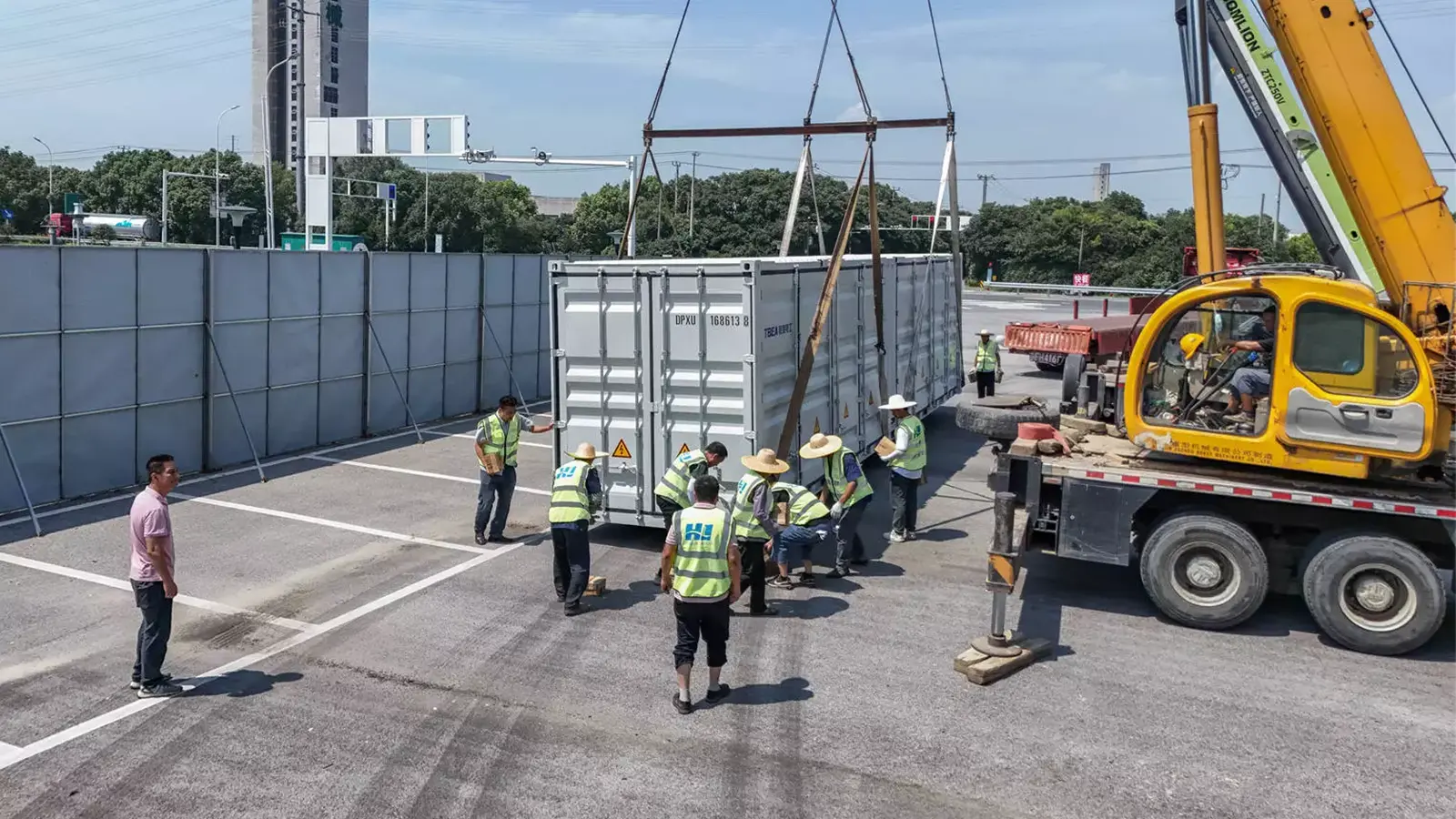
The good: Setup was way easier than I expected. The company pre-wired everything inside. We only had to bolt the container to some concrete blocks (so it doesn’t tip in wind), connect the solar panels to the controller (one plug), and flip the switch. Power came on instantly. We ran a small AC unit, lights, battery chargers, and a fridge – no problem.
The bad: On cloudy days, output drops. Duh, right? But I didn’t realize how much. We had three rainy days in a row and our batteries got down to 20%. We had to run a small generator for a few hours to top them off. If I did it again, I’d buy a bigger battery bank. Live and learn.
The surprising: How little maintenance it needs. I thought I’d be cleaning solar panels every week. But after a rain, they’re pretty clean. We hose them down maybe once every two months. The batteries (we got lithium) don’t need water or anything. The inverter fan runs sometimes but it’s quiet.
A Real Story From One of Our Crew
Our electrician, Dave (not his real name but close), was skeptical. He said “no way a box of batteries can run our tools.” Then one day we had a power surge from a lightning strike nearby – the inverter shut down safely, and Dave reset it in two minutes. He told me later, “okay, this thing is tougher than I thought.” Now he recommends solar containers to his friends who have off-grid cabins.
We also let a local volunteer group use our kit for a weekend emergency shelter after a small flood. They charged phones and ran a medical fridge. The group leader thanked us and said it was “way more reliable than the grid power in that area.” That felt good.
Speaking of emergency use – FEMA has actually started deploying solar container units for disaster relief. In 2025, FEMA’s Energy Resilience Program funded the deployment of 1MWh BESS (Battery Energy Storage System) containers to Puerto Rico after a hurricane. These mobile power units restored electricity to 12,000 residents within 48 hours. The agency allocated $89 million to procure 75 of these container units across 12 municipalities. If it’s good enough for FEMA, it’s good enough for our job site.
How to Pick a Solar Container Kit
If you’re shopping for a solar container kit, here’s what I learned the hard way:
- Size matters. A 20ft container is enough for a small office or workshop. A 40ft gives you more roof space for more solar panels – and more batteries inside. Don’t go too small. You’ll regret it.
- Batteries are key. Lithium costs more upfront but lasts longer and needs no maintenance. Lead-acid is cheaper but you have to check water levels. We went lithium and I’m happy.
- Inverter wattage. Add up the watts of everything you want to run at the same time. A 3000W inverter is fine for lights, a laptop, a small fridge. For power tools or AC, get 6000W or more.
Common Questions
Q: Can you still use regular grid power as backup?
A: Yes. Our kit has an automatic transfer switch. If the batteries get low and the sun isn’t out, it can switch to grid power if available. Or you can run a generator. But we rarely need it.
Q: How long does delivery take?
A: Most companies have a waitlist. We waited 6 weeks for our kit. Delivery took another week because we’re in a rural area. Plan ahead.
Q: Will snow or hail damage the panels?
A: The solar panels are rated for hail. We had a hailstorm last spring – no cracks. Snow just slides off if the panels are tilted a bit. If not, brush it off carefully.
Q: What’s the lifespan?
A: Panels should last 25+ years. Lithium batteries about 10-15 years. The container itself? Probably longer than you’ll need it.
Would We Buy Another One?
Absolutely. In fact, we’re ordering a second solar container kit for another site next month. The upfront cost stings a bit, but when you add up what you save on grid power and diesel, it pays for itself in 2-3 years. And there’s a peace of mind that comes with making your own solar power – no blackouts, no bills, no noise.
If you’re thinking about getting one, my advice: do it. But do your homework. Talk to people who actually use them. Read reviews. And don’t be afraid to ask the seller dumb questions – that’s what I did.
HighJoule has now deployed over a dozen off-grid solar systems across rural job sites since 2022. We’ve learned a ton along the way, and we’re happy to share what we know.
This is our real, unpaid experience. All costs and results are specific to our 20ft solar container kit. Your mileage may vary – do your own research before buying.
Thanks for reading. I’ll try to answer comments if you have questions. And if you see a typo or two – well, I wrote this on a Friday afternoon. Hope it helps.
– Mike, Operations at HighJoule
Last Updated on 05/28/2026