I still remember a project in the Sahel region of Africa a few years back. The mine manager wasn’t worried about the ore grade; he was staring at the horizon, waiting for a fuel truck that was three days late, stuck in a mud track five hundred kilometers away.
When the diesel stops, the pumps stop. The camp goes dark, and the whole operation starts bleeding money—thousands of dollars per hour.
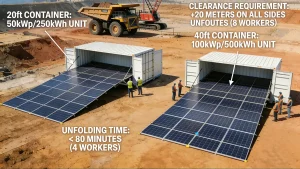
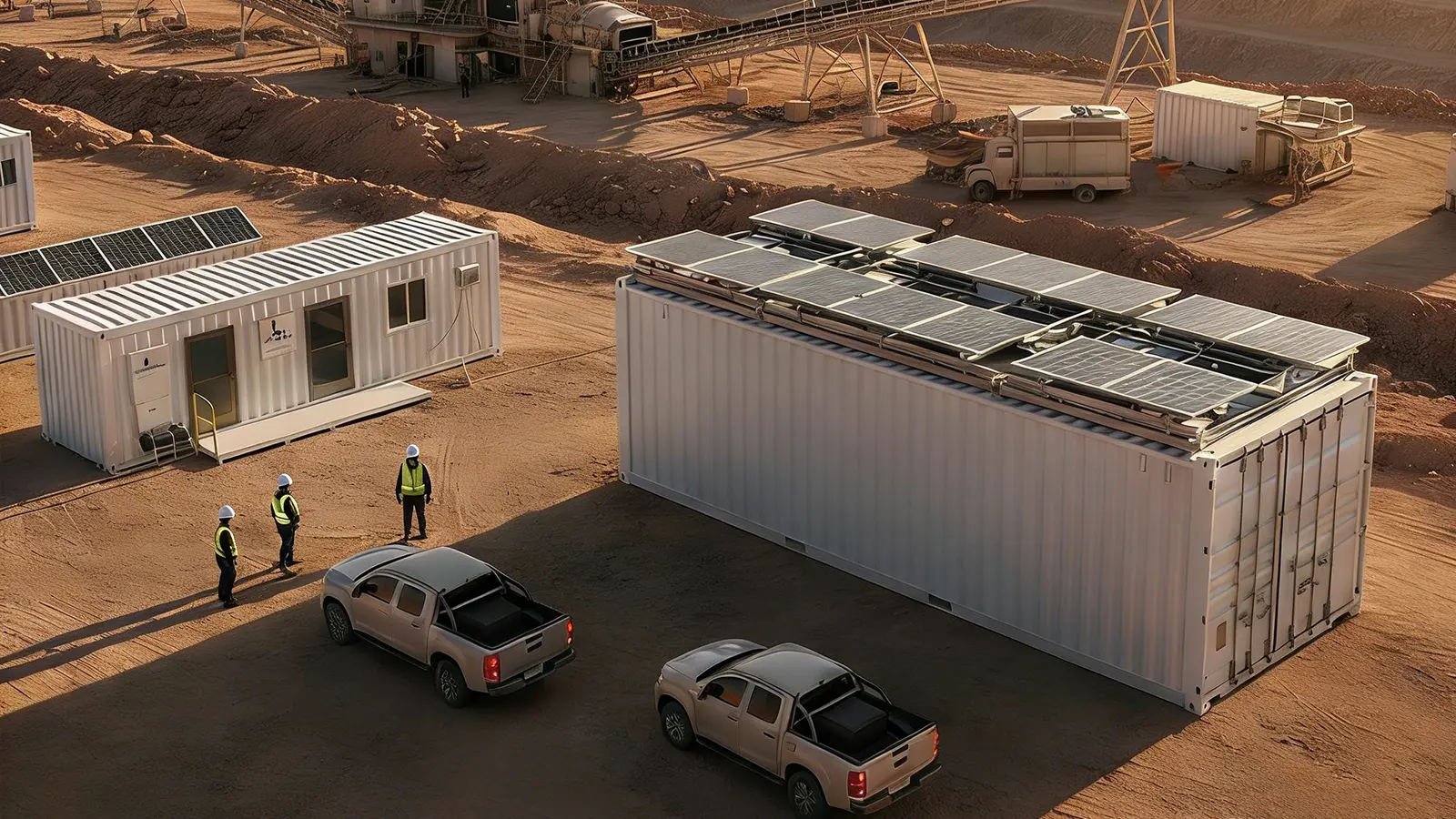
At HighJoule, we’ve been building energy storage since 2002. We started with small telecom cabinets, but mining? Mining is a different beast. You’re dealing with massive, swinging loads and environments that want to kill electronics. That’s why we developed our specialized off-grid solar container for remote mining sites. This is our Mining Energy Solution.
“It’s not just a ‘green’ initiative; it’s a survival strategy for the balance sheet.”
It’s a Microgrid, Not a Science Project
A common mistake I see is thinking you can just bolt some panels onto a shipping container and call it a day. In a copper mine or a quarry, that’s a recipe for a blackout in six months.
When we build these units at our Nantong facility, we design for the “worst-case scenario”:
-
Extreme Thermal Management: Our Lithium Iron Phosphate (LFP) banks have active liquid cooling. I’ve seen standard batteries swell in the 50°C heat of the Australian outback; ours are designed to handle 60°C to -30°C swings for 10+ years.
-
The Dust War: In a mine, dust isn’t just dirt; it’s often conductive. We seal our core inverters to IP65/66 standards. I’ve seen our units in the Gobi Desert run for three years—the outside looks like a sand dune, but the “brain” inside is pristine.
-
Handling the “Kick”: When a primary crusher starts up, the load spikes instantly. Our smart controllers manage the handover between solar, battery, and backup genset in milliseconds. No flickering, no tripped breakers.
Lessons from the Mud: Three Real-World Stories
-
Security through Silence (Burkina Faso)
Exploration teams move fast. Dragging diesel tanks is slow and risky. By deploying a 100kW hybrid container, we cut fuel deliveries by 72%. The win? Less fuel to guard. The site manager finally slept better.
-
The Atacama Hybrid (Chile)
At 4,000m+ altitude, diesel engines lose ~20% efficiency due to thin air. Our solar containers handle the heavy lifting during the day, letting the generators rest. Result: $9.2 million in annual fuel savings.
-
Life-Support & Safety (Egypt)
In the Western Desert, reliability is life-and-death. During a massive sandstorm that choked open-air generators, our sealed units kept the safety sensors and slope monitors online with 99.8% uptime.
The CFO’s Corner: Why the Math Works
Let’s be honest. Engineering is great, but the budget is what gets the “Go” sign.
| Metric | Traditional Diesel Only | HighJoule Hybrid Solar Container | Impact |
| Logistics Risk | Critical (Fuel dependency) | Low (Fuel is backup only) | One stuck truck won’t stop production. |
| Maintenance | High (Constant overhauls) | Minimal (Static components) | Fewer parts to break in the middle of nowhere. |
| Power Cost | $0.35 – $0.60 / kWh | $0.08 – $0.15 / kWh | Directly lowers cost-per-ton. |
| Asset Life | 5-7 Years | 20+ Years | Long-term asset vs. consumable expense. |
Common Questions from Site Managers
-
“Won’t the dust kill the panels?” It’s a valid concern. We use anti-soiling coatings and a specific tilt. In extremely dusty mines, we recommend a quick weekly air-blow. The real secret is that the inverters are sealed tight inside, so the dust never reaches the sensitive bits.
-
“Can it run 24/7 without diesel?” Technically, yes. But economically? Usually, no. The smartest ROI is a hybrid setup. Let the sun do 80-90% of the work, and keep the diesel for those three days of rain.
Finally
I’ve seen too many remote projects fail because their power infrastructure couldn’t keep up with their ambition. An off-grid solar container for remote mining sites isn’t a magic wand, but it is the most reliable tool we have today to tame the chaos.
At HighJoule, we don’t just sell boxes. We engineer power. If you’re tired of watching your margins disappear into a diesel tank, let’s talk. Send us your load profile, and I’ll give you an honest assessment.
Last Updated on 03/09/2026