Mobile Solar Container — Emergency Deployment
Solar Panel Container & Mobile Solar Container — Operational Readiness, Anywhere
30-Minute Deployment for Mission-Critical Power
NFPA 855 (2023) & UL 9540A certified solar container — a true mobile energy solution for disaster relief, defense logistics, and field hospitals.
Rapid Logistics & Deployment
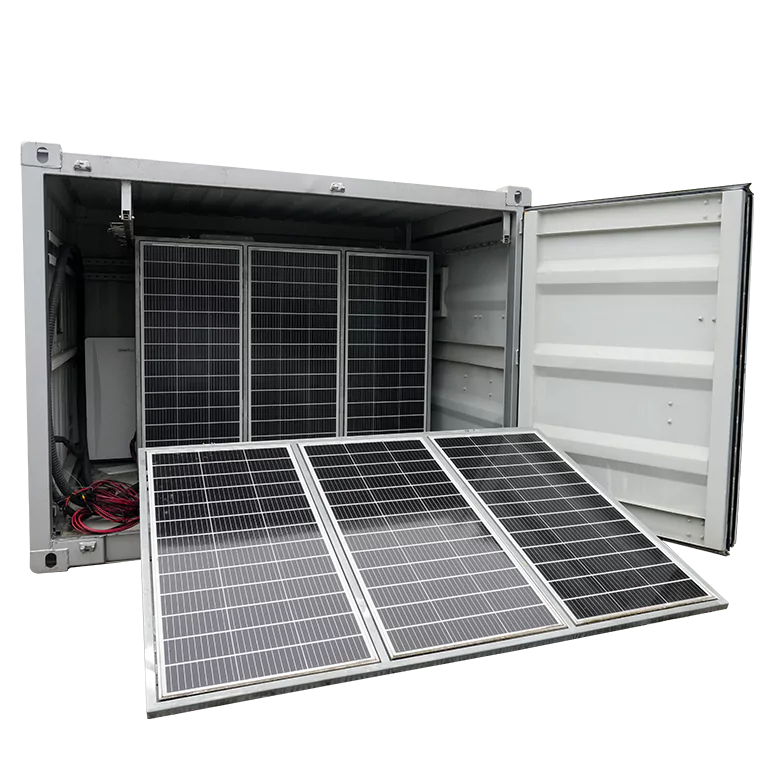
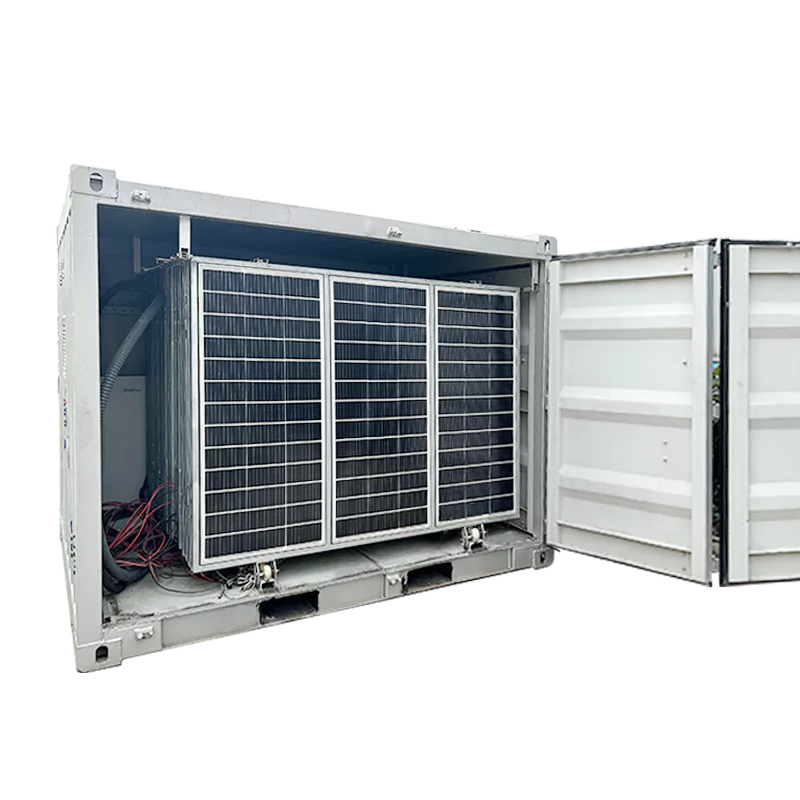
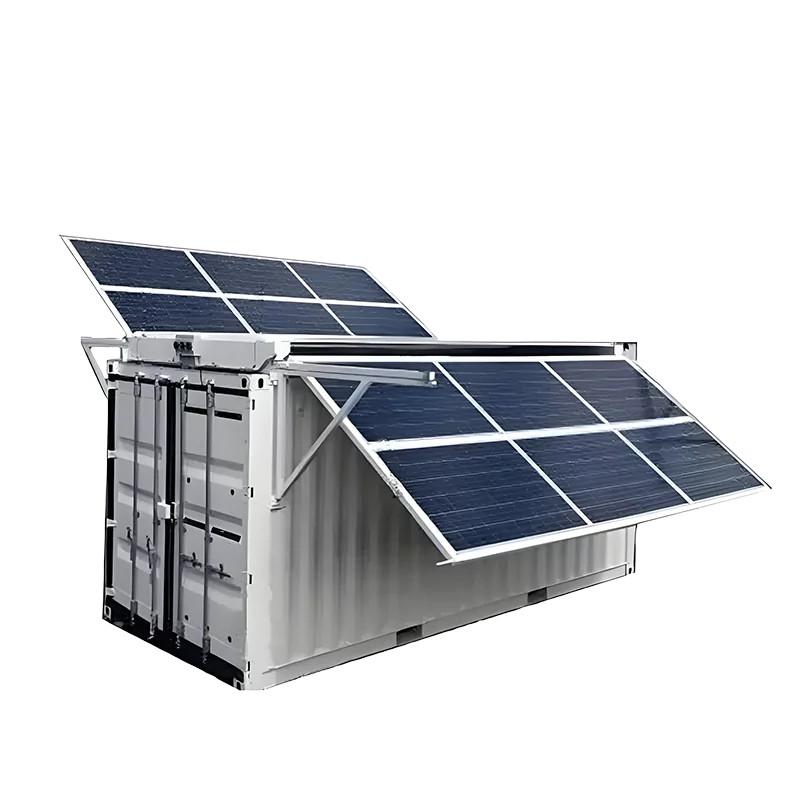
ISO 1496-1 compliant solar containers (20ft/40ft) with CSC certification. Telescopic solar arrays deploy rapidly — fully compatible with global shipping and standard logistics.
Logistics Specifications
- ISO Standard: ISO 1496-1 compliant solar containers (20ft/40ft dimensions) with CSC certification for global shipping.
- Ground Mobility: Standard ISO corner castings enable rapid transfer between transport modes.
Single-Operator Deployment
- Time-Critical Response: 30-minute full deployment — meets FEMA's "Golden Hour" mobile emergency power standard.
- Minimal Training: Intuitive touchscreen interface requires no technical expertise — deployable by 2 personnel.
Mission-Critical Advantage
In disaster response, every minute counts. Deploying a solar container within 30 minutes — without specialized personnel or equipment — directly saves lives and ensures mission success.
Key Applications:
- Field Hospitals: Powering surgical lights, patient monitors, and blood refrigeration units within 30 minutes of arrival.
- Communication Restoration: Reestablishing satellite communication (SATCOM) hubs after grid collapse.
- Forward Bases: Fuel-free power for command centers, radar systems, and perimeter lighting.
Stealth & Survival Capabilities
Tactical advantages for high-risk operational environments
Zero-Noise Operation
Unlike conventional diesel generators (70–90 dB), our solar container operates at near-silent levels (< 10 dB), eliminating acoustic detection risks in sensitive environments.
-
Medical Facility Compatibility: Enables quiet operation (< 10 dB) in field hospitals and trauma centers.
-
Command Center Integration: Reduces acoustic signature for secure communications operations.
-
Infrared Signature Reduction: 30% lower thermal emissions vs. diesel generators
Cybersecurity Hardening
Satellite communication controllers feature hardware-accelerated AES-256 encryption, protecting remote energy assets from cyber attacks.
-
Hardware-Accelerated Encryption: Tamper-resistant cryptographic modules prevent software-based attacks.
-
Multi-Layer Security Architecture: Defense-in-depth approach protects critical infrastructure assets.
-
Audit Logging: Comprehensive security event tracking for compliance and threat analysis.
Multi-Energy Integration
Our solar containers integrates photovoltaic panels, battery storage, optional hydrogen or backup diesel, creating a self-healing energy network.
-
Energy Resilience: Automatic failover between power sources ensures continuous operation.
-
Fuel Flexibility: Adapts to available energy resources in remote or contested environments.
-
Autonomous Operation: AI controller manages complex multi-source power flows without human intervention.
Calculate Your ROI
Discover your potential savings with our solar container — get a custom ROI analysis.
Get StartedGlobal Compliance & Safety Matrix
Regulatory compliance for your solar container — mandatory credential for emergency and defense procurement.
| Compliance Standard | Specification Details | Strategic Significance |
|---|---|---|
| Fire Safety Standard | NFPA 855 (2023 Edition) — solar container fire safety design | Critical Credential: Enables entry into US and European emergency procurement databases, required for FEMA and EU civil protection agency contracts. |
| Energy Storage System Safety | UL 9540A certified — large-scale fire testing passed | Dense Deployment Safety: Proves system safety in dense configurations, essential for field hospital and base camp deployments |
| Structural Resistance | Category 5 Hurricane & Seismic Zone 8 resistance | Survivability: Ensures operational integrity in hurricane-prone regions and seismically active zones, critical for disaster response missions |
| Black Start Capability | 0-Second Independent Startup after grid collapse | Mission Continuity: Guarantees communication and command center power continuity during extreme crises, enabling autonomous operation when all other infrastructure fails |
Tactical Scenario: Caribbean Hurricane Response
Location: Eastern Caribbean, post-Category 4 hurricane
Objective: Establish emergency power for field hospital and water purification facility
Timeline: Immediate response within 72-hour critical window
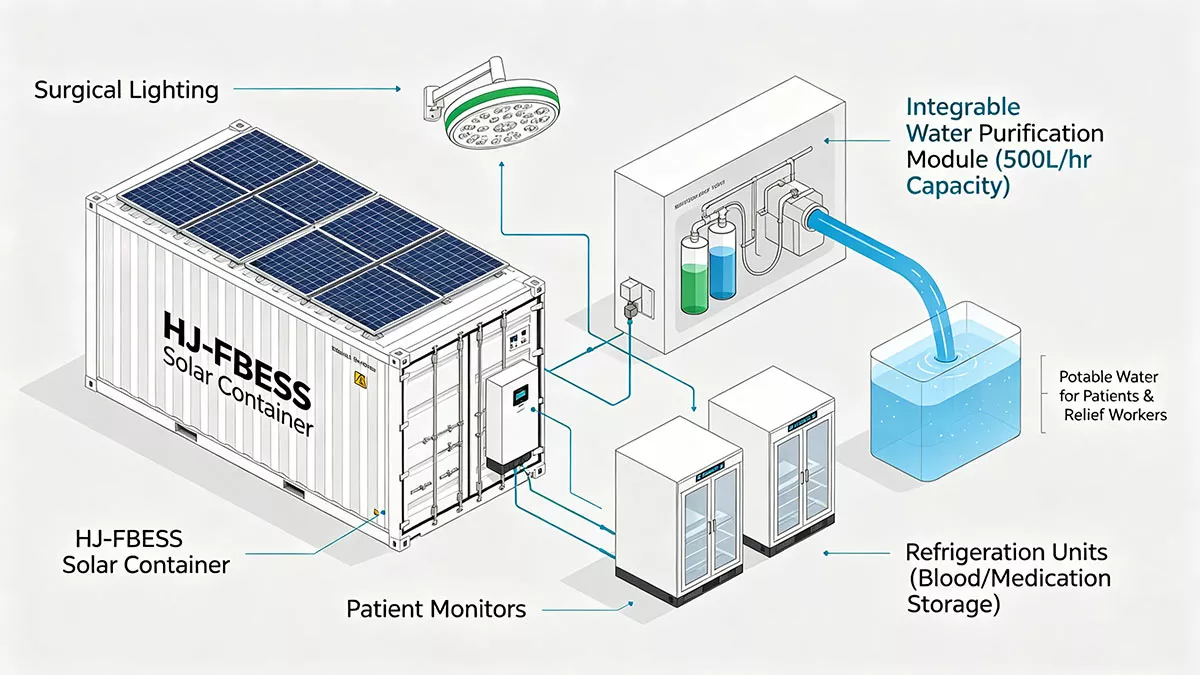
Following a Category 4 hurricane that devastated critical infrastructure across multiple Caribbean islands, international relief organizations faced an immediate challenge: establishing reliable power for emergency medical facilities and clean water production through the use of our Solar Container. Traditional diesel generators were unavailable due to fuel supply chain disruptions, and existing grid infrastructure had been completely destroyed.
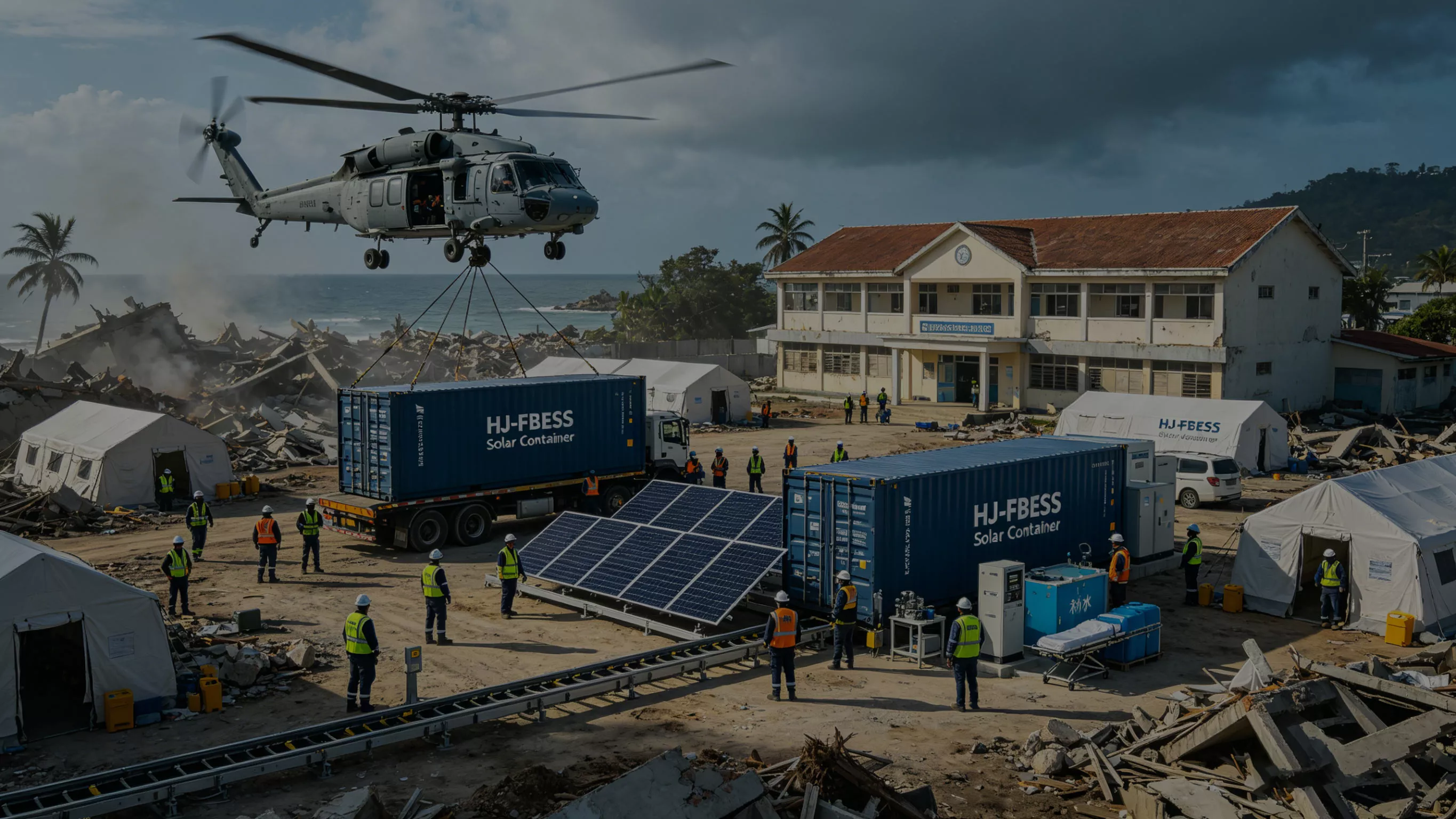
A single ISO 1496-1 compliant solar container (20ft/40ft) was airlifted via C-17 Globemaster III to the disaster zone. Upon landing at a damaged airstrip, the container was offloaded and positioned adjacent to a temporary field hospital in a converted school building. The deployment team consisted of two personnel: one logistics coordinator and one electrical technician. Using the automated telescopic rail system, the solar arrays were fully extended and operational within 30 minutes of ground arrival (aligning with FEMA's "Golden Hour" standard).
Within one hour of aircraft touchdown, the HJ-FBESS Solar Container (photovoltaic panels + battery energy storage system) was providing stable power to critical medical equipment: surgical lighting, patient monitors, and refrigeration units for blood and medication storage. The integrated water purification module (500L/hr capacity) began producing potable water, addressing hydration needs for patients and relief workers.
The system's 0-second black start capability proved critical when the temporary diesel generator failed due to contaminated fuel. The HJ-FBESS's controller automatically detected the failure and seamlessly transitioned to solar-battery operation without interrupting medical services. This autonomous failover eliminated manual intervention during a critical surgical procedure, demonstrating reliability under extreme stress.
Over the following 30 days, the system operated continuously, powering facilities serving 2,500+ patients and producing 360,000+ liters of clean water. The < 10 dB near-silent operation maintained a quiet recovery environment, while satellite-linked monitoring enabled remote diagnostics without on-site personnel.
Solar Container Emergency Solutions have reached a new standard of reliability through recent field applications. The rapid deployment of the HJ-FBESS Solar Container directly contributed to treating hundreds of trauma patients and preventing waterborne disease outbreaks. Its fuel-free autonomy eliminated a critical logistics bottleneck. This deployment has since become a reference case for emergency response energy planning in hurricane-prone regions.
Ready for Mission-Critical Deployment?
Our specialists provide operational readiness and rapid deployment planning for solar container projects — emergency response, defense logistics, and humanitarian missions.
From Field-Proven Success to Ready-to-Deploy Products
Our Solar Container lineup, featuring both standard and innovative folding solar container models, offers a comprehensive full container solar system. Engineered with high-efficiency integrated container solar panels, these units are purpose-built to provide immediate, high-capacity power for remote sites and off-grid operations.