If you’ve ever stood on a dusty job site at 6 AM, you know the routine. You’re trying to go over the day’s safety briefing, but you have to shout over the bone-rattling roar of a diesel generator. Then there’s the smell—that heavy exhaust that lingers in your nostrils all day.
For the twenty years I’ve been in the energy storage industry, this was just “the cost of doing business.” But at HighJoule, we’ve reached a tipping point. Since we started back in 2002, moving from small communication cabinets to massive microgrids, the conversation has shifted. It’s no longer just about “being green” to please the board of directors. It’s about the fact that diesel is becoming a massive headache—logistically and financially.
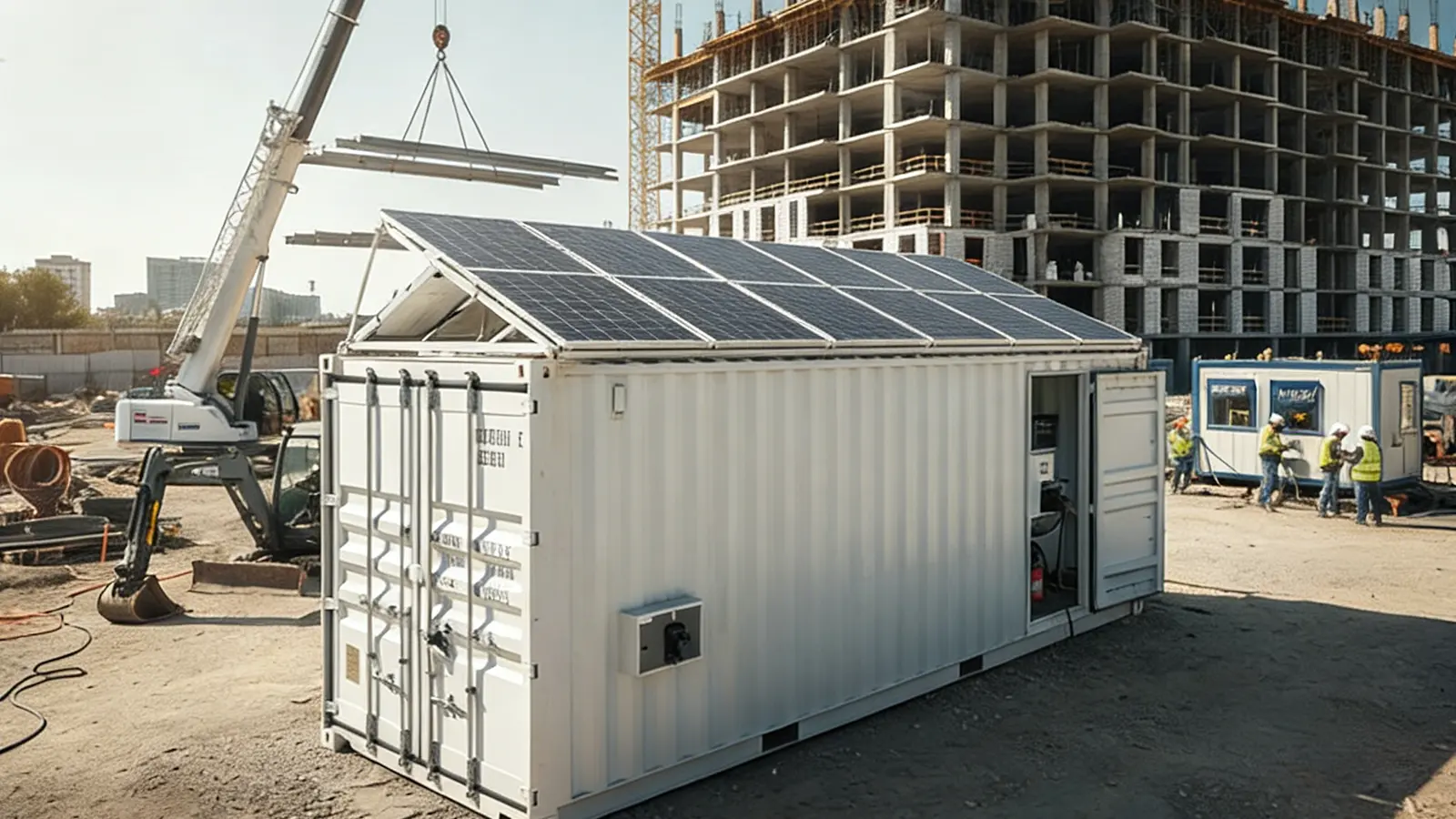
That’s why we built the mobile solar power container for construction sites. It’s not just a product in our catalog; it’s our answer to the chaos of the field.
It’s a Power Plant in a Box (Not a Science Project)
Early on, we tried putting solar panels on trailers. Honestly? It was a disaster. The vibrations from the road shook the mounts loose, and the dust on-site choked the standard electronics.
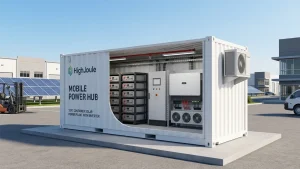
Our current solution is built into 20ft and 40ft ISO containers at our Nantong and Lianyungang production bases. We built them to be “construction-proof.” Here is what’s actually under the hood:
-
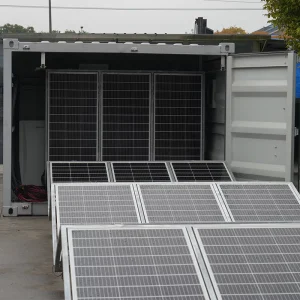
The PV Array: We use TOPCon bifacial modules. They fold out like wings. The “bifacial” part is key—they catch light reflected from the ground, which is a huge boost when you’re on light-colored concrete or gravel.
-
Industrial LFP Banks: We don’t mess around with lead-acid anymore. Our Lithium Iron Phosphate (LFP) batteries are rated for thousands of cycles. Even with deep discharges, they’ll still show up for work the next day.
-
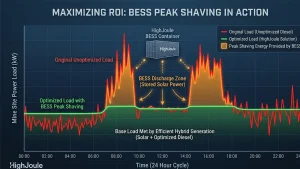
The “Brain” (Hybrid Inverters): This is where most systems fail. Our smart inverters handle load prioritization. If a crane or a heavy saw kicks in, the system pulls from the batteries instantly so the site office computers don’t reboot.
It’s truly drop-and-go. No trenching, no expensive fuel contracts, and no “nuisance tripping.”
Lessons from the Mud: Three Real-World Stories
“The data sheet looks good in the office, but the mud tells the truth.”
-
The “Quiet Zone” in Bavaria, Germany
Local noise ordinances were brutal. A developer could only run diesel for a few hours daily. We dropped one unit, and while fuel savings hit 70%, the project manager told me: “The workers are actually happier. They can hear each other talk for once.”
-
Salt and Humidity in Guangzhou Ports
Salt air eats standard PCBs alive. We used IP54-rated enclosures and specialized conformal coating on every circuit board. In 18 months, these units pushed out over 6.8 million kWh without a single corrosion-related shutdown.
-
The Moving Front in the Philippines
On a highway project in Luzon, the “site” moves 3km every month. We put our containers on flatbeds. Within 2 hours of arriving at a new section, they were unfolded and pushing power.
Is Your Site Actually Ready? (The Honest Truth)
I’ll be the first to tell you: solar isn’t a magic wand. However, you should seriously look at a mobile solar power container for construction sites if:
| Challenge | The Impact |
| High Fuel Spend | Your monthly diesel bill is over $2,000. |
| Sensitive Neighbors | Working near hospitals, schools, or high-end residential zones. |
| Logistical Pain | Tired of fuel theft or the fuel truck not showing up on time. |
| Green Mandates | You need LEED points or carbon reduction reporting. |
Note: If your site is in a deep canyon or you’re running 24/7 heavy welding without any space for panels, we might recommend a hybrid diesel-solar setup instead.
Trust and Safety
At HighJoule, we take the “boring” stuff seriously. Every unit is CE and UN 38.3 certified. Our Battery Management System (BMS) monitors cell temperatures in real-time. If a cell gets too hot, the system isolates that string before it becomes a hazard.
After 20 years in this game, I’ve seen companies come and go with “revolutionary” tech that breaks in a week. We didn’t build this to be flashy. We built it to work when it’s raining, when it’s dusty, and when you’ve got a deadline to meet.
Ready to see the math for your own site?
Reach out to our engineering team. We’ll look at your actual load data and tell you—honestly—how much a mobile solar power container can save you. No sales pitch, just engineering facts.
Last Updated on 05/28/2026