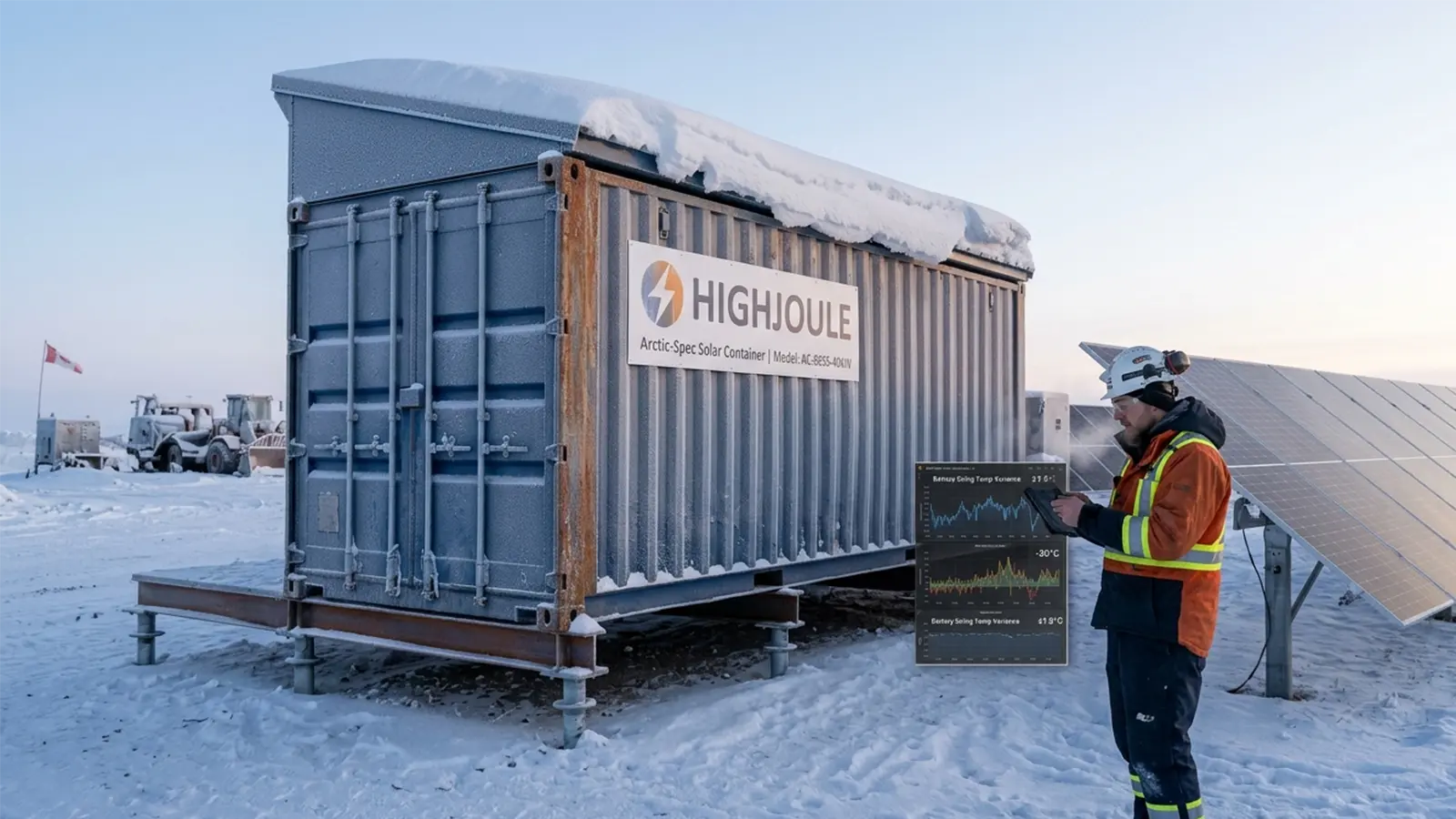
I still remember a late-night radio call from our site manager in northern Alberta. It was mid-winter, dropping fast toward -40°C, and the solar container system we’d commissioned for a remote telecom hub had just tripped offline. Again.
“Marcus, the BMS says 40% SoC,” he told me, “but the breakers keep tripping. It won’t discharge. It’s like the batteries just gave up.”
We spent the next few days troubleshooting via satellite link. It turned out the battery management system’s temperature compensation curves weren’t calibrated for the reality of a Canadian winter. The cells were actually sitting closer to 15% capacity, but the extreme cold was “lying” to the voltage sensors. The system was basically flying blind.
Since we started deploying HighJoule units, I’ve overseen dozens of these projects in sub-zero climates, from Alaska to the Nordics. I’ve noticed that even experienced engineers fall into the same three traps.
1. The “Standard Test Condition” Trap
Most engineers evaluate panel efficiency based on STC (25°C). But honestly? Testing a panel at 25°C to see how it works in the Arctic is like testing a truck’s fuel economy on a flat, sunny track in July. It tells you nothing about the winter “slump.”
In our systems, we’ve moved exclusively to N-type TOPCon panels. It’s not just about the raw efficiency numbers—it’s about the Temperature Coefficient.
Look at the field data from one of our side-by-side tests:
| Month | Avg Temp | Standard P-type | Our N-type | The Gap |
| Jan | -28°C | 1120 kWh | 1310 kWh | +17.1% |
| Apr | -5°C | 2480 kWh | 2650 kWh | +7% |
The colder it gets, the wider that gap becomes. N-type material has a much better low-light response. When you only have 4 hours of weak winter sun, that 17% difference is exactly what keeps the microgrid alive while others are forced to burn expensive backup diesel.
Pro tip: Don’t just look at the front of the datasheet. Ask for the low-irradiance performance data at 200W/m². If the manufacturer can’t provide it, they probably haven’t tested for real-world winter.
2. Stop Treating Batteries Like They‘re in a Lab
Lithium batteries are chemically “sluggish” in the cold. If you try to charge a LiFePO4 battery below 0°C without a real thermal strategy, you aren’t just losing efficiency—you’re causing irreversible lithium plating. You’re killing the battery.
A common mistake is relying on simple air-heating or heater mats. We’ve seen these fail repeatedly because they create “hot spots” near the heater and “dead zones” at the back of the rack. That temperature imbalance causes cells to age at different rates. One day your rack looks fine, the next day a whole string is dead.
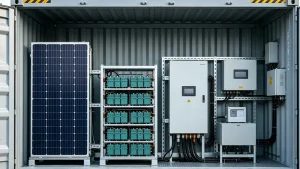
This is why we developed Active Liquid Cooling & Heating. By using a liquid medium, we keep the temperature variation within ±1.8°C across the entire enclosure. Because liquid is much more efficient at heat transfer than air, we use significantly less “parasitic power.” In our Arctic deployments, the heating energy consumption is often 60% lower than air-heated systems. That’s energy you can actually use for the load.
3. “Arctic Grade” is often just Marketing
I’ve seen “Arctic-ready” containers that look great in a brochure but buckle under real-world snow. In Quebec or Scandinavia, you can easily get 2+ meters of snow on a roof. That’s a massive static load that a standard “modified” sea can isn’t built for.
At HighJoule, we had to rethink the structural physics:
- Roof Pitch: 8° minimum. Flat roofs are a death sentence in snow country.
- The Steel: 4mm Corten with C5-M corrosion protection. If you’re near the coast, salt and sub-zero moisture will eat standard paint in two seasons.
- Permafrost Foundation: You need a specific thermal break between the container and the ground. If you don’t account for this, the heat from your equipment will melt the permafrost, and your system will start to tilt within a year.
Final
I get it—HighJoule systems have a higher upfront cost. But spec-ing a “cheap” system for a cold climate is a huge gamble.
The real cost isn’t the hardware; it’s the mid-winter repair mission. It’s the cost of flying a technician and replacement batteries to a remote site when the thermal management fails in January. When you factor in the 20-year Total Cost of Ownership (TCO), building it right the first time is always the cheaper option.
Last Updated on 03/30/2026