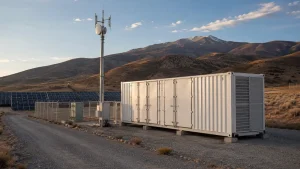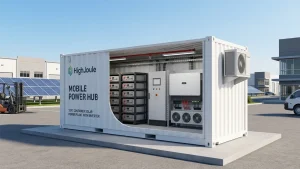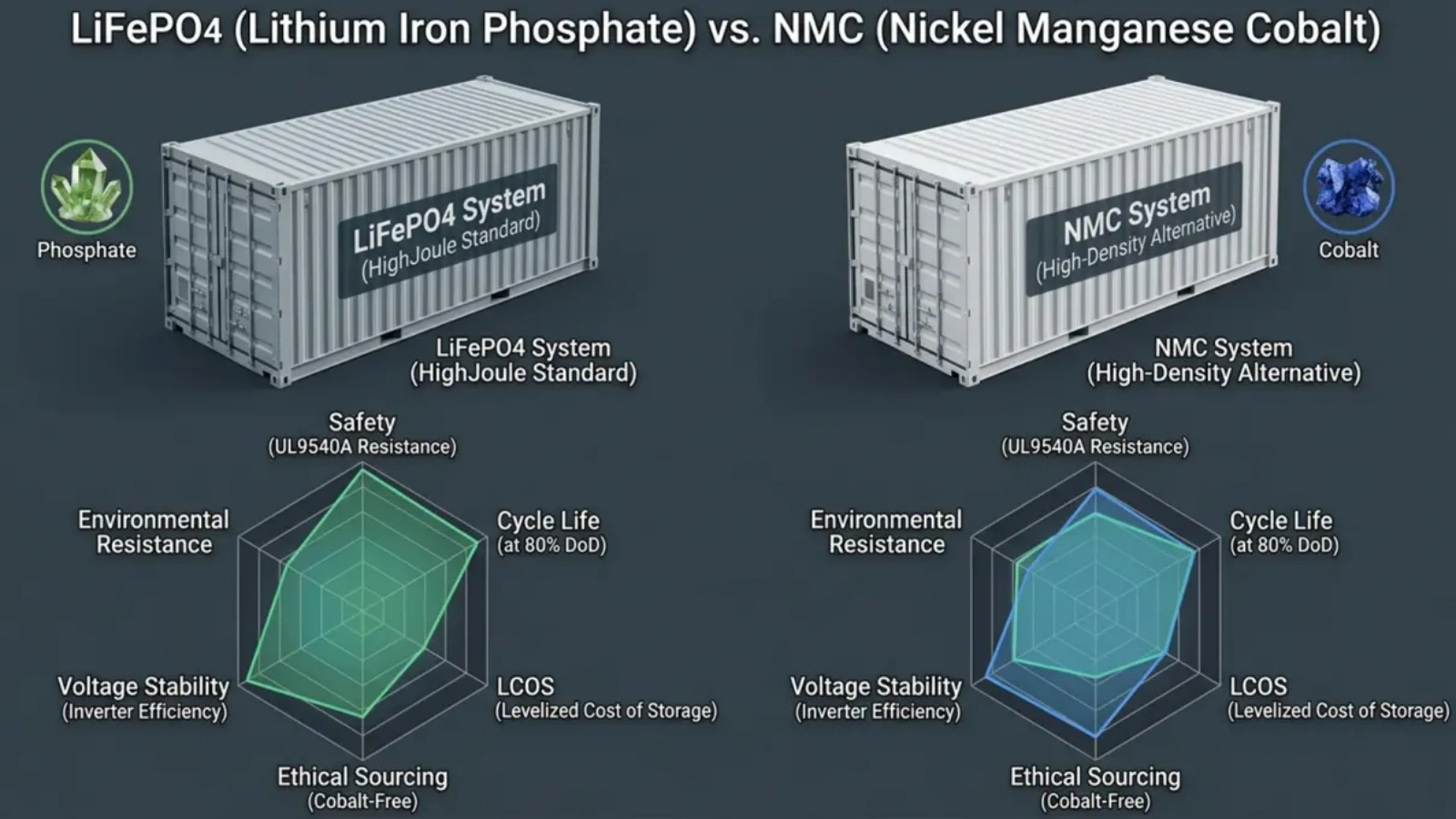
Back in HighJoule’s early days, we faced a ton of pressure to go with NMC (Nickel Manganese Cobalt) batteries. And I get it—NMC is energy-dense. You can pack more power into a smaller space, which sounds great on paper. But when we started designing our 20ft shipping container solar power plant with inverter, our team made a conscious call to stick with LiFePO4 battery technology (Lithium Iron Phosphate).
Looking back, it’s hands down the best engineering decision we’ve ever made. If you’re an investor or facility manager, here’s the non-marketing breakdown—why LFP is the only battery chemistry that belongs in a shipping container.
1. The “Fire” Elephant in the Room
Let’s cut to the chase: thermal runaway. NMC batteries have a major “oxygen-release” flaw. If they catch fire, they fuel themselves—you can’t just smother the flames by cutting off oxygen. They’ll keep burning underwater, even in a vacuum. We’ve seen it happen with a competitor’s NMC container in Colorado a few years back—total loss, and it took firefighters 12 hours to get it under control.
LFP is a different beast. The phosphorus-oxygen bond is way stronger. It takes an insane amount of abuse to get an LFP cell to vent. In our 20ft container setups, safety isn’t just a checkbox on a permit—it’s knowing that even if a cell fails, it won’t turn the whole unit into a blowtorch. For our clients across the US and Europe, where permitting is already a nightmare, LFP makes the fire marshal’s job (and yours) way easier. No one wants to explain to regulators why they chose a battery that’s basically a self-sustaining fire hazard.
2. The 6,000 Cycle Reality
People love fixating on upfront costs, but in the industrial world, we care about Levelized Cost of Storage (LCOS)—the real cost over the system’s life.
NMC: Maybe 2,500 to 3,000 cycles before it drops to 80% capacity. We had a client in Germany who hit that wall at year 7 with their NMC setup—had to replace the entire battery rack, and their ROI went out the window.
LFP: We’ve got HighJoule containers in the field hitting 6,000+ cycles and still holding strong above 80% capacity. Do the math: cycle once a day, and LFP lasts 15+ years. NMC might conk out by year 8. If you’re planning a 20-year project, replacing batteries halfway through isn’t just a hassle—it’s a financial disaster.
3. It’s Easier on the Inverter
One thing my team raves about with LFP is its discharge curve—it’s incredibly flat. Whether the battery’s at 80% charge or 30%, the voltage stays rock steady. Why does that matter? Because the inverter doesn’t have to work overtime to regulate output. It runs cooler, more efficiently, and lasts longer. We’ve got inverters in our LFP containers that are going on year 10 with zero issues—something we can’t say about the NMC setups we’ve serviced for other companies. When your inverter isn’t constantly “hunting” for the right voltage, the whole system’s reliability shoots through the roof.
4. The Ethical Side
More and more of our Western C&I clients are asking about cobalt—and for good reason. The supply chain is messy, both environmentally and ethically. LFP is 100% cobalt-free. It’s easier to recycle, and frankly, it’s something we as a company can stand behind without any caveats. In today’s world, ESG scores aren’t just a buzzword—they affect your ability to get financing. Last year, a client in California almost lost their project funding because their initial NMC setup raised red flags with investors. Switching to LFP fixed that overnight.
Final
Is LFP heavier than NMC? Yeah, sure. Does it make the container a bit more crowded? Maybe. But when you’re building a stationary solar container that’s supposed to sit in a field (or a factory yard) for 20 years, I’ll take safety, longevity, and financial stability over “lightweight” every single time. If you’re on the fence about battery chemistry, ask yourself this: do you want a battery that looks good on paper, or one that performs when it matters most? For us at HighJoule, the answer was never in doubt.