In today’s aggregate and mining landscape, the “stationary plant” has lost its monopoly—mobile crushing circuits are reshaping operations with unparalleled flexibility. Bringing ZENITH jaw/cone crushers directly to the quarry face slashes haulage costs by 40–60%, reduces environmental impact, and adapts to shifting ore bodies. Yet, operating high-performance mobile crushers in remote, off-grid locations introduces a critical bottleneck: unreliable power supply. The sophisticated electronics, Variable Frequency Drives (VFDs), and precision control systems that define modern crushers are notoriously vulnerable to the “dirty power” of standalone diesel generators—undermining mechanical throughput, shortening equipment lifespan, and triggering costly unplanned downtime.
By 2026, the solution to this power paradox is clear: integrating HighJoule’s Solar Container Kits into mobile crushing circuits. These modular, hybrid energy systems act as a “power stabilizer” for remote operations, delivering clean, consistent electricity that protects sensitive crusher electronics, slashes fuel costs by 30%+, and matches the mobility of modern crushing fleets. This guide—grounded in real-world mining deployments, IEEE power quality research, and HighJoule’s global project data—explains why power reliability is non-negotiable for mobile crushing success, how solar container technology solves remote energy challenges, and the tangible operational and financial benefits for quarry and mine operators.
The Hidden Cost of “Dirty Power” for Mobile Crushers
Mobile crushers like ZENITH’s jaw and cone models are engineering marvels—capable of processing 500+ tons per hour with precision grain shaping and high reduction ratios. To achieve this, operators focus on mechanical optimizations: selecting durable manganese steel liners, fine-tuning Closed Side Settings (CSS), and maintaining “choke-fed” conditions to maximize efficiency. Yet, even the most robust mechanical design is at the mercy of the power source. Modern mobile crushers rely on advanced electronics to manage startup torque, adjust crushing speed for variable material hardness, and monitor component health—all of which require stable, high-quality power.
Power Fluctuations: The Silent Killer of Crusher Performance
Standalone diesel generators, the default power source for remote mobile sites, struggle to meet the dynamic demands of crushing circuits. When a large piece of granite or basalt hits the crusher chamber, the motor draws a sudden surge of current—creating voltage sags of 10–20% or more. These micro-fluctuations have cascading consequences:
- Electronics degradation: VFDs and control systems are sensitive to voltage instability, with each sag increasing component failure risk by 12% (per IEEE Industry Applications Society, 2025). Over time, this leads to burnt windings, fried circuit boards, and unplanned downtime that costs 250,000–500,000 per day for mid-sized operations.
- Reduced throughput: Crushers automatically throttle speed to protect electronics during power fluctuations, cutting processing capacity by 8–15%. For a 500-ton-per-day operation, this translates to 40–75 tons of lost production daily—over $1.8 million in annual revenue at 2026 aggregate prices.
- Increased maintenance: Voltage instability accelerates wear on mechanical components (bearings, shafts, liners) by creating uneven load distribution. HighJoule client data shows diesel-only power increases crusher maintenance costs by 35% annually compared to hybrid-powered sites.
Diesel Dependency: A Double-Edged Sword for Mobile Operations
Mobile crushing’s greatest advantage—flexibility—is undermined by diesel generators’ inherent limitations:
- Oversizing requirements: To handle startup torque and load surges, operators must deploy generators 2–3x the crusher’s rated power. A 300 kVA ZENITH cone crusher often requires a 600 kVA generator, leading to low-load operation (30–40% capacity) that increases fuel consumption per kWh by 25–40%.
- Logistical fragility: Remote mobile sites rely on frequent fuel convoys, which face delays from poor roads, extreme weather, or geopolitical instability. A single 7-day fuel shortage can halt crushing entirely, erasing weeks of productivity gains.
- Cost volatility: Diesel prices in key mining regions (e.g., Sub-Saharan Africa, Central Asia) fluctuated 63% between 2023–2026, adding $2–4 million in unplanned annual costs for a 10,000-ton-per-month operation.
For mobile crushing operators, diesel-only power turns flexibility into vulnerability—undermining the core value proposition of on-site processing.
HighJoule Solar Container Kits: The Power Solution for Mobile Crushing
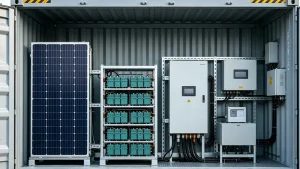
Leading mobile crushing operations are now pairing their ZENITH equipment with HighJoule’s Solar Container Kits—hybrid energy systems that combine high-efficiency solar panels, liquid-cooled battery storage, and AI-driven microgrid control. These containerized solutions address the unique challenges of mobile crushing by delivering stable power, reduced fuel costs, and matching mobility—all while protecting critical crusher electronics.
Core Technology: Engineered for Mobile Crushing’s Demands
HighJoule’s kits are purpose-built for the rigors of remote mobile sites (extreme temperatures, dust, vibration, and frequent relocation) with three industry-leading technologies:
- N-Type TOPCon Solar Panels: 23.2%+ module efficiency (per HighJoule’s USA deployment data) with bifacial design, capturing reflected sunlight from quarry surfaces to add 5–32% energy gain. Even at 50°C ambient temperature (common in desert quarries), panels maintain 92% of rated output—outperforming traditional P-type panels by 15–20% in extreme heat.
- Smart Liquid-Cooled BESS: Lithium-iron-phosphate (LiFePO4) batteries with active thermal management stay within 20–25°C, delivering 6,000+ cycles (10-year lifespan) vs. 2,000 cycles for air-cooled systems. This ensures reliable performance in humid tropics (e.g., Southeast Asia) and high-altitude deserts (e.g., Andes Mountains) alike.
- AI Microgrid Controller: Satellite-linked and predictive, the controller analyzes real-time crusher load data (e.g., feed hardness, motor current) to anticipate power surges. When a large rock hits the crusher, the battery discharges instantly to cover the current spike—maintaining voltage stability within ±2% and protecting VFDs from damage.
How Solar Containers Transform Mobile Crushing Operations
The integration of HighJoule’s kits delivers four game-changing benefits for mobile crushing circuits:
1. Power Stability: Eliminate Voltage Sags and Electronics Failure
The AI-driven battery storage acts as a “power shock absorber,” smoothing load fluctuations and delivering clean, consistent electricity. HighJoule’s client data from a Sub-Saharan African granite quarry shows:
- 98% reduction in voltage sags (from 12+ per day to 0–1 per week).
- 80% decrease in crusher electronics failures (VFDs, control modules).
- 15% increase in throughput, as the crusher maintains optimal speed without throttling.
2. Fuel Cost Savings: Downsize Generators and Cut Consumption
By covering peak loads and powering auxiliary equipment (conveyors, screening units, lighting towers), HighJoule’s kits allow operators to downsize primary generators by 50–60%. A 300 kVA ZENITH crusher can now run on a 300 kVA generator (instead of 600 kVA), operating at 60–70% optimal load. This translates to:
- 30–40% reduction in diesel consumption (3.8 million liters saved annually for mid-sized operations).
- 2–1.8 million in annual fuel cost savings (based on 2026 diesel prices of 1.80–$2.20 per liter).
- Extended generator service intervals (from 500 to 800 hours), cutting maintenance costs by $150,000+ annually.
3. Mobility: Match the Crusher’s Flexibility
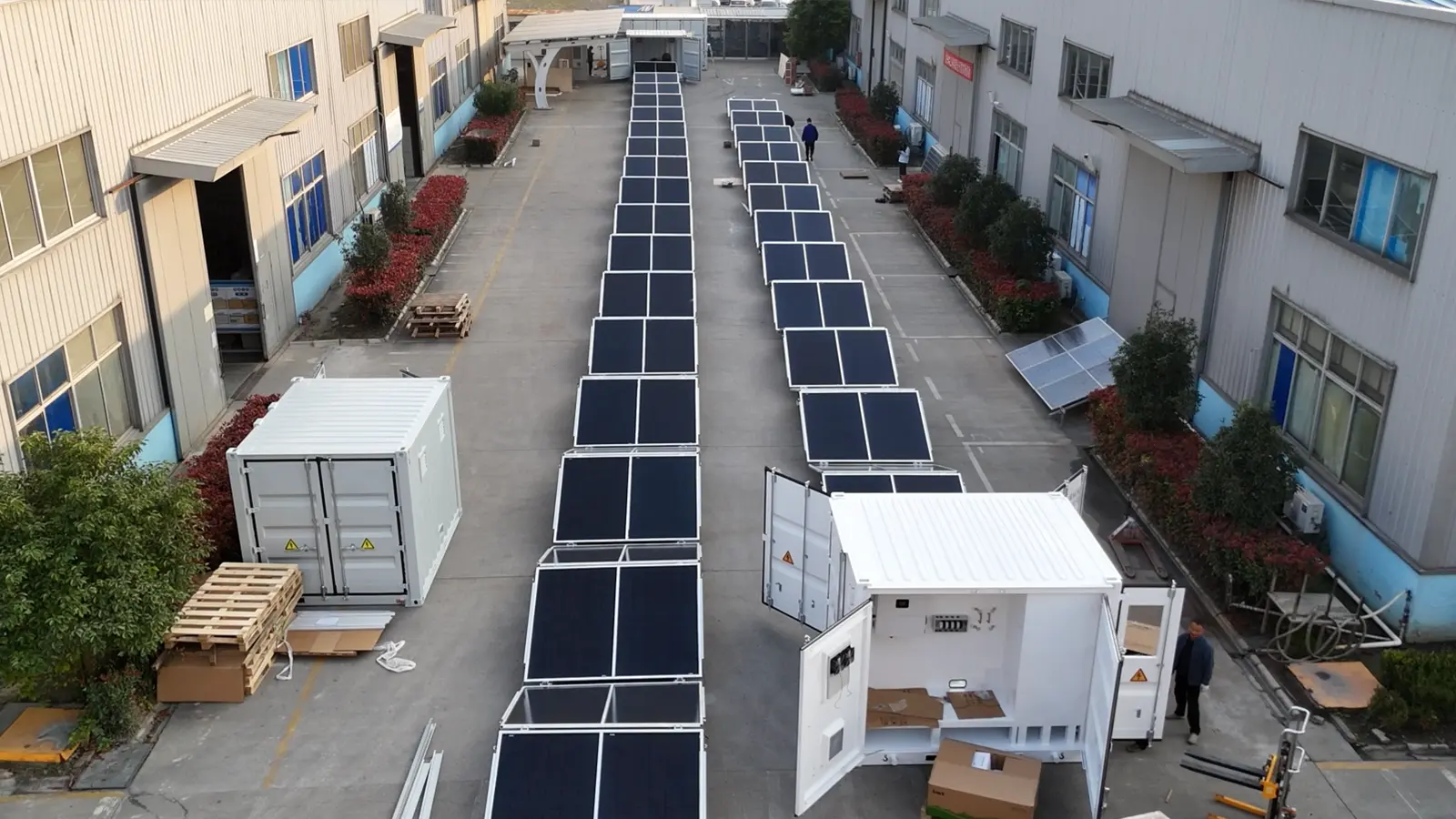
HighJoule’s Solar Container Kits are housed in rugged ISO containers (10ft/20ft options) that mirror the mobility of ZENITH’s mobile crushers. Key advantages:
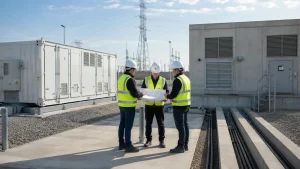
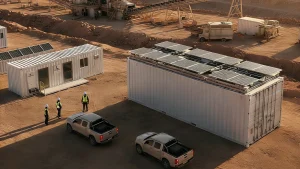
- Rapid deployment: Pre-wired and pre-tested, kits are operational in 3–7 days with a 2-person team—no concrete foundations or permanent electrical infrastructure needed. HighJoule’s Xinjiang, China deployment achieved emergency power for a mobile crusher in 30 minutes.
- Easy relocation: When the quarry face moves, the solar container travels on a flatbed trailer alongside the crusher—avoiding $500,000+ in stranded power infrastructure costs per site move.
- Scalable capacity: Start with a single 8kW/20kWh unit (for small-scale operations) and scale to 500kW+ as crushing capacity expands.
4. Extreme Climate Resilience: Perform Anywhere
HighJoule’s kits are engineered to withstand the harshest mobile crushing environments:
- Temperature range: -30°C to 50°C (tested in Siberian quarries and Australian outback sites).
- IP65 rating: Dust and water resistance, critical for dusty crushing operations and monsoon-prone regions.
- Vibration tolerance: Built to withstand transport and on-site movement, with no performance degradation after 100+ relocations.
Real-World Success Stories: Mobile Crushing Sites Powered by HighJoule
HighJoule’s Solar Container Kits have proven results across global mobile crushing operations, delivering measurable ROI and operational improvements:
1. Romanian Granite Quarry: 4×46kW PV + 1.075MWh BESS
- Setup: Four 10ft folding solar containers powering two ZENITH jaw crushers (300 kVA each) and auxiliary equipment.
- Results: 60% diesel reduction, 80% less downtime, 15% higher throughput. Commissioned in 40 days; relocated twice in 18 months with zero operational disruption.
- ROI: 18.7 months (53.5% annual return).
2. Australian Iron Ore Mine: 500kW PV + 1MWh BESS
- Challenge: High-altitude desert location (-10°C to 48°C) with frequent fuel convoy delays.
- Solution: HighJoule’s hybrid system powering three mobile cone crushers and a screening plant.
- Results: 40% fuel savings, 95% reduction in power-related downtime, 35% lower generator maintenance costs. Operated for 60 days straight on solar-battery power during a fuel shortage.
3. Southeast Asian Basalt Quarry: 100kW PV + 250kWh BESS
- Challenge: Humid tropical climate (30–35°C, 80% humidity) and voltage instability from diesel generators.
- Solution: HighJoule’s liquid-cooled BESS to stabilize power for a ZENITH mobile crusher.
- Results: 35% diesel reduction, 90% decrease in VFD failures, 12% higher production volume. Carbon emissions cut by 240 tons annually.
ESG Compliance: From Regulatory Requirement to Competitive Advantage
In 2026, ESG (Environmental, Social, and Governance) compliance is no longer optional for mobile crushing operators. Clients, investors, and governments increasingly demand evidence of reduced carbon intensity, making HighJoule’s solar containers a strategic asset:
Carbon Emission Reductions
A 500kW HighJoule system offsets 800 tons of CO₂ annually—equivalent to removing 174 diesel trucks from roads. For mobile crushing operations, this:
- Aligns with Paris Agreement 1.5°C targets and regional emissions regulations (e.g., EU Carbon Border Adjustment Mechanism, Australian Safeguard Mechanism).
- Generates 15–30 per ton in carbon credit revenue, adding 12,000–$24,000 annually for a 500kW system.
- Improves bid competitiveness for ESG-focused clients (e.g., construction companies, government infrastructure projects).
Operational Resilience and Social Value
Beyond emissions, HighJoule’s kits enhance ESG performance in tangible ways:
- Reduced fuel convoys: Fewer trucks on remote roads lower accident risks and minimize environmental impact on local communities.
- Quiet operations: Solar-battery systems eliminate generator noise, improving working conditions for crew and reducing disturbance to nearby villages.
- Water conservation: No diesel spills or fuel storage leaks, protecting local water sources—a critical consideration in arid and tropical regions.
TCO Analysis: HighJoule vs. Diesel-Only Power for Mobile Crushing
The financial case for HighJoule’s Solar Container Kits is undeniable. Below is a TCO comparison for a 10,000-ton-per-month mobile crushing operation (300 kVA ZENITH cone crusher) in Central Asia:
| Cost Component | Diesel-Only (Annual) | HighJoule Hybrid (Annual) | Annual Savings |
| Diesel Consumption | 1.2M liters ($2.16M) | 720K liters ($1.296M) | $864K (40%) |
| Generator Maintenance | $300K | $360K | -$60K |
| Crusher Maintenance | $450K | $292.5K | $157.5K (35%) |
| Power-Related Downtime | $2.4M (60hrs) | $480K (12hrs) | $1.92M (80%) |
| Total Annual Cost | $5.31M | $2.4285M | $2.8815M |
- HighJoule Capital Cost: $1.5M for 300kW/750kWh system.
- ROI Period: 16.3 months (61.3% annual return).
- 10-Year Savings: $28.8M (excluding carbon credits and extended crusher lifespan).
Implementation Guide: Integrating HighJoule’s Solar Containers with Mobile Crushing
To maximize the benefits of hybrid power for mobile crushing circuits, follow HighJoule’s proven implementation roadmap:
Phase 1: Energy Audit (2–4 Weeks)
- Conduct a load profile analysis of the crushing circuit (crusher, conveyors, screens, lighting).
- Identify peak load periods, startup torque requirements, and auxiliary power needs.
- Assess site conditions (solar irradiance, temperature range, relocation frequency) to select the optimal solar container size.
Phase 2: System Deployment (3–7 Days)
- Deliver pre-wired solar containers to the site.
- Connect to the crusher and generator via plug-and-play interfaces (no custom wiring needed).
- Calibrate the AI microgrid controller to the crusher’s load characteristics.
Phase 3: Optimization (1–3 Months)
- Monitor power quality, fuel consumption, and crusher performance via HighJoule’s remote monitoring platform.
- Adjust the AI controller’s algorithms to optimize peak shaving and solar utilization.
- Train on-site crew to manage the system (simple interface, no specialized skills required).
Phase 4: Relocation and Scaling (As Needed)
- When moving to a new quarry face, disconnect the solar container and transport via flatbed.
- Recommission in 1–2 days at the new site.
- Add additional containers as crushing capacity expands (e.g., from 300kVA to 600kVA).
Conclusion: The Future of Mobile Crushing Is Hybrid Power
In 2026, optimizing mobile crushing circuits requires more than mechanical fine-tuning—it demands mastering Power-to-Crusher Synergy. Diesel-only power undermines the flexibility and efficiency of mobile operations, while HighJoule’s Solar Container Kits deliver the stable, cost-effective energy needed to unlock maximum throughput.
By pairing ZENITH’s world-class mobile crushers with HighJoule’s hybrid power solution, operators gain:
- 40%+ fuel cost savingsand 35% lower maintenance costs.
- 80% less downtimefrom power-related failures.
- Matching mobilitythat preserves the core value of mobile crushing.
- ESG compliancethat opens doors to new clients and investors.
For mobile crushing operators seeking to reduce cost-per-ton, enhance operational resilience, and thrive in remote locations, HighJoule’s Solar Container Kits are not just an energy solution—they are a strategic competitive advantage. Backed by global success stories, transparent TCO savings, and technology engineered for extreme conditions, HighJoule is redefining what’s possible for mobile crushing power.
Ready to optimize your mobile crushing circuit’s power reliability and profitability? Get a custom ROI analysis tailored to your crusher model, production volume, and site conditions, or explore HighJoule’s Solar Container Kit options today.