There is no defensible universal solar container cost without defining PV capacity, inverter power, battery energy, storage duration, destination market and delivery scope. As of 5 August 2026, buyers should compare equipment, delivered, installed and lifecycle cost separately before comparing headline totals. A lower number may simply exclude the battery, freight, civil work, grid interface or commissioning.
This guide uses a global quote framework rather than a fabricated price range. The final currency and tax treatment depend on the destination and contract. Start by fixing the system configuration, then normalize every supplier quotation to the same boundary.
Define the System Before Asking for a Price
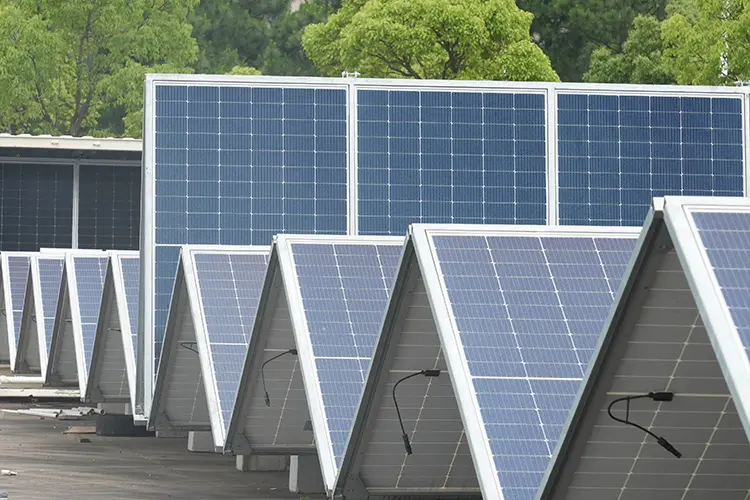
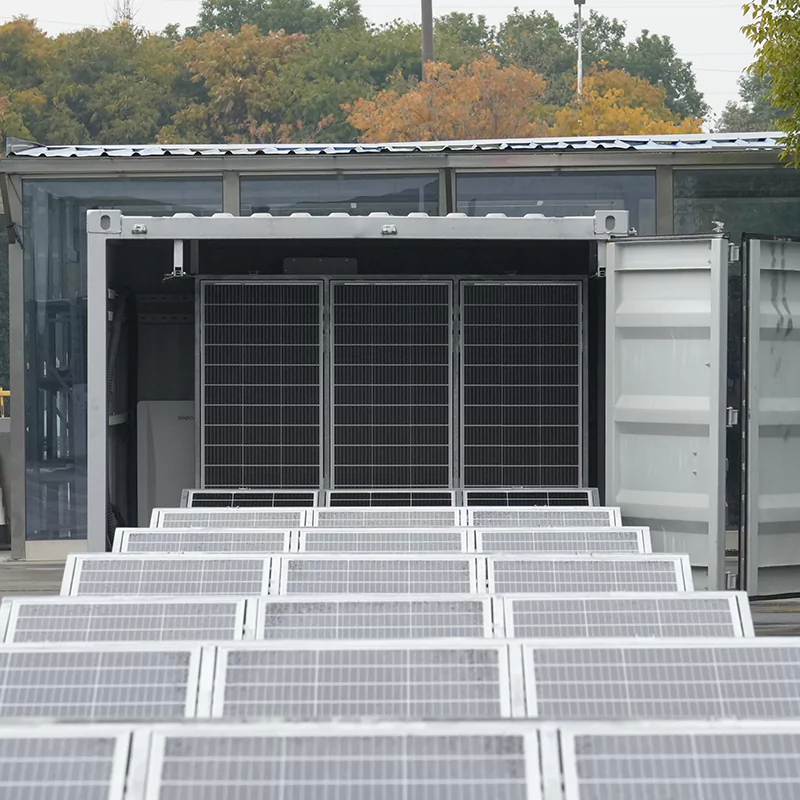
A solar container can describe different architectures. A foldable PV generation unit, an integrated PV-plus-storage system and a compact hybrid solar-storage-diesel unit do not share the same bill of materials or project role. Treating them as one price category produces false comparisons.
Define the load first: continuous kW, peak kW, daily kWh, critical-load duration and expected seasonal variation. Then decide whether the project needs daytime generation only, energy shifting, backup operation, black-start capability or a diesel interface. If those functions are not fixed, suppliers may solve different problems while appearing to quote the same product.
For early sizing, use the separate guides to estimate solar container generation and off-grid battery capacity. Those inputs should enter the request for quotation rather than being inferred from the container length.
Compare Four Solar Container Cost Boundaries
The fastest way to make quotes comparable is to label the boundary of every total. Do not use “system price” as a substitute for a detailed scope.
| Cost boundary | What it should include | What to verify |
|---|---|---|
| Equipment cost | PV modules and deployment structure, container, inverter or PCS, battery when specified, BMS or EMS, internal integration and the agreed factory acceptance test | Exact ratings, usable versus nominal battery energy, included cables and accessories, test records, warranty boundary and documentation |
| Delivered cost | Equipment cost plus freight, cargo insurance and the customs or import responsibilities assigned by the agreed Incoterm | Named destination, shipment dimensions and weight, route restrictions, duties and taxes, port charges, unloading responsibility and storage risk |
| Installed cost | Delivered cost plus foundations, drainage, grounding, transformer or switchgear, external cabling, crane or forklift work, installation, commissioning and site acceptance | Grid-study and permit scope, contractor split, trench distances, interface points, temporary works, test equipment and acceptance criteria |
| Lifecycle cost | Installed cost plus O&M, replacements, insurance, financing, taxes, downtime and decommissioning, less discounted residual value | Analysis period, discount rate, degradation, duty cycle, service access, replacement assumptions and the party carrying operating risk |
The U.S. Department of Energy treats procurement, installation and commissioning, operations and maintenance, and end-of-performance planning as distinct photovoltaic lifecycle activities. That separation is useful even when the project is outside the United States because it prevents equipment procurement from being mistaken for the complete project scope. See DOE’s photovoltaic system lifecycle guidance.
Use a Project-Window Cost Formula
Project-window cost = equipment and integration + site civil and electrical work + transport and offloading + commissioning + O&M + replacements + insurance + financing + taxes + downtime + decommissioning − discounted residual value.
This is a project-window cost framework, not a levelized cost of energy or levelized cost of storage calculation. A financial model must define the analysis period, discount rate, energy production or throughput, degradation, replacement timing and residual-value treatment before it can produce a comparable cost per kWh.
Budget commissioning and decommissioning while the design is still flexible. DOE’s guidance specifically recommends planning and budgeting these activities early instead of treating them as late additions. The relevant installation and commissioning guidance also connects acceptance to documented system performance.
Eight Drivers That Change a Solar Container Quote
1. PV Capacity and Deployment Structure
More PV kWp changes the module count, folding or sliding structure, DC cabling, transport mass and deployment labor. Ask whether the quoted capacity is DC nameplate and whether the support structure, deployment mechanism and site anchoring are included.
2. Inverter and PCS Power
Inverter kW sets the conversion boundary for PV. A battery PCS may be a separate power stage. A quote that lists PV kWp, inverter kW and PCS kW independently is easier to evaluate than one “system power” number.
3. Battery Energy and Duration
Battery kWh cannot be priced meaningfully without battery power, usable energy, operating window and intended duration. A 100 kWh battery designed for a 25 kW, four-hour duty is not equivalent to one expected to deliver 100 kW for one hour, even when nominal energy is identical.
4. Thermal and Environmental Design
Ambient temperature, altitude, humidity, dust, salt exposure and snow or wind conditions can change cooling, heating, derating, filtration, enclosure design and site preparation. Put the design conditions in the RFQ so the supplier does not assume a mild reference site.
5. Grid, Off-Grid and Generator Interfaces
Grid connection, islanded operation and diesel coordination require different protection, controls and testing. Define voltage, frequency, grounding arrangement, point of connection, expected operating modes and who supplies external transformer and switchgear.
6. Tests and Documentation
Clarify the factory acceptance test, site acceptance test, drawings, manuals, settings files, training and language requirements. If a project needs specific standards or authority approvals, list the exact jurisdiction and evidence expected; do not accept a generic “compliant” statement.
7. Logistics and Offloading
Container dimensions alone do not settle freight. Packed dimensions, gross weight, dangerous-goods classification when batteries are included, route access, port handling, crane capacity, unloading surface and on-site storage can all move cost or risk between parties. Use the solar container delivery checklist before fixing the Incoterm.
8. Civil, Electrical and Commissioning Scope
Foundations, drainage, trenching, grounding, external cabling, protection studies, permits and commissioning are site-specific. Record every interface point on a responsibility matrix. An omitted line item does not disappear; it becomes a local procurement task or a change order.
Why Battery Cost per kWh Is Not Enough
A battery price divided by nominal kWh hides the functions that determine project value and replacement risk. Compare usable kWh, continuous and peak kW, duration, PCS scope, thermal management, controls, auxiliary consumption, duty cycle, degradation assumptions and replacement plan. Keep energy and power units separate.
The National Laboratory of the Rockies’ utility-scale PV-plus-battery benchmark demonstrates why scope matters: its representative system has a defined PV-to-battery architecture, power ratio, four-hour duration and shared equipment assumptions. It also accounts for categories such as site preparation, hardware, labor, interconnection, O&M and battery replacement. That benchmark is a U.S. utility-scale reference with a 2022 base year, not a transferable solar container quote. Use its cost-method structure, not its project values, when organizing a container RFQ.
Normalize Two Quotes Without Inventing Prices
Suppose Quote A has the lower headline total. It includes a foldable PV unit and inverter but excludes storage, ocean freight, cargo insurance, offloading, site switchgear and commissioning. Quote B has the higher headline total and includes PV plus battery storage, an agreed factory acceptance test, defined transport responsibility, local interface equipment and site acceptance support.
The totals cannot be ranked yet. Convert both to the same rows:
- Match PV kWp, inverter kW, battery kW, usable battery kWh and duration.
- Match the named destination, Incoterm, freight, insurance, duties, taxes and offloading.
- Match foundations, transformer or switchgear, external cabling, installation and commissioning.
- Match test evidence, documentation, training, spares, warranty and service responsibilities.
- Add operating, replacement and end-of-project assumptions for the same analysis period.
Only then compare equipment, delivered, installed and project-window totals. Leave a value marked “supplier clarification required” when it is unknown; filling the gap with a guessed allowance creates false precision.
Match the Quote to HighJoule’s Published Product Routes
HighJoule currently publishes three relevant configuration routes. These are manufacturer-published specifications, not third-party verification, and the final configuration remains subject to the project quotation.
| Published route | Published configuration range | Use in quote scoping |
|---|---|---|
| HJ-FESS foldable solar container | Six variants from 24 to 182 kWp PV, with published string-inverter configurations from 20 to 200 kW; no battery capacity is published in the configuration table | Start here when the requirement is deployable PV generation without an integrated battery specification |
| HJ-FBESS foldable PV-plus-storage container | Eight variants from 9 to 136 kWp PV and 15 to 482 kWh storage; published power configurations range from 8 to 200 kW, with inverter and PCS listed separately on larger variants | Use when the RFQ needs both generation and storage, keeping inverter power, PCS power and battery energy distinct |
| HJ-SG solar container | Two published configurations with 3.6 or 7.2 kWp PV and 30 or 50 kWh storage for photovoltaic, storage and diesel-generation scenarios | Use for smaller hybrid-system discussions; confirm all interface and output definitions in the project scope |
For a broader architecture view, see the solar-powered shipping container guide. Product length or a family name is not enough to request a comparable price; submit the electrical duty and site boundary with it.
Request a Scope-Matched Solar Container Quote
A useful quotation begins with a complete input set. Send:
- destination country, named site and access constraints;
- continuous load in kW, peak load in kW and daily energy in kWh;
- target PV capacity and expected operating season;
- battery power in kW, usable energy in kWh, duration and duty cycle;
- grid-connected, off-grid, backup or generator-coordinated operating modes;
- ambient temperature, altitude, dust, humidity, salt, wind and snow conditions;
- required standards, drawings, tests, manuals and acceptance records;
- requested equipment, delivered or installed boundary and the preferred Incoterm;
- target delivery and commissioning dates.
Request a scope-matched solar container quote. Ask for the response to separate equipment, logistics, site work, commissioning and lifecycle assumptions so competing proposals can be normalized.
Solar Container Cost FAQ
Can I compare solar containers by price per kW?
Only after matching the architecture and scope. Price per PV kW may help compare similar generation packages, but it does not normalize battery energy, PCS power, deployment hardware, logistics, site work or operating obligations.
Is battery storage included in a solar container price?
Not necessarily. Some product routes publish PV generation without battery capacity, while others publish integrated storage. Require battery kW, usable kWh, duration and PCS scope as separate RFQ fields.
Does a delivered quote include installation?
Usually not unless the quotation says so. “Delivered” should identify the destination and transport boundary. Foundations, offloading, transformer or switchgear, external cabling, permits, installation and commissioning need explicit line items.
Why does destination change the quote?
Freight route, shipment mass, cargo rules, insurance, import responsibilities, duties, taxes, site access, local labor, permits and electrical interfaces are destination-specific. A factory equipment total cannot represent those costs.
What is the best way to compare quotations?
Fix one technical configuration and one commercial boundary, then compare equipment, delivered, installed and project-window costs in separate columns. Record exclusions and responsible parties instead of converting unknowns into guessed prices.
Last Updated on 08/07/2026