When a typhoon, earthquake, or flood knocks out the grid, the first 72 hours dictate the line between stabilization and catastrophe. Hospitals lose vaccine refrigeration and surgical suite power; water pumps sit idle; communication networks collapse. While diesel generators are the traditional stopgap, they rely on a fuel supply chain that is usually the first casualty of blocked roads and damaged ports.
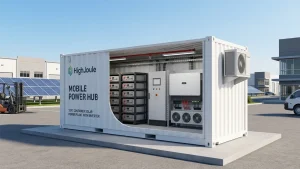
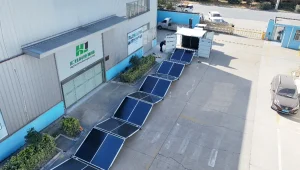
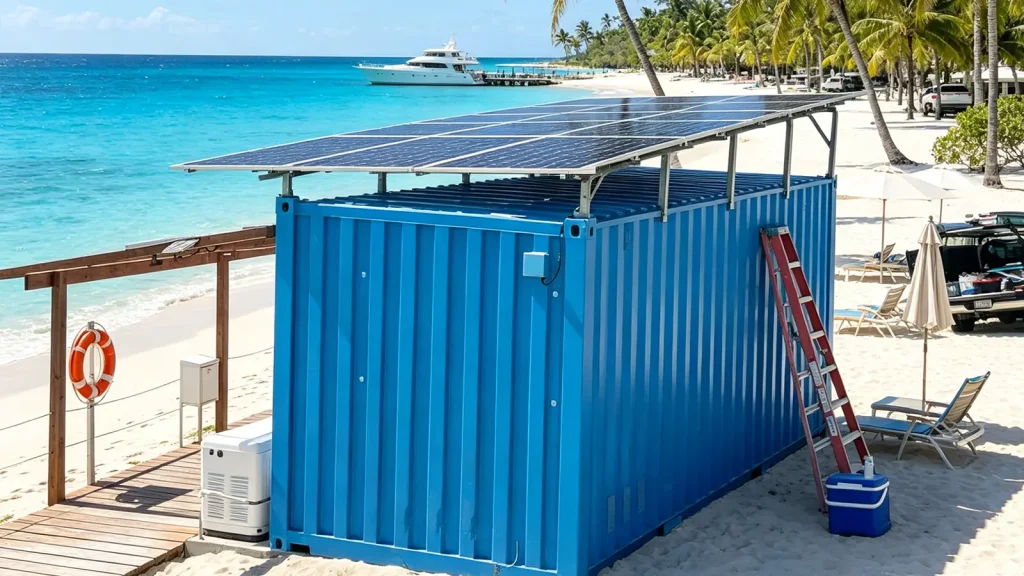
Foldable solar containers bypass this logistics bottleneck entirely. These pre-fabricated, ISO-standard systems deliver high-efficiency solar panels, liquid-cooled lithium storage, and smart energy management in a single mobile unit. Rolled off a flatbed truck, the PV array unfolds and begins generating utility-scale power within two hours—requiring zero fuel infrastructure, zero on-site grid integration, and minimal labor.
At HighJoule Group, we engineered the HJ-FBESS series to operate where conventional power infrastructure fails. From the Tibetan Plateau at 4,500 meters to the Xinjiang desert at -30°C, these systems are built for immediate tactical deployment. This article breaks down the core engineering of foldable solar infrastructure, the practical realities of field deployment, and how to spec a system for critical disaster relief.
1. The Logistics Bottleneck: Why Diesel Fails in Active Disasters
For decades, the disaster response playbook relied on a single assumption: that fuel trucks would always get through. Experience proves otherwise. When Super Typhoon Rai (Odette) struck the Philippines in December 2021, 12 million people lost power. Major islands remained dark for up to six weeks—not due to a shortage of generators, but because marine debris and ruined roads blocked fuel tankers from reaching distribution points. A similar vulnerability emerged during Hurricane Maria in Puerto Rico (2017), where communities spent months without electricity once localized diesel reserves ran dry.
The alternative—rapidly deployable solar-plus-storage—only became viable recently due to the convergence of three industrial technologies:
-
N-Type TOPCon PV Modules: Commercial conversion efficiencies now exceed 22.5%, paired with a low -0.29%/°C temperature coefficient that prevents dramatic power drops in tropical heatwaves.
-
Liquid-Cooled Lithium Iron Phosphate (LiFePO4) Storage: High-density cells packed into standard shipping containers that deliver 6,000+ cycles with active, unattended safety controls.
-
Turnkey Factory Pre-fabrication: Integrating the panels, inverters, thermal management, fire suppression, and energy management into the structural frame of the container before it leaves the factory.
The HJ-FBESS is not a standard container with solar panels bolted on; it is a fully integrated, self-contained power plant designed to log on to an unmanaged load the moment it lands.
2. Inside the HJ-FBESS: Engineering for the Field
Disaster zones are hostile environments for electronics. Delivering reliable power requires specific design choices that protect system efficiency and components under extreme thermal and mechanical stress.
2.1 The PV Array: High-Heat Tolerant TOPCon Modules
In active operations across the Philippines or Sub-Saharan Africa, ambient temperatures frequently surpass 40°C, driving solar panel surface temperatures above 65°C. Standard PERC panels suffer steep efficiency degradation under these conditions.
The HJ-FBESS mitigates this with N-Type TOPCon modules. Featuring a temperature coefficient of -0.29% °C (compared to conventional PERC at -0.35% °C), these arrays retain 4–6%, these arrays retain 4-6% more generating capacity at peak operational temperatures. Additionally, their enhanced low-light sensitivity extends the generation window during dawn, dusk, and heavy cloud cover—critical periods when every watt-hour counts.
2.2 DC-Coupled Architecture: Eliminating Conversion Loss
Traditional AC-coupled systems route power through multiple conversion stages:
PV (DC) → Inverter (AC) → Battery Charger (DC) → Battery
Each step introduces a 3-5% efficiency penalty, resulting in a total round-trip loss of 12-15% before electricity ever reaches a medical tool or water pump.
[AC-Coupled System] PV (DC) -> Inverter (AC) -> Charger (DC) -> Battery (Loss: 12-15%)
[HJ-FBESS DC-Bus] PV (DC) –> Battery (Loss: < 5%)
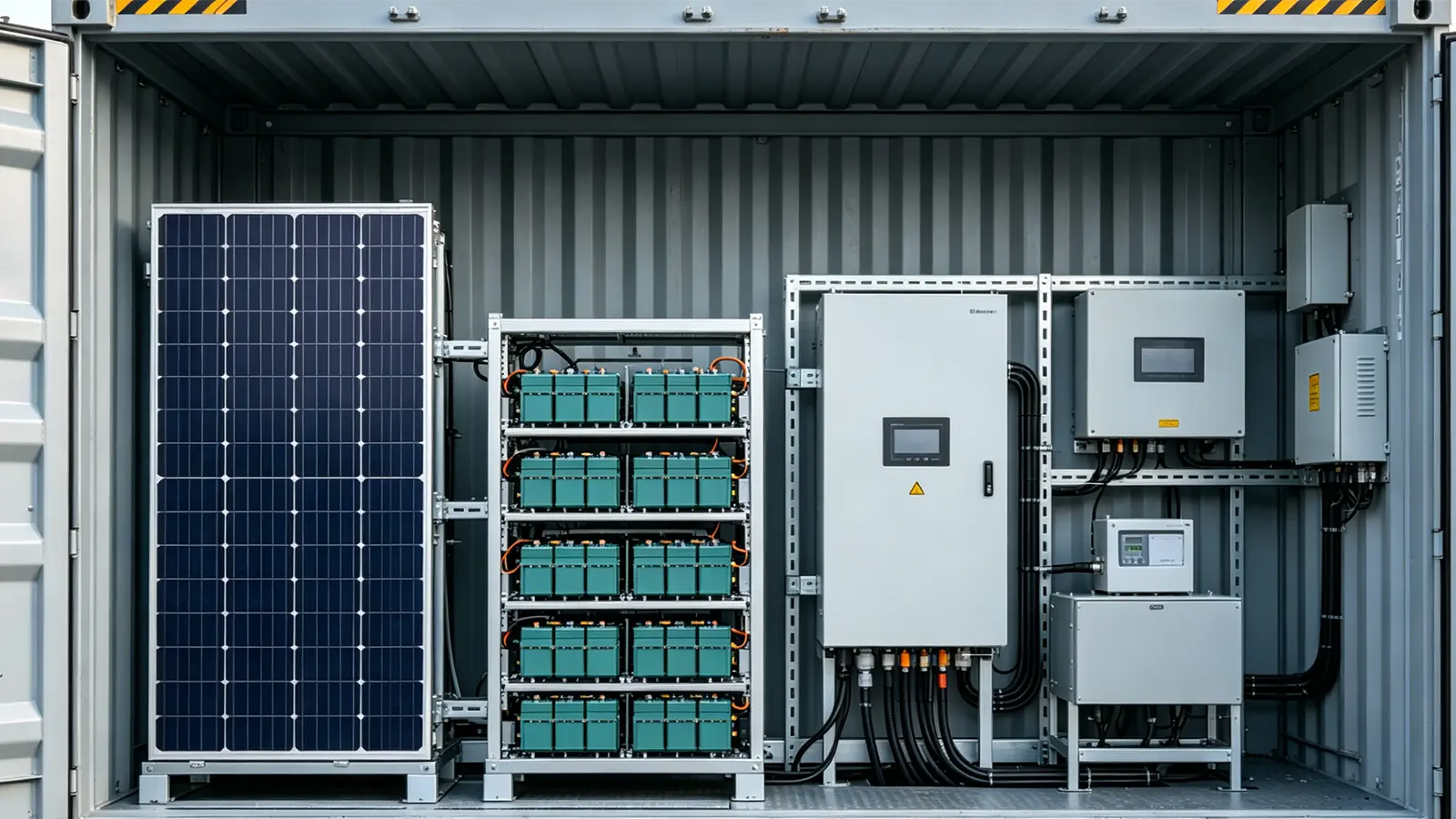
The HJ-FBESS utilizes a dedicated DC-coupled topology. Solar power feeds directly into the battery bank via a shared DC bus, eliminating the double-conversion penalty. This architecture secures a 88-95% round-trip efficiency, minimizes internal heat generation, and reduces the overall component count—significantly lowering the risk of hardware failure in remote areas.
2.3 Liquid-Cooled Battery Racks: Safety Under Thermal Load
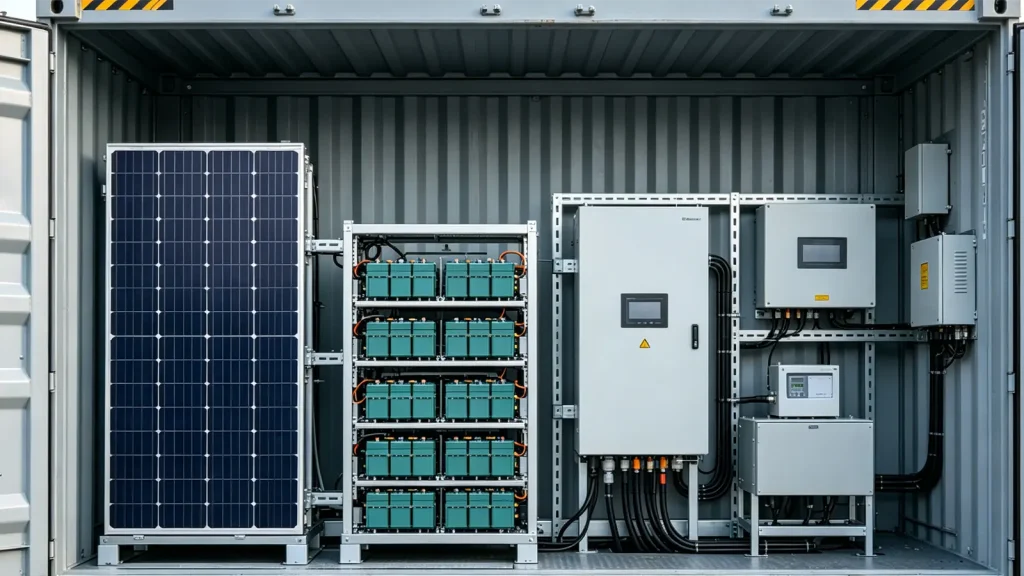
Packing up to $5.0+\text{ MWh}$ of energy storage into a 20-foot shipping container requires rigorous thermal management. Air-cooled battery systems rely on external air circulation, which fails when a sealed steel container sits under direct sunlight in 45°C ambient heat.
We equipped the HJ-FBESS with active liquid cooling. By circulating coolant directly through the modular cell blocks, the system maintains cell temperatures within a narrow, optimal band. This eliminates thermal throttling, preserves the 10-year battery lifespan, and mitigates the risk of thermal runaway, even during rapid charge and discharge cycles.
2.4 The Brains: EMS with Built-in Satellite Failover
The onboard Energy Management System (EMS) coordinates with the BMS to balance loads dynamically. If battery reserves drop past critical thresholds, the EMS automatically executes load shedding—cutting non-essential circuits like area lighting or device-charging stations while prioritizing life-support systems, vaccine cold chains, and radio repeaters.
Because local cell towers are frequently destroyed during disasters, the communication module includes automatic failover to satellite links (e.g., Starlink/Iridium). Off-site engineering teams can pull diagnostics, update firmware, or adjust load profiles remotely without needing a technician on the ground.
2.5 Ruggedized Structural Frames
Every unit is built into an IP55-rated, ISO/CSC-certified steel shipping container. They travel via standard commercial container ships, rail networks, and flatbed trucks without requiring specialized permits. For fire safety, the internal spaces conform to UL 9540A and NFPA 855 standards, featuring automated aerosol fire suppression, multi-stage electrical isolators, and marine-grade, salt-spray resistant fasteners.
3. Field Deployments: Operational Case Studies
3.1 Tibetan Plateau: Low Pressure, Extreme Cold (4,500m)
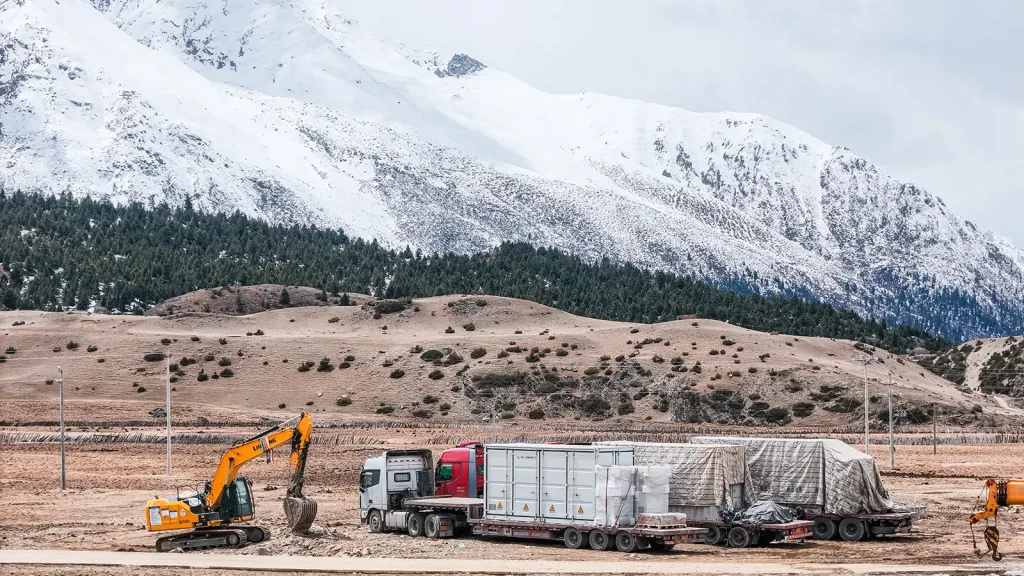
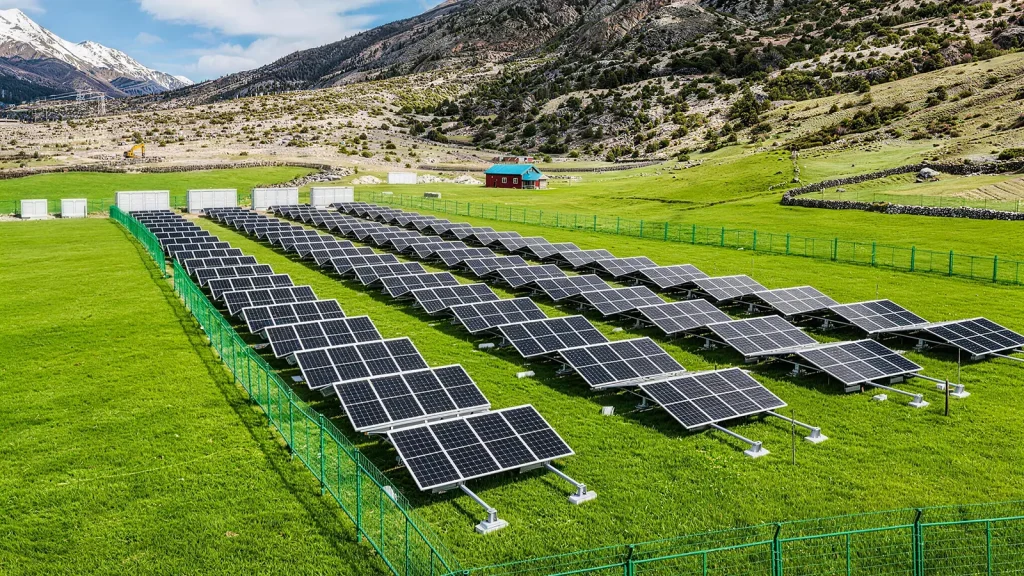
HighJoule deployed custom, wide-temperature LiFePO4 containers to support a high-altitude microgrid at 4,500 meters. Standard power electronics face automatic derating due to the thin atmosphere, and conventional lithium cells refuse to charge below 0°C.
By integrating internal thermal insulation, pre-heating circuits, and custom-mapped altitude inverters, this unit achieved full deployment within 4 hours, operating continuously down to -30°C.
3.2 Xinjiang Desert: 90 kWp Bifacial Hybrid System
A mobile rapid-response configuration consisting of two 10-foot containers was deployed for emergency desert operations. The system paired a 54 kWp main array with 36 kWp of bifacial wing panels, feeding a 241 kWh battery bank.
Setup took 30 minutes from arrival to power-on. The bifacial panels leverage the high ground reflectivity (albedo) of sand and gravel, boosting total energy yield by 11% without increasing the container’s transit footprint.
3.3 Romania: 1.075 MWh Multi-Unit Microgrid
To support emergency power leasing and rapid off-grid logistics, we delivered four 10-foot folding containers (4 × 46 kW) linked to five 100kW/215kWh grid-connected storage cabinets.
[4 x 10ft Containers] –> [5 x Storage Cabinets] –> Shared Microgrid Bus (1.075 MWh)
By shifting the engineering, testing, and certification entirely to our factory floor, the complete microgrid was built, shipped, and commissioned within 40 days from contract signing—saving months of traditional civil works and on-site integration.
3.4 United States: 8kW / 20kWh Modular Command Pods
For tactical operations, forward command centers, and remote field clinics, massive containers are often unsuited for tight clearings or light transport vehicle limits. Our 8-foot compact pod scales down the technology, providing 23.2% efficient panels and an IP66 enclosure that can be slung under a medium-lift helicopter or towed on a standard utility trailer.
4. Engineering Specifications: The HJ-FBESS Fleet
| Model | Container Size | PV Capacity | Storage Capacity | Inverter Power | PV Module Spec | Typical Application |
| HJ-08G-P018E030 | 8 ft | 18 kWp | 30 kWh | 15 kW | 430 Wp | Remote command trailers, tactical field clinics |
| HJ-10G-P024E040 | 10 ft | 24 kWp | 40 kWh | 20 kW | 500 Wp | Telecom hubs, emergency offices, rapid response |
| HJ-20G-P057E241 | 20 ft | 57 kWp | 241 kWh | 50 kW + 100 kW PCS | 500 Wp | Field hospitals, water purification stations |
| HJ-20H-P068E241 | 20 ft High Cube | 68 kWp | 241 kWh | 60 kW + 100 kW PCS | 600 Wp | Multi-agency disaster coordination centers |
| HJ-40G-P114E482 | 40 ft | 114 kWp | 482 kWh | 50 kW × 2 + 200 kW PCS | 500 Wp | Multi-building field microgrids, refugee base power |
| HJ-40H-P136E482 | 40 ft High Cube | 136 kWp | 482 kWh | 60 kW × 2 + 200 kW PCS | 600 Wp | Regional emergency hubs, high-capacity human relief |
5. Overlooked Realities of Disaster-Zone Operations
On paper, solar is simple. In a disaster zone, operational realities require robust contingency engineering.
-
Managing Extended Cloud Cover: A system rated for 57 kWp will see its output drop during heavy monsoons or smoke cover. The HJ-FBESS addresses this through its smart EMS load-shedding hierarchy. Furthermore, the integrated Power Conversion System (PCS) includes a hardwired auxiliary port that accepts legacy diesel generators, allowing operators to run a generator at its maximum efficiency sweet spot solely to fast-charge the DC battery bus at up to 140A.
-
Mitigating Idle Degradation: Disaster response assets often sit in storage warehouses for 10 months out of the year. Unmanaged lithium batteries self-discharge, and internal seals dry out. HighJoule’s firmware includes an automated “Storage Maintenance Mode.” The system wakes up at scheduled intervals, performs a self-diagnostic, uses the panels to top off the cells, and pings status updates back via satellite.
-
Physical Asset Security: High-value hardware can attract theft in active crisis zones. The HJ-FBESS features GPS geofencing alerts linked to the satellite uplink. If the container moves outside its authorized perimeter, silent alarms trigger immediately. Structurally, the IP55 steel shell features concealed internal locking rods to prevent tampering.
6. Procurement Planning Checklist
Before selecting a container configuration, verify these parameters in your operational design:
-
Load Profile Audit: Calculate continuous wattage plus inductive surge spikes (pumps, motors). Add a minimum 20% safety headroom to the inverter spec.
-
Autonomy Target: Determine the minimum number of consecutive zero-sunlight days the site must survive purely on battery power.
-
Logistics Constraints: Confirm transport methods. Standard ISO dimensions handle ship, rail, and highway flatbeds; use 8ft or 10ft units if deployment requires helicopter airlifts.
-
Environmental Mapping: Match the build to the climate—specify marine-grade anti-corrosion for coastal tropics, sand-ingress filtration for arid regions, or pre-heating kits for freezing zones.
-
Regulatory Compliance: Verify that your local jurisdiction requires UL 9540A, NFPA 855, or specific CE certifications for rapid grid injection.
Spec Your Deployment Infrastructure
Every crisis deployment presents unique logistics, electrical, and environmental constraints. HighJoule’s application engineering team provides custom load modeling, structural configurations, and thermal adjustments to match your specific operational mandate.
To review current engineering schematics or schedule a technical review, visit solarcontainerkit.com/products or contact our engineering desk directly at solarcontainerkit.com/contact-us.
About HighJoule Group
Shanghai HighJoule Energy Technologies Ltd. designs and manufactures industrial, containerized solar-plus-storage platforms for emergency response, off-grid infrastructure, and remote industrial operations. By consolidating advanced TOPCon PV arrays, active liquid-cooled storage, and high-efficiency DC-coupled power management into standardized mobile units, we eliminate on-site civil and electrical engineering. All systems are certified to UL 9540A, NFPA 855, ISO 9001, UN38.3, and CE standards, with active deployments across three continents.
Technical Disclaimer: Specifications outlined herein reflect engineering and product documentation valid as of May 2026 and are subject to engineering updates. Custom mechanical or electrical integration may alter standard model performance profiles. This documentation is for informational engineering evaluation and does not constitute formal procurement advice for any individual agency or tactical program. Certified specifications can be requested via solarcontainerkit.com/contact-us.
Last Updated on 05/18/2026