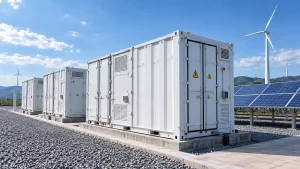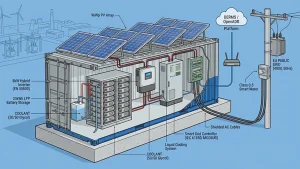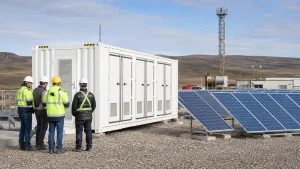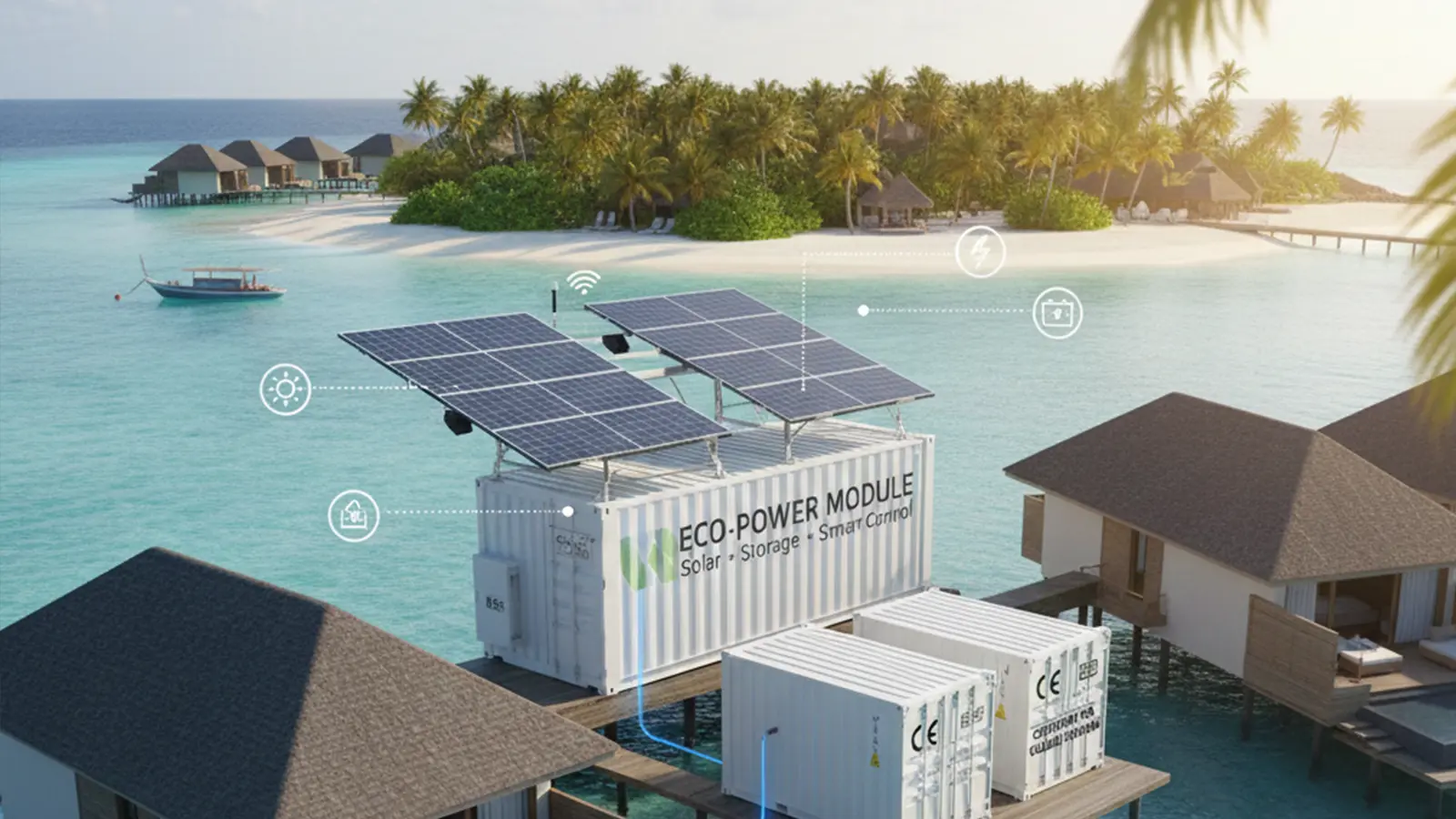
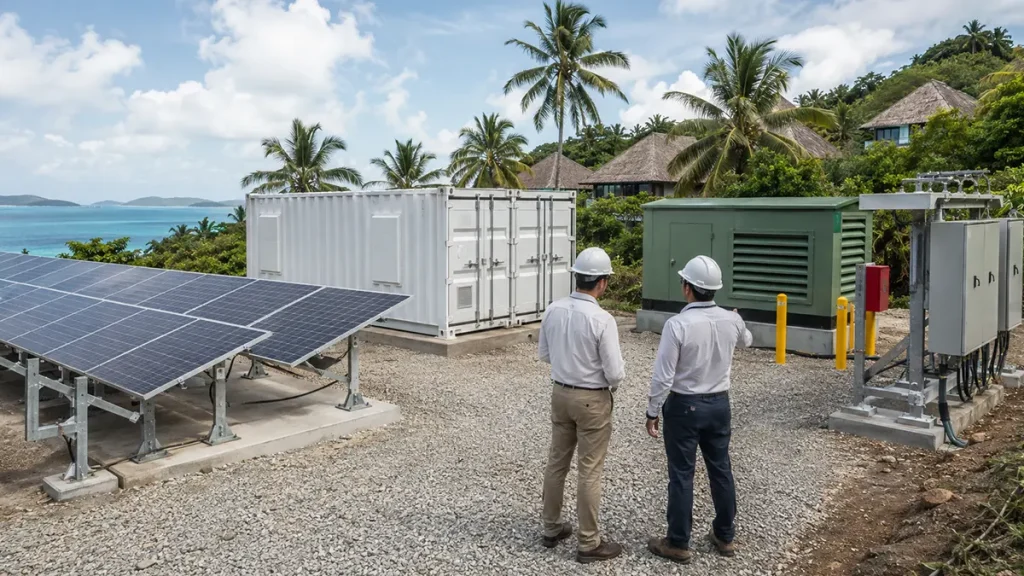
A containerized solar and energy-storage system can be worth evaluating for a resort, glamping site, island property, or remote hospitality development when sustained load, delivered-fuel exposure, usable solar resource, available deployment area, and an agreed backup strategy support the case. It is not automatically the right answer because a destination is described as “eco.” A short seasonal operation, a highly variable load, limited usable solar area, a difficult route, or an unresolved critical-load requirement can make diesel or a diesel-led hybrid the more practical starting point.
Start by defining the service the energy system must provide: guest rooms, kitchens, refrigeration, water treatment, communications, lighting, pumps, cooling, staff areas, events, and emergency loads do not share the same operating patterns or outage consequences. The selected architecture must meet the agreed service boundary, not merely reduce a generator’s nameplate hours.
This page addresses the earlier suitability question: what must be known before a resort or remote destination asks suppliers to price diesel-only, solar-storage, or hybrid alternatives.

First, decide what the destination is actually trying to protect
Some hospitality sites primarily need quiet nighttime power for guest accommodation. Others have a daytime-driven load from kitchens, laundry, water treatment, pools, workshops, or construction activity. An island site may have a grid connection that is unreliable rather than absent. A seasonal camp may need a removable system that is de-energized or relocated between operating periods. These are different engineering and commercial problems.
Do not treat guest experience, environmental positioning, and electrical resilience as interchangeable claims. A power system may contribute to an operating plan, but whether it changes guest ratings, permits, branding, revenue, or certification depends on the local project, the operator, the authority, and the evidence available. Put those outcomes in the owner’s business case; keep the equipment comparison focused on defined energy service and project interfaces.
Use this eco-destination operating-profile screen
Complete this screen before requesting a proposal. A blank or estimated input is not a reason to insert a generic number. Mark it as open and assign an owner to close it.
| Operating question | Why it changes the architecture | Evidence to collect | What remains open until confirmed |
|---|---|---|---|
| What is the load by hour and season? | Accommodation, kitchen, cooling, water, laundry, and event loads can peak at different times. A seasonal average can hide the actual power and energy duty. | Fifteen-minute or hourly meter data where available; equipment schedule; occupancy calendar; planned expansion. | PV, battery, generator, and distribution sizing. |
| Which loads are critical? | Medical refrigeration, communications, water treatment, fire and life-safety systems, or guest-security loads may need a different continuity plan from discretionary loads. | Owner-approved critical-load list, one-line diagram, and allowable outage duration. | Battery reserve, generator-start logic, and manual load-shedding responsibility. |
| How is diesel actually delivered? | A depot price is not the delivered project cost. Marine transfers, island storage, weather disruption, route access, and site handling can be the controlling commercial variables. | Delivered-fuel quotation, route plan, storage arrangement, supply contingency, tax basis, and fuel-risk owner. | Fuel allowance, operating contingency, and residual-diesel model. |
| When is quiet operation needed? | Nighttime guest use, events, wildlife-sensitive periods, and staff operations may require different operating modes and backup assumptions. | Operating timetable, event calendar, site layout, local requirements, and owner operating policy. | Which loads remain powered, curtailed, or transferred during quiet periods. |
| What solar resource and deployment area are usable? | Resource, shading, surface conditions, seasonal weather, panel deployment geometry, and maintenance access determine usable production rather than a marketing estimate. | Coordinates, site survey, shading review, layout, wind and weather basis, and access plan. | PV layout, seasonal contribution, and generator backup requirement. |
| Who can maintain the system? | Remote travel time, available skills, spare-parts route, communications, and response responsibility affect service scope and the risk held by the operator. | Operations plan, maintenance scope, local contractor availability, spares strategy, and escalation contacts. | Service budget, intervention time, and responsibility after an alarm or fault. |
| What is the site and logistics boundary? | A container does not eliminate route, lifting, foundation, drainage, cable, maintenance-access, coastal-exposure, permitting, or acceptance work. | Route and lifting plan, site layout, civil scope, electrical interface register, and project approval path. | Delivered scope, site cost, schedule, and acceptance responsibilities. |
This is an operating-profile screen, not an energy model. Its purpose is to reveal which inputs are controlled, which are assumptions, and which party owns each remaining decision before a supplier turns them into a proposal.
Choose the architecture by constraint, not by destination label
| Architecture path | May be a practical starting point when | Must be demonstrated before selection | Conditions that can reverse the decision |
|---|---|---|---|
| Diesel-only | The site has a short or intermittent operating period, a credible fuel and maintenance plan, and a load that does not justify higher initial capital or a more complex system interface. | Generator duty rating, operating load, delivered-fuel basis, storage, service schedule, backup plan, and end-of-life responsibility. | High delivered-fuel exposure, frequent service travel, a sustained load, or operating constraints that make generator runtime the dominant project risk. |
| Diesel-led hybrid | The property needs conventional backup confidence, but PV and storage may reduce selected generator runtime or protect defined critical loads. | Generator-start logic, residual-diesel model, battery reserve, dispatch strategy, load priorities, transition behavior, and the responsible controls party. | Unmodeled critical loads, insufficient PV area, weak maintenance coverage, or an assumption that the generator can be removed without an agreed operating basis. |
| Solar-storage-led hybrid | The project has sustained, modeled loads; a verified solar and site basis; a credible maintenance plan; and an owner willing to manage a higher initial equipment and interface scope. | Seasonal energy model, storage operating window, critical-load plan, backup-generation policy, site works, transport, electrical integration, and acceptance path. | Long low-solar periods, a load profile that does not align with usable generation, restricted deployment area, or a continuity requirement that exceeds the agreed reserve and backup plan. |
There is no universal “solar-only” outcome. A hybrid system may be the right operating architecture precisely because it makes backup generation explicit rather than assuming that a battery can cover every weather, occupancy, maintenance, and event condition. Conversely, diesel-only should be tested against its full fuel, service, logistics, and outage-risk boundary rather than its purchase price alone.
Separate energy equipment from the resort project
A destination project often has more interfaces than its first equipment quotation shows. The supplier may provide a defined containerized equipment scope, while the owner or EPC retains responsibility for access, foundations, drainage, cables, distribution upgrades, fuel infrastructure, local design, approvals, installation coordination, commissioning, and operational acceptance. Those responsibilities must be allocated in an interface register; they cannot be inferred from a product brochure.
For coastal, island, mountain, or protected-area locations, identify the applicable authority and project conditions early. Local environmental permissions, land-use restrictions, building rules, electrical requirements, fire-service expectations, marine logistics, weather exposure, and insurance conditions vary by jurisdiction and site. A containerized system, CE marking, a factory test, or a published case is not a substitute for project-specific approval.
Use published cases as configuration context, not a promise
HighJoule’s published Maldives project describes a 135 kW / 261 kWh liquid-cooled energy-storage system in a beach-tourism area, with grid-connected and off-grid operating modes stated on the case page. It is relevant configuration context for a tourism-adjacent power problem. It does not establish a comparable site’s cost, savings, operating hours, fuel reduction, approval path, guest outcome, or system suitability.
Our published USA 8 kW / 20 kWh solar-container case records a 20-foot modular configuration with 9 kWp PV, 20 kWh storage, and 8 kW system power; the case page lists scenic-area boutique lodging and eco-tourism among possible applications. That is not evidence that every resort should use that configuration, nor that it will meet another site’s service, weather, logistics, or commercial requirements.
Turn the operating profile into a comparable request
Ask every shortlisted supplier to respond to the same input pack. The pack should name the location, operating season, 15-minute or hourly load profile, peak load, critical loads, required autonomy, existing generator data, delivered-fuel basis, solar deployment area, site access, environmental exposure, required delivery rule and named place, electrical point of connection, site-work boundary, and acceptance responsibilities.
Then request three things that are frequently omitted: a residual-diesel model, an exclusions list, and an operating-mode description. The residual-diesel model should state which loads, seasons, generator conditions, fuel assumptions, and battery reserve assumptions it uses. The exclusions list should distinguish equipment scope from civil, electrical, logistics, installation, permitting, and service scope. The operating-mode description should explain how the system behaves during normal solar operation, peak load, low solar, generator start, maintenance, and a critical-load event.
For the cost boundary, use the TCO comparison ledger and then use our solar container ROI calculator with the actual location and load profile. The calculator is a preliminary estimate tool, not a project quotation, engineering design, savings guarantee, or substitute for the project interface and acceptance review.
When to pause instead of selecting a system
Pause the selection when the seasonal load is unknown, the final deployment area has not been surveyed, the delivered-fuel cost is assumed, the existing generator duty is unclear, key loads have not been prioritized, or responsibility for site works and approvals is unassigned. A supplier can still provide a budget range or concept response, but open inputs should remain visible as allowances, contingencies, exclusions, or owner decisions.
A containerized solar system can be a strong route for the right eco-destination project. It should be selected because the controlled project basis supports it—not because a brochure promises silent luxury, automatic approval, fuel independence, or a universal commercial outcome. For the equipment and solution context, review our eco-destination energy solution and our solar-container and diesel-generator integration guide.
Headquartered in Shanghai, HighJoule manufactures containerized solar and energy-storage systems through production facilities in Jiangsu Province. We can provide controlled configuration and interface information for an agreed equipment scope. Final site design, approvals, fuel arrangements, installation, commissioning, and acceptance must be assigned in the project contract and procedures.
Request an Eco-Destination Power Assumption Review
Last Updated on 08/10/2026