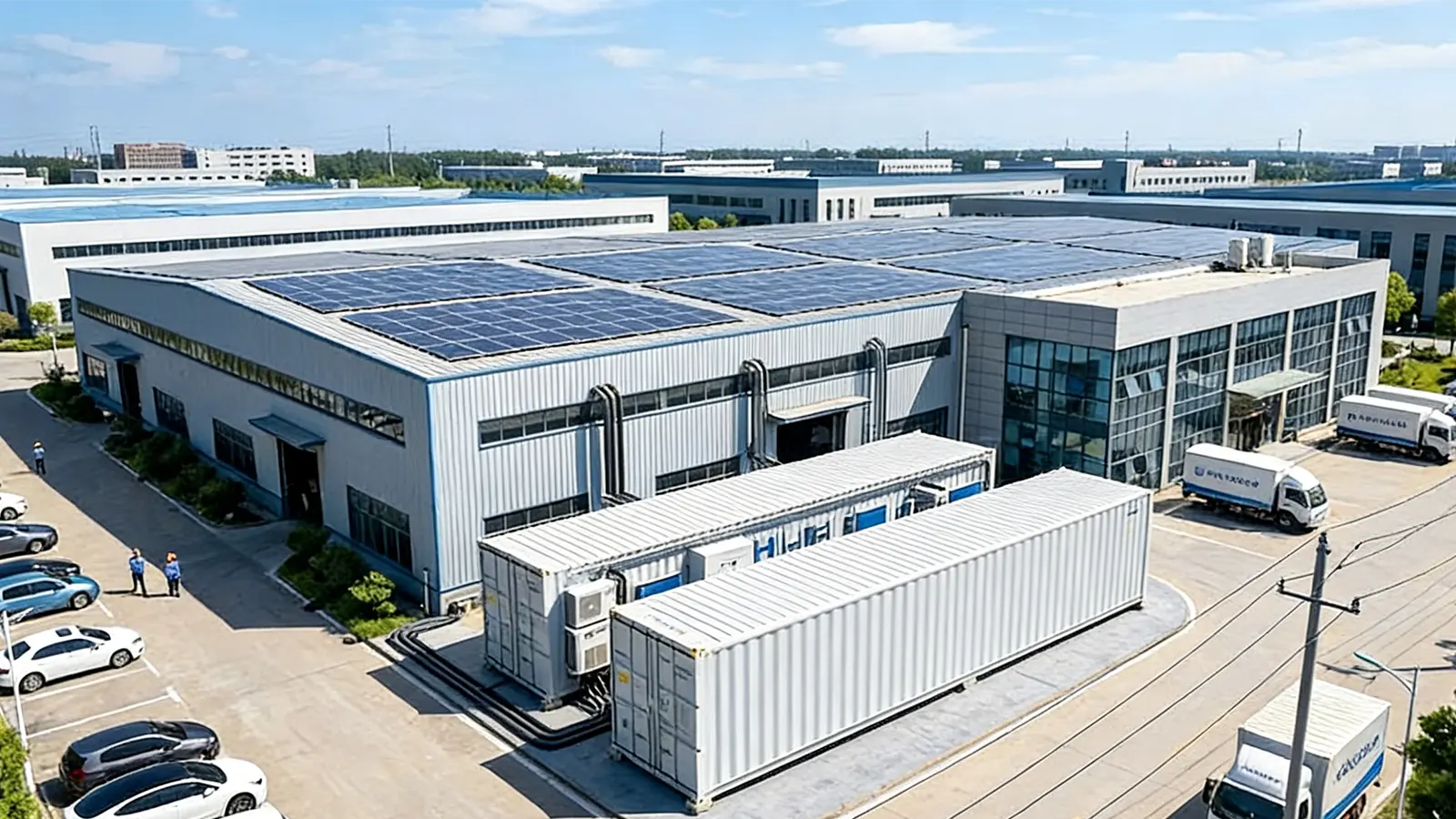
Let’s be honest. When I’m sitting across from a factory owner talking about dropping a 20-foot shipping container full of batteries on their lot, the conversation usually starts with “sustainability.” They talk about carbon footprints and ESG goals because it’s the corporate thing to do.
But we all know what’s actually keeping that owner or the CFO up at night.
It’s the sheer volatility of the energy market. It’s those brutal demand charges on the monthly bill, and the quiet terror that a 50-millisecond voltage drop on the grid will freeze a production line and waste eight hours of labor.
At HighJoule, we’ve mostly stopped pitching “saving the planet” as the lead. The real story—the one that actually gets the POs signed—is about financial resilience. If you’re crunching the numbers on the ROI of industrial solar energy storage containers, you aren’t just buying hardware; you’re buying a hedge against a grid that’s becoming increasingly unreliable and expensive.
The Value Streams (Beyond the Surface)
You don’t drop half a million dollars on a container just to feel good. You do it because the math forces your hand. In our experience, the return comes from three specific angles:
1. Killing the “Peak” (Demand Charge Management)
In many industrial zones, up to 70% of your bill isn’t about how much energy you use—it’s about your Peak Demand. That one fifteen-minute window when you ramp up heavy machinery sets your rate for the entire month.
Our strategy is “Peak Shaving.” The storage container “watches” your meter in real-time. When it senses a spike, it kicks in instantly, feeding stored power so you don’t pull those expensive kilowatts from the utility.
Case: We recently worked with a food processor in Texas. After six months, they cut their monthly demand charges by 41%. That’s $5,000 back in their pocket every single month.
2. The High Cost of “Darkness”
An outage in an office building is a coffee break. An outage in a plastic injection molding plant is a disaster.
I was at a meat processing plant in Bavaria last autumn. A 4-hour unplanned outage there costs roughly €500,000 in spoiled product and “re-sanitization” downtime—not to mention the risk of ammonia leaks if cooling systems fail. They installed a 3MWh container primarily as a UPS. They’ve already avoided two major brownouts this year. For them, ROI isn’t a line item; it’s business survival.
3. Playing the “Incentive” Game
If you aren’t factoring “government coupons” into your ROI calculation, your spreadsheets are basically fiction.
-
In the U.S.: The Inflation Reduction Act (IRA) is a game-changer. Between the ITC and various “adders,” you can often wipe out 30% to 50% of the project cost. Look, the paperwork is a nightmare—seriously, get a good consultant—but the money is real.
-
In the EU: Programs like REPowerEU offer massive grants, sometimes covering up to €500 per kWh of capacity.
Real-World Sector Breakdown
Most systems we deploy hit full “payback” in about 3 to 5 years.
| Industry | Primary ROI Driver | Est. Payback | 15-Year Value (Est.) |
| Mining / Remote | Diesel displacement | < 2 Years | $2.5M+ in fuel savings |
| Agriculture | Spoilage prevention | 2-3 Years | Total revenue protection |
| Manufacturing | Demand charge cutting | 4-5 Years | Consistent OpEx margins |
Note: Averages from HighJoule projects. Local utility rates and “Time of Use” (ToU) pricing will shift these numbers.
How to Calculate Your Specific Return
If you want to do some “napkin math” before calling us, here is the standard formula we use for initial assessments:

Pro Tip: Don’t let a vendor tell you O&M is zero. It’s low (HVAC filters, software subs), but it’s there. Factor in about 1% of the system cost annually. Ignoring this is how people get burned later.
What Actually Dictates Long-Term Value?
To make sure your investment doesn’t become a “brick” in year seven, look for these three:
-
LFP is Non-Negotiable: We only use Lithium Iron Phosphate. It’s safer, handles 8,000+ cycles, and doesn’t have the thermal runaway risks of NMC batteries.
-
Modular “Block” Design: Your factory might expand; your battery should too. Avoid monolithic “all-in-one” units that can’t be scaled.
-
The “Brain” (EMS): A container is just a box of chemicals. The ROI is driven by the Energy Management System. Our AI-driven software tracks weather and grid pricing to decide exactly when to charge/discharge. Without it, you’re leaving 30% of your savings on the table.
Is it Worth It?
Solar storage is no longer a luxury; it’s a hedge. With battery costs having plummeted nearly 90% over the last decade, the math has finally caught up to the tech.
The biggest mistake I see? Waiting. Every month you spend “thinking about it” is another month of peak charges you’ll never get back.
Want to see the real numbers for your site?
[Click here to use our Interactive ROI Calculator] — it takes about 2 minutes and uses actual utility data. Or, just give us a call. Let’s look at your bill together.
Last Updated on 05/28/2026