In mineral processing, operational efficiency has long centered on mechanical metrics—optimizing feed size for crushing precision, achieving targeted fineness for downstream separation, and maximizing throughput to boost output. Equipment manufacturers have pushed the boundaries of grinding mills and cone crushers, but remote mining operations in Sub-Saharan Africa, Central Asia, or remote Australia face a critical bottleneck: unreliable, costly power supply. Diesel-dependent grids often erase mechanical gains, inflating Total Cost of Ownership (TCO) and derailing sustainability goals.
By 2026, diesel-only power is no longer a viable long-term strategy. HighJoule’s Solar Container Kits—integrated hybrid power solutions combining solar, battery storage, and AI control—are redefining energy economics for remote processing circuits. These modular, plug-and-play systems stabilize power, cut fuel costs by up to 40%, and align with ESG mandates, delivering unmatched value for miners prioritizing profitability, resilience, and compliance. This guide explains why hybrid power is non-negotiable for modern remote mining, how HighJoule’s technology solves critical power challenges, and the tangible TCO and operational benefits backed by real-world deployments.
The Hidden Cost of Diesel-Only Power for Remote Processing
Remote mineral processing plants rely on heavy-duty equipment—vertical grinding mills, primary jaw crushers, and high-capacity conveyors—that demand massive starting torque and consistent power quality. Yet, 78% of new remote mining projects (per IEEE Power and Energy Society, 2025) depend on diesel generators, a choice that creates a cascade of inefficiencies and hidden costs.
The Inrush Current Crisis: Oversized Generators, Wasted Resources
The core challenge is inrush current—the instantaneous power surge (up to 3x the running load) required to start grinding mills and crushers. A typical 600 kVA processing load may demand 1,800 kVA during startup, forcing operators to deploy 1,000 kVA generators just to avoid blackouts. This oversizing leads to:
- Low-load inefficiency: Generators running at 30–40% capacity consume 25–40% more fuel per kWh than at optimal 60–70% load.
- Accelerated wear: Carbon buildup from low-load operation cuts generator lifespan by 30%, adding $350,000 in annual maintenance costs for mid-sized mines.
- Power quality failures: Voltage fluctuations and harmonics damage Variable Frequency Drives (VFDs) and sensors, increasing equipment failure rates by 17% and reducing grinding efficiency by 8–12%.
Logistical Volatility and ESG Risks
Diesel dependency amplifies operational risks in remote regions:
- Supply chain delays: Fuel convoys face 7–14 day holdups due to weather, poor infrastructure, or geopolitical instability, causing downtime that costs 250,000–500,000 per day.
- Price unpredictability: African diesel prices fluctuated 63% between 2023–2026, adding $3–5 million in unplanned annual costs for 10,000-ton-per-day operations.
- ESG non-compliance: Diesel generators account for 40–85% of Scope 1 emissions, risking regulatory penalties, lost investor funding, and damaged community trust.
For a mid-sized copper mine, these inefficiencies translate to $5.87 million in annual power-related costs—a figure HighJoule’s hybrid systems cut by 50% or more.
HighJoule Solar Container Kits: The Hybrid Power Solution
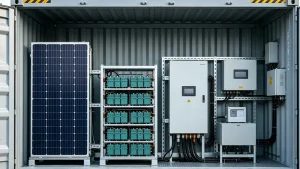
Tier-1 mining contractors are now adopting decentralized energy buffers: HighJoule’s Solar Container Kits—turnkey units integrating high-efficiency solar panels, liquid-cooled Battery Energy Storage Systems (BESS), and AI-driven energy management. These systems decouple mechanical load demand from generator output, stabilizing power and unlocking massive TCO savings.
Core Technology Engineered for Extreme Mining Environments
HighJoule’s kits are built to withstand remote mining’s harshest conditions (-30°C to 50°C, dust, vibration) with three industry-leading technologies:
- N-Type TOPCon Solar Panels: 23.2%+ module efficiency (per HighJoule’s USA deployment data) with bifacial design, capturing reflected sunlight to add 5–32% energy gain. Even at 50°C ambient temperature, panels maintain 92% of rated output—critical for desert and tropical mining regions.
- Smart Liquid-Cooled BESS: LiFePO4 batteries with active thermal management stay within 20–25°C, delivering 6,000+ cycles (10-year lifespan) vs. 2,000 cycles for air-cooled systems. This cuts battery replacement costs by $2.3 million over a project’s lifetime.
- AI Microgrid Controller: Satellite-linked and predictive, the controller forecasts load spikes (e.g., mill startups, feed hardness surges) and discharges BESS to cover inrush demand. Generators run at constant optimal load, eliminating low-load waste and voltage fluctuations.
Peak Shaving: The Key to TCO Reduction
The most impactful feature is peak shaving—using BESS to absorb short-term demand spikes, allowing generators to operate efficiently. For processing circuits:
- Eliminates generator oversizing: A 600 kVA mill load no longer needs a 1,000 kVA generator; HighJoule’s kits cover 100% of inrush demand.
- 40% fuel cost reduction: Generators run at 60–70% capacity, slashing annual diesel consumption by 3.8 million liters for mid-sized mines.
- 80% less downtime: Voltage stability (±2% fluctuation) protects VFDs and sensors, cutting power-related outages from 80 to 16 hours annually.
Modular Agility for Modern Mining Operations
Modern mineral processing plants are modular—designed for rapid deployment, minimal civil work, and easy relocation as mines expand or deplete. HighJoule’s Solar Container Kits mirror this agility, making them the perfect power counterpart.
Rapid Deployment & Mobility
Traditional solar farms require 6–12 months for commissioning—impractical for 5-year mine lifespans. HighJoule’s kits:
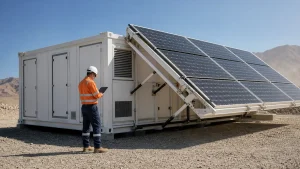
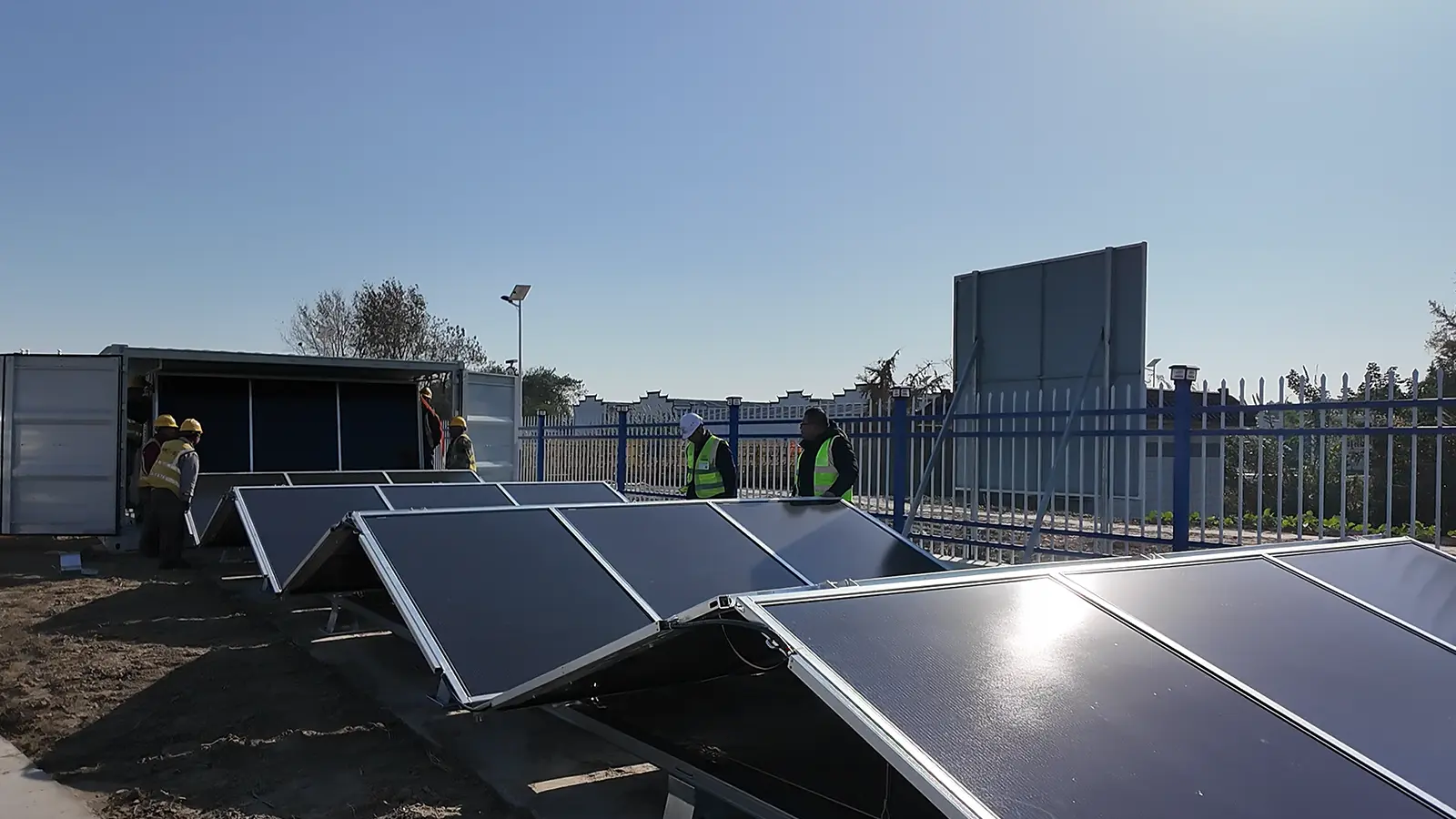
- Deploy in days: Pre-wired, pre-tested ISO containers (10ft/20ft options) are operational in 3–7 days with a 2-person team, no concrete foundations needed. The Xinjiang, China deployment achieved full operation in 30 minutes for emergency power.
- Fully relocatable: When processing lines move to new ore zones, containers relocate with them—avoiding $1.2 million in stranded infrastructure costs (as seen in the Romanian mining project).
- Scalable: Start with a single 8kW/20kWh unit (like HighJoule’s USA remote command center deployment) and scale to 1MW+ as throughput grows.
Real-World Mining Success Stories
HighJoule’s kits have proven results across global mining sites:
- Romania: 4×46kW PV + 1.075MWh BESS deployed for grinding circuits—60% diesel reduction, 80% downtime cut, commissioned in 40 days.
- Xinjiang, China: 54kWp + 36kWp bifacial PV + 241kWh BESS for emergency mining power—-30°C to 50°C operation, 30-minute deployment, IP65 rating for dust/water resistance.
- Sub-Saharan Africa: 500kW system powering a gold mine—40% fuel savings, 35% Scope 1 emissions reduction, $2.8 million annual TCO savings.
ESG Compliance: From Burden to Competitive Advantage
By 2026, ESG compliance is mandatory for securing financing, permits, and social license to operate. HighJoule’s hybrid grids turn ESG from a cost center into a value driver.
Carbon Emission Reductions
A 500kW HighJoule system offsets 800 tons of CO₂ annually—equivalent to removing 174 diesel trucks from roads. These reductions:
- Align with Paris Agreement 1.5°C targets.
- Generate $15–30 per ton in carbon credit revenue.
- Lower project loan costs by 200 basis points (per ESG financing data, 2026).
Operational Resilience & Social Value
Beyond emissions, HighJoule’s kits enhance resilience and community relations:
- Fewer fuel convoys: Reduces supply chain risks and road accidents in rural areas, improving community trust.
- Quiet, clean operations: Zero generator noise and no diesel spills—improving worker safety and minimizing environmental impact on local ecosystems.
- Biodiversity support: Minimal site disturbance (no concrete) preserves habitats, aiding biodiversity certifications.
TCO Analysis: HighJoule vs. Diesel-Only Power
The financial case for HighJoule’s Solar Container Kits is unambiguous. Below is a TCO comparison for a 10,000-ton-per-day copper mine in Central Asia with a 600 kVA processing load:
| Cost Component | Diesel-Only (Annual) | HighJoule Hybrid (Annual) | Annual Savings |
| Diesel Consumption | 1.2M liters ($2.16M) | 720K liters ($1.296M) | $864K (40%) |
| Generator Maintenance | $350K | $420K | -$70K |
| Power-Related Downtime | $3.36M (80hrs) | $672K (16hrs) | $2.688M (80%) |
| Total Annual Cost | $5.87M | $2.388M | $3.482M |
- HighJoule Capital Cost: $1.8M for 500kW/1MWh system.
- ROI Period: 19.3 months (51.7% annual return).
- 10-Year Savings: $34.8M (excluding carbon credits and extended equipment lifespan).
Conclusion: The Future of Remote Mining Is Hybrid
In 2026, optimizing grinding and crushing circuits requires mastering Power-to-Mill Synergy—and HighJoule’s Solar Container Kits are the cornerstone. Diesel-only grids inflate TCO, cause costly downtime, and block ESG progress. HighJoule’s hybrid solution delivers:
- 40%+ fuel cost reductionvia peak shaving and optimal generator loading.
- 80% less power-related downtimefrom stable, high-quality power.
- Rapid, mobile deploymentmatching modular processing plants.
- 40–60% carbon cutsfor ESG compliance and investor confidence.
For remote miners, HighJoule’s Solar Container Kits are not just a “green” option—they are the key to unlocking unmatched profitability, resilience, and sustainability. Backed by proven technology, global deployments, and transparent TCO savings, HighJoule is redefining what’s possible for remote mining power.
Ready to eliminate diesel inefficiencies and cut your processing circuit TCO? Get a Custom ROI analysis (tailored to your site’s load profile, climate, and operational goals) or explore HighJoule’s Solar Container Kit options today.
Last Updated on 05/08/2026