The solar shipping container is a modular, scalable power plant. As global energy prices fluctuate, businesses in Africa, Europe, and Southeast Asia are turning to these units to achieve energy independence.
I. Pricing Architecture: Retail vs. B2B Factory
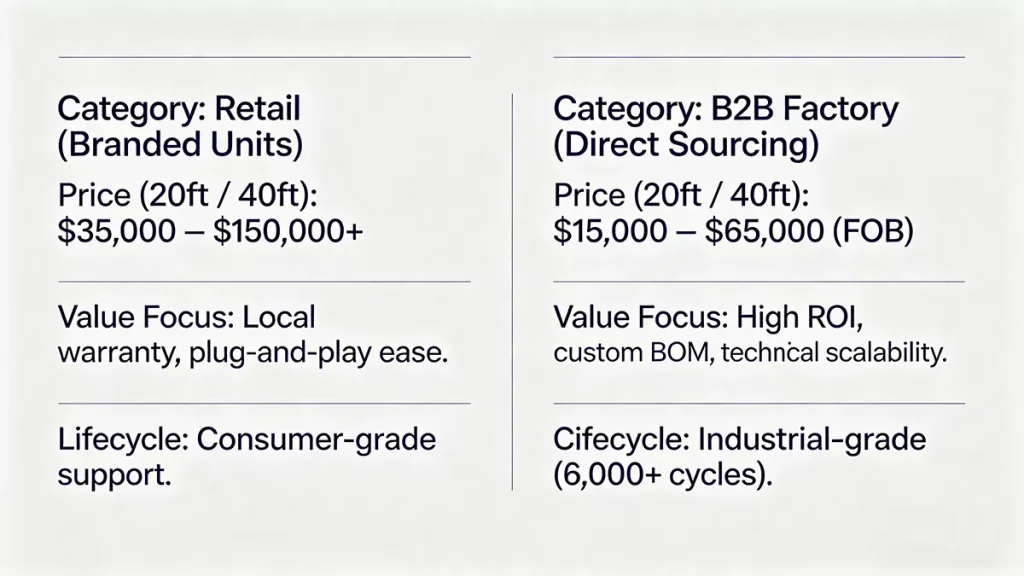
| Category | Retail (Branded Units) | B2B Factory (Direct Sourcing) |
|---|---|---|
| Estimated Price (20ft / 40ft) | $35,000 – $150,000+ | $15,000 – $65,000 (FOB) |
| Value Focus | Local warranty, plug-and-play ease. | High ROI, custom BOM, technical scalability. |
| Lifecycle | Consumer-grade support. | Industrial-grade (6,000+ cycles). |
II. Three Critical Industry Solutions
1. The “Diesel-Killer” (Industrial BESS)
Targeted at regions with high fuel costs, this solution replaces traditional diesel generators.
- Core Logic: Shift from high OPEX (fuel/maintenance) to fixed CAPEX.
- Key Specs: 10kVA – 50kVA Hybrid inverters with massive LiFePO4 racks.
- B2B Advantage: Integration of Auto-Generator Start (AGS) for seamless backup management.
2. The “Agri-Hub” (Solar Irrigation & Cold Chain)
Designed for rural farming cooperatives and agricultural export zones.
- Core Logic: Combines high-voltage DC power for solar water pumps with climate-controlled storage.
- Technical Detail: Features dual-compartment design with PIR insulation for cold room functionality.
- ROI Factor: Reduces post-harvest loss while providing zero-cost water pumping.
3. The “Mobile Office & Microgrid”
Ideal for mining sites, construction projects, and remote communication base stations.
- Core Logic: Focus on UPS-level stability and thermal management.
- Technical Detail: Industrial HVAC (Mini-split) to maintain battery temperature at 25°C.
- Customization: Fitted with windows, workstations, and high-gain antenna mounts.
III. Strategic Sourcing: Why “Factory Direct” Wins
For professional buyers, sourcing directly from industrial manufacturers offers several advantages:
- BOM Control: Buyers choose specific cell chemistry (e.g., Tier-1 LFP cells) rather than standard retail packs.
- Logistics Optimization: Standard ISO dimensions allow for SOC (Shipper Owned Container) shipping, reducing long-term freight costs.
- Technical Transparency: Direct access to engineering teams for site-specific load calculations.
IV. Conclusion
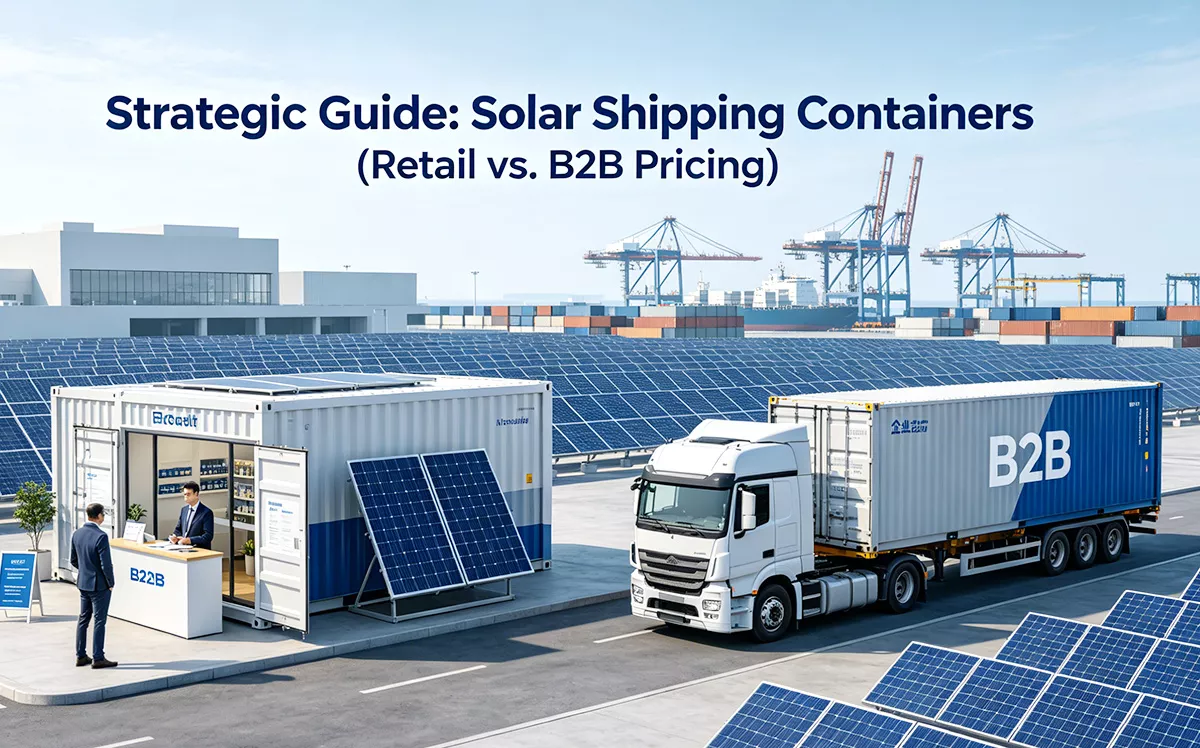
Choosing between retail and factory pricing depends on project scale. Retail units offer immediate reliability for individual end-users, while the B2B factory model provides the margins and technical flexibility necessary for industrial deployments and diesel replacement programs.
Last Updated on 05/06/2026