If you’ve been in the renewable energy distribution game as long as I have, you’ve seen trends come and go like the tide. But walking through the recent clean energy expos in Dubai and Singapore, one thing felt fundamentally different this year.
It wasn’t just about who could squeeze another 0.5% efficiency out of a PERC cell; it was about solving the absolute logistics nightmare of off-grid power.
I was grabbing a coffee with a distributor from Papua New Guinea last month who looked visibly burnt out. He told me:
“I’m spending 40% of my time playing technician—trying to get Brand A’s inverter to stop fighting with Brand B’s BMS, and then praying the whole thing doesn’t trip when the humidity hits 90%.”
This is where the conversation around solar container kits for international distributors shifts from a marketing buzzword to a genuine survival strategy. In markets where technical support is a six-hour flight away, reliability isn’t just a feature—it’s the whole business.
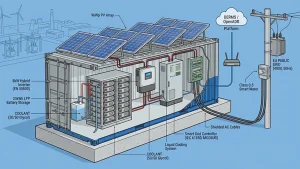
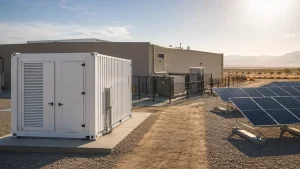
It’s Not Just a Box (It’s a Factory-Integrated Microgrid)
Let’s be real: anyone can throw panels and batteries into a 20ft shipping container and call it a “solution.” But as a distributor, you’re the one who gets the midnight phone call when it fails.
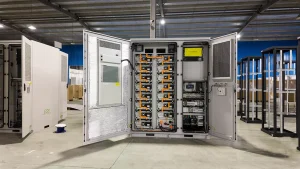
When we talk about high-end kits at HighJoule, we’re talking about a system that’s been stress-tested as a single unit before it ever hits a crane. In my experience, the hardware is secondary to the integration.
1. The LFP vs. NMC Debate
This is a hill I will die on. I’ve seen too many “budget-friendly” projects in Southeast Asia literally go up in smoke because someone tried to use NMC batteries. In high-heat environments, LFP (Lithium Iron Phosphate) is the only sane choice for safety. If a supplier tries to sell you NMC for a tropical off-grid site? Walk away.
2. Active Cooling vs. “Hope”
A spec sheet might say “IP65,” but if the cooling system is just a couple of dusty fans, that unit is going to throttle itself in a Caribbean summer. The best kits we’re seeing now use closed-loop liquid cooling. It keeps the cells at a steady temp even when the ambient air is hitting 45°C.
3. The “Brain” (EMS)
You don’t just need an inverter; you need an Energy Management System that talks to the cloud. If your client is at a remote mine in the Australian Outback, you need to be able to troubleshoot the firmware from your office, not a helicopter.
The Profit Margin Reality Check (Beyond the Markup)
Yes, buying solar container kits can slash your hardware costs by 30% compared to buying piece-meal. But honestly? That’s not where the real money is. The real profit driver is labor.
When you sell loose components, your engineering team spends weeks on site-specific designs and wiring. With a pre-certified kit (look for UL 9540 or NFPA 855), that on-site time drops from weeks to days. I’ve seen HighJoule partners cut their project lead times by 3 months.
That means you can flip three projects in the time it used to take to do one. That’s how you get to those 40-50% margins that actually stay in your pocket.
Pro Tip: White-labeling these units is the fastest way to build your own brand equity. It’s much easier to sell a “HighJoule-Powered Container” than a pile of mismatched boxes with five different logos on them.
Where Things Go Sideways (The Stuff They Don’t Put in the Brochure)
I remember a case in Eastern Europe where a distributor went with the lowest bidder—purely on a price-per-kWh basis. The red flag? The supplier couldn’t produce a proper fire suppression certification for the container interior.
Fast forward six months: a minor sensor fault triggered a shutdown during a heatwave. Because the cooling was subpar, the rack temp soared, and the whole system stayed offline for a week. The distributor didn’t just lose the margin on that sale; they lost a 10-year relationship with a major agricultural client.
My Personal Vetting Checklist for Suppliers:
Cell Grade: Are they Tier-1 LFP? Ask for the cell manufacturer’s test reports. If they hesitate, don’t bother.
Thermal Management: Liquid cooling is non-negotiable for the tropics. Fan-only systems are a risk you don’t want to take.
Certifications: Don’t take “we follow UL standards” for an answer. Ask to see the actual paper. * Data Sovereignty: Do you own the monitoring dashboard, or does the manufacturer? You need that data to sell lucrative O&M (Operation & Maintenance) contracts.
Calculating the Real ROI
The end-user usually sees a payback in 3 to 5 years, which is great. But for you, the distributor, the “long tail” of profit is the service contract.
Take one of our long-term partners based in Singapore, for example. They started bundling their kits with a 5-year remote monitoring package for several island resorts. The upfront sale was profitable, sure, but the recurring service revenue increased their company valuation by 25% in just two years. That’s a “recession-proof” business model right there.
How to Start (Without Losing Your Shirt)
If you’re looking to pivot into containerized solar, don’t just wire $200k to a factory tomorrow.
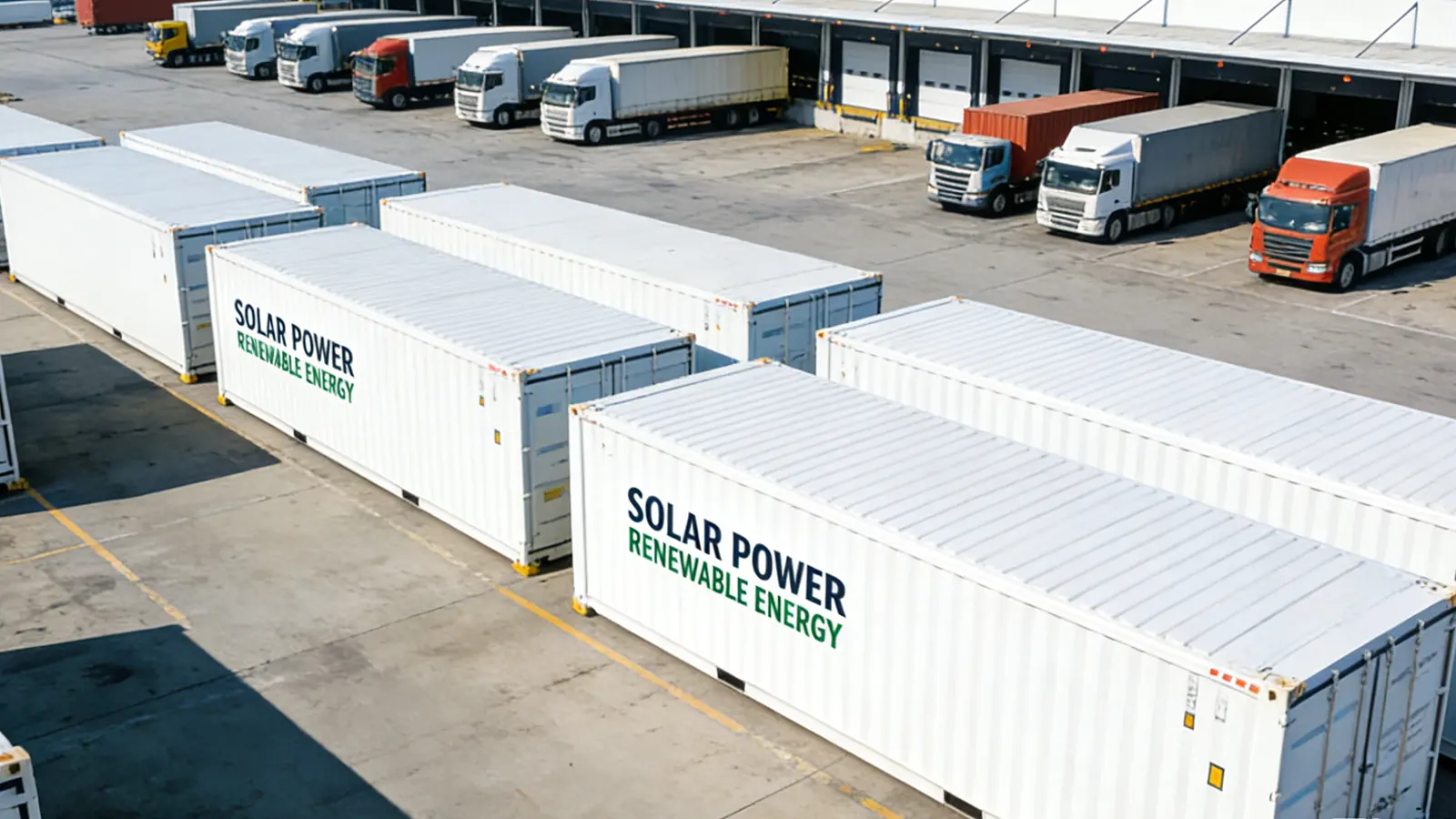
Audit Your Local Grid: Does your market need the mobility of a 20ft unit (approx 500kWh) or the massive scale of a 40ft (1MWh+)?
Get a Sample: Any supplier worth their salt should offer a prototype discount for qualified distributors. Test it in your local conditions. Break it if you have to.
Negotiate Training, Not Just Price: A $5,000 discount is nothing compared to having your tech team fly to the factory for a week of “under the hood” training. Knowledge saves you more money than a slight price cut ever will.
Final
The world is moving toward decentralized power, and grid instability isn’t going away anytime soon. The demand for solar container kits for international distributors is exploding because they solve the one thing money can’t always buy: time and peace of mind.
Choose a partner who cares more about the internal wiring than the glossy paint job on the outside. Your reputation is the only thing that’s hard to replace in this industry.
Got questions about specific ISO standards or want to see how these containers fit into your current line-up? Drop a comment below or shoot us a message at HighJoule. Let’s get to work.
Last Updated on 05/28/2026