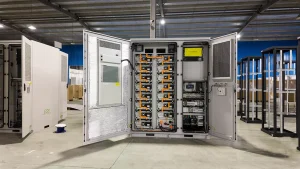
Let’s keep it real—most customers buy a 20ft shipping container solar power plant with inverter, bolt it down to a concrete pad, and think they’re set for the next 20 years. I wish it were that simple, but after 7 years doing BESS maintenance at HighJoule, I’ve seen way too many costly mistakes that could’ve been avoided.
One that still sticks with me: a 500k BESS system that lost half its capacity after just 8 years—all because the on-site team forgot to replace the HVAC air filter. That tiny part costs just 50! If you run a commercial or industrial facility, don’t treat your BESS like a “set-it-and-forget-it” appliance. It’s more like a chemical plant in a box that’s always working—you gotta watch it like a hawk, just like you would a kid. These lessons come from bouncing around dozens of projects across Europe and North America—stuff you won’t find in those shiny sales brochures.
1. HVAC Isn’t Just About Cooling: Dust Is BESS’s Silent Killer
Everyone knows batteries hate heat, but dust is the real nightmare we deal with. Last year, we had a project in a semi-arid region of Arizona where the 风沙 (oops—wind and sand) was brutal. The HVAC filters clogged every three weeks. When filters block up, the fans have to work overtime, sucking up more “parasitic power” from the BESS itself. Eventually, the system just derates to 50% output to keep from overheating—it’s not broken, it’s just trying to survive.
Pro Tip: If you notice your BESS’s self-consumption bill creeping up, check the filters first—don’t wait for the high-temperature alarm to go off. Also, never ignore refrigerant levels. We tell all our clients to check them quarterly. In a 20ft container, space is tight, and heat builds up at the top. A small refrigerant leak? Those top battery modules will be toast in less than six months.
2. BMS “State of Charge Drift”: Don’t Trust the Screen Blindly
BESS Battery Management Systems (BMS) are smart, but they aren’t mind-readers. They calculate State of Charge (SoC) based on voltage and current flow, and over time, those sensors drift—this is one of the most frustrating issues we face.
Just last month, a client called panic-stricken: their system showed 20% charge, but when the inverter kicked into heavy load, the BMS tripped hard, leaving the entire facility in the dark. Turns out, the actual cell charge was only 8%—the BMS had been miscalculating for months.
Fix: Do a “full calibration cycle” at least once a year. Drain the BESS completely, then charge it back to 100%. This resets the sensor’s zero point. It’s a hassle—you have to coordinate downtime—but if you skip it, you’ll never really know if the number on the screen is accurate.
3. Torque Wrenches: BESS Maintenance’s “Old-School” Must-Have
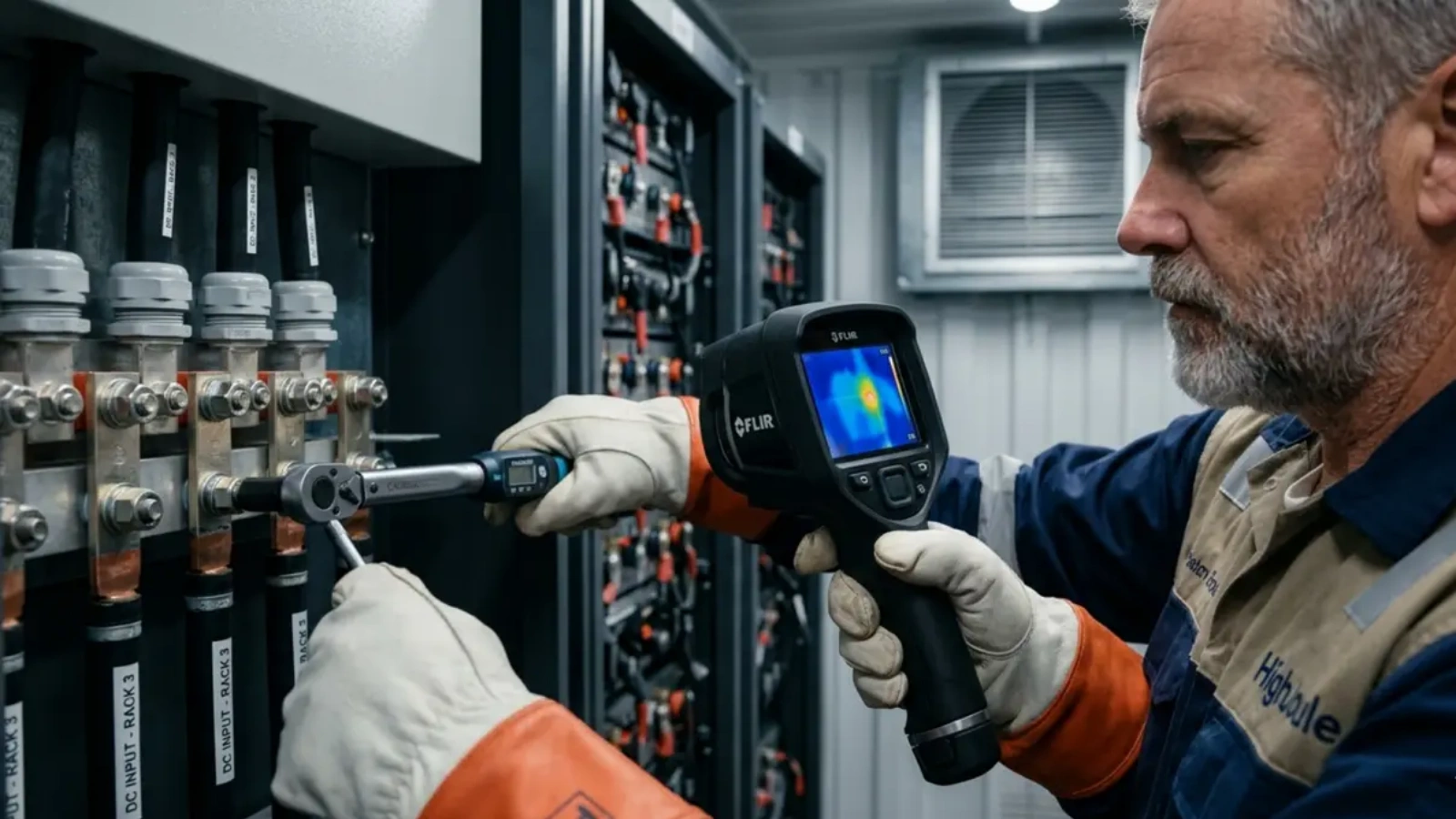
Some people think torque wrenches are outdated, but thermal expansion is no joke—especially in a BESS container. A single 20ft unit has hundreds of copper busbar connections. They expand when hot (during peak discharge) and contract when cold. After three years, even the tightest bolts work loose.
A loose bolt creates resistance, resistance creates heat, and heat is a fire hazard. Every time we do BESS maintenance, we don’t just stare at monitors—we bring an infrared (IR) camera. If any terminal glows purple on our Flir screen, we shut the system down and retorque it. It takes five minutes, but that quick fix saved a Texas project from a million-dollar disaster last year.
4. Western Market Safety Codes: Don’t Let Maintenance Logs Ruin You
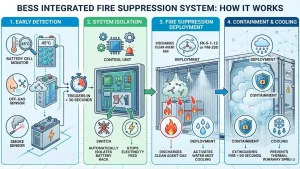
In Europe and North America, codes like UL9540 and NFPA 855 aren’t just suggestions. A client learned this the hard way: their BESS container triggered an emergency alarm, and when the insurance company showed up, they had no records of pressure tests for the aerosol fire suppression system or calibration for the hydrogen sensors. The claim was denied outright—they had to cover all the losses themselves.
Heads Up: No matter how busy you are, document every BESS maintenance check. File test reports and calibration certificates away. It’s not just about compliance—it’s protecting your asset.
Final
BESS maintenance might seem tedious, but every task ties directly to your ROI. At HighJoule, we use cloud monitoring to automate as much as possible, but BESS systems need boots on the ground every now and then—some issues just don’t show up on a screen. If you’re dealing with BESS maintenance headaches, feel free to reach out and chat anytime.
Last Updated on 07/30/2026