At HighJoule, one of the most frequent questions we get from project managers in Europe and North America is: “Why should I invest in a containerized system instead of a traditional indoor battery room?”
In markets where labor costs are skyrocketing and site construction timelines are shrinking, the 20ft shipping container solar power plant with inverter has transitioned from a niche “off-grid” solution to the go-to choice for industrial and commercial (C&I) energy storage.
But there’s more to it than just putting things in a box. Let’s look at the actual logic of these systems and the deployment hurdles you need to know about.
It’s a Power Hub, Not a Storage Box
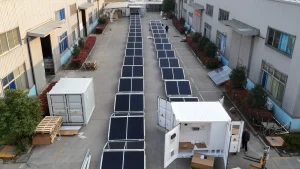
First, a quick technical clarification: a 20ft container doesn’t actually house the PV modules (solar panels). Those are installed on your roof or ground racks.
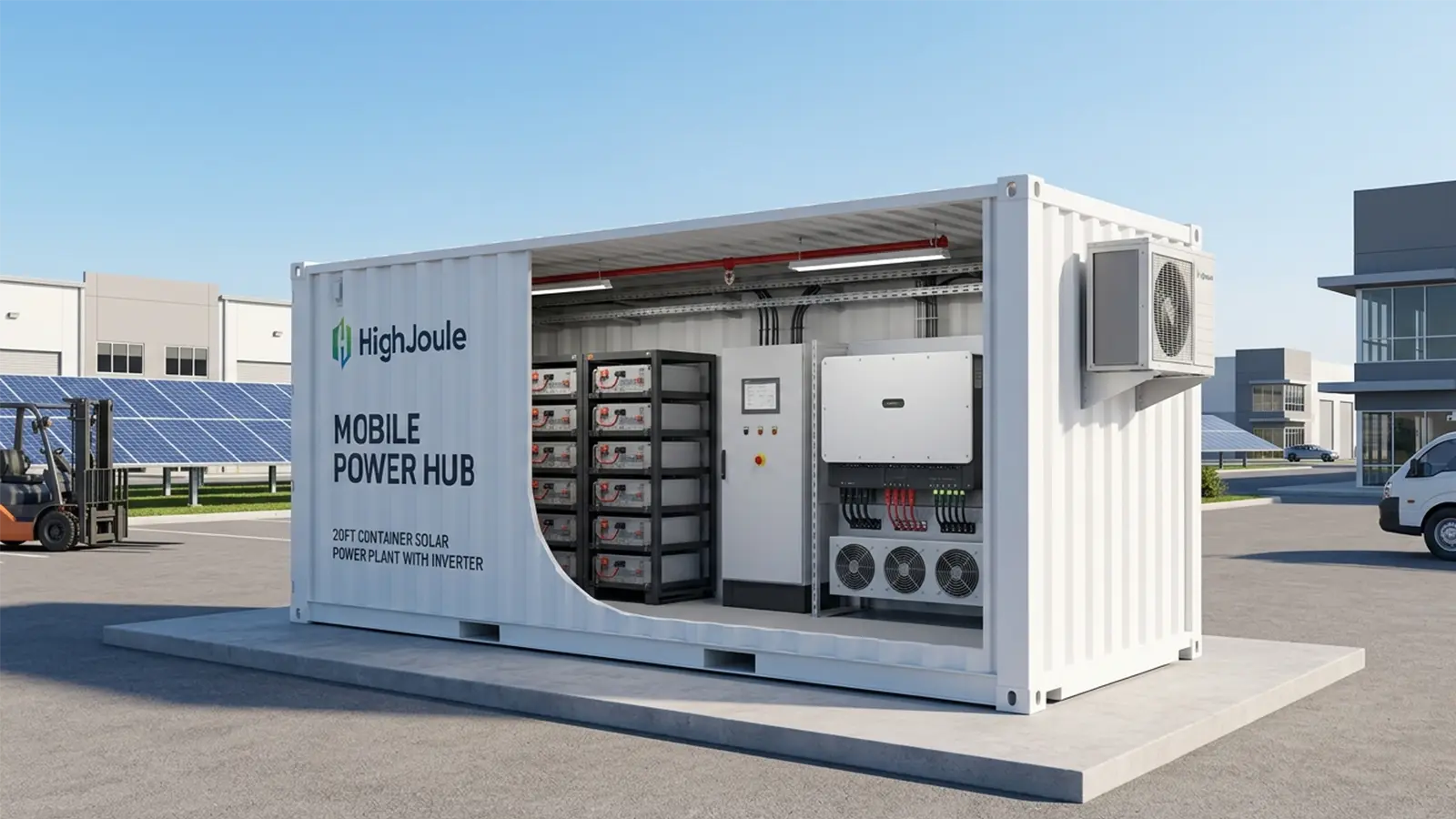
Think of the container as a Turnkey Power Center. It integrates thousands of battery cells, high-performance inverters, switchgear, and—most importantly—the HVAC (thermal management) and fire suppression systems into a single, standard shipping unit.
Typical Internal Configuration:
- High-Power Inverters: The heart of the system that handles DC/AC conversion at scale.
- BESS (Battery Energy Storage System): High-density LiFePO4 battery racks designed for a 10-15 year lifespan.
- EMS (Energy Management System): The “brain” that optimizes when to charge from the sun and when to discharge to avoid peak grid prices.
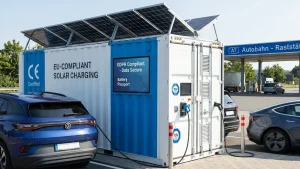
- Safety Gear: To meet strict Western standards (like UL9540A or CE), these units include automatic aerosol fire suppression and industrial-grade cooling.
The Logic Behind the 20ft Footprint
In global logistics, the 20ft container is the Goldilocks size. It is large enough to house between 2MWh to 3.7MWh of storage capacity, yet compact enough to be moved by a standard truck to remote mining sites, farms, or urban construction zones.
True Plug & Play: All the complex wiring and internal testing are done at our factory. When it arrives on-site, your electrician just needs to connect the external AC/DC cables. This saves thousands in high-cost local labor fees.
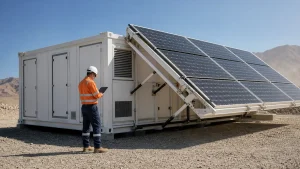
Environmental Armor: Unlike indoor setups, these containers are built to C5-level corrosion resistance. Whether it’s the salt air of a coastal project or the dust of a desert site, the internal electronics stay protected.
Asset Mobility: If your lease ends or your factory moves, the entire power plant is an asset you can crane onto a truck and take with you.
What the Manual Doesn’t Tell You (Expert Tips)
Based on our experience deploying these systems globally, there’s a few things that often catch people off guard if they’re only looking at the spec sheets:
Local Grid Codes: North American and European grid regulations are incredibly specific. Even the best 20ft shipping container solar power plant with inverter is just an expensive box if the inverter isn’t certified for local utility interconnection.
The Heat Management Trap: People often underestimate how much heat an inverter generates under full load. In a confined 20ft space, if the HVAC isn’t designed with the right airflow path, the system will “de-rate” (reduce power output) to prevent overheating—directly hurting your ROI.
Foundation Matters: Even though it’s a portable container, you still need a level concrete pad or pier foundation. Don’t just drop it on dirt; any settling over time can stress the internal busbars and lead to electrical faults.
Final
For C&I clients who need efficiency and a predictable ROI, the containerized solar plant is basically a “micro-grid in a box.” It simplifies the most complex part of a renewable project.
At HighJoule, we’re focused on making these systems as efficient as possible. If you are looking at a project and want to see a specific Single Line Diagram (SLD) or a layout for your site, feel free to reach out to our engineering team.
Last Updated on 03/20/2026