The Critical Power Gap in Disaster Response
The First 72 Hours: Why Traditional Solutions Fail
In our experience responding to disasters worldwide, we’ve identified a consistent pattern: the most critical period for power needs is also when traditional solutions are least effective.
Common Challenges with Diesel Generators:
- Fuel Supply Chain Disruption
- Roads and infrastructure damaged or destroyed
- Fuel stations non-operational
- Security risks for fuel transport convoys
- Storage limitations at disaster sites
- Deployment Logistics
- Heavy equipment requires specialized transport
- Technical expertise required for setup and operation
- Maintenance needs during ongoing crisis
- Noise and emissions in crowded relief camps
- Environmental and Health Concerns
- Air pollution in already compromised environments
- Fire risks in damaged structures
- Ground contamination from fuel spills
- Noise pollution affecting sleep and mental health
During our response to Hurricane Maria in Puerto Rico (2017), we witnessed diesel generators sitting idle for days while fuel trucks couldn’t reach isolated communities. Meanwhile, our solar container units were providing power within hours of deployment.
What Disaster Response Operations Actually Need
Based on our deployments across various disaster scenarios, we’ve identified the essential power requirements:
Critical Infrastructure Power:
- Medical facilities and field hospitals
- Emergency operations centers
- Water treatment and pumping stations
- Communications infrastructure
- Lighting for security and operations
Community Support Power:
- Mobile phone charging stations
- Food preparation and refrigeration
- Temporary shelter climate control
- Educational and recreational facilities
- Small business recovery support
Solar Container Kits: The Emergency Response Game-Changer
Key Advantages for Disaster Scenarios
1. Rapid Deployment Capability
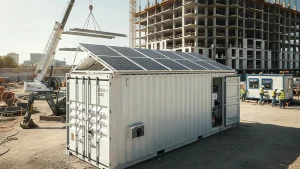
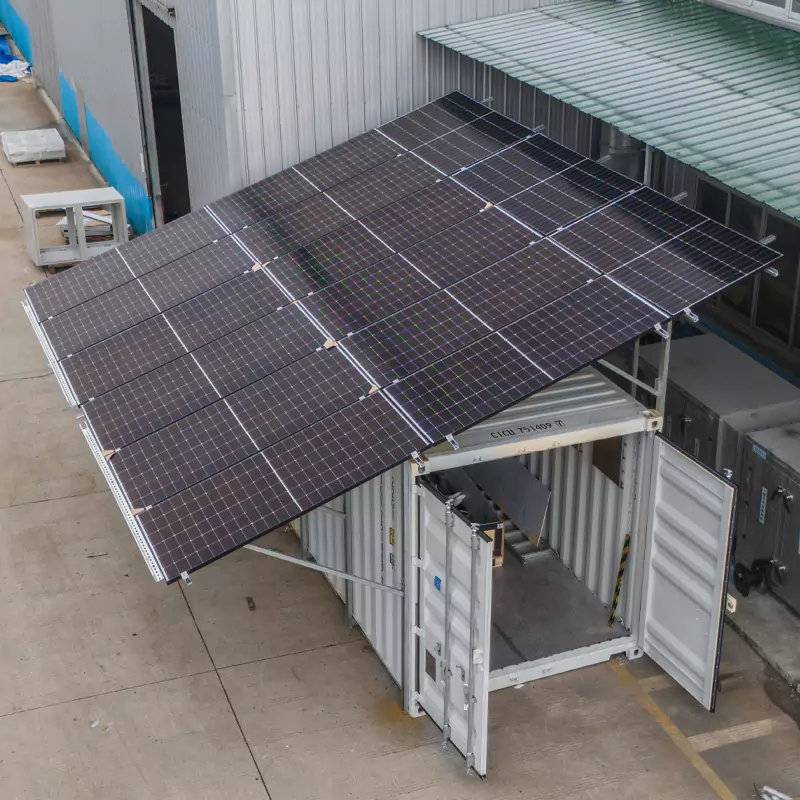
Our HJ-FESS (Foldable Energy Storage System) solar containers can be deployed in under 4 hours:
- Transport via standard shipping containers or flatbed trucks
- No foundation or site preparation required
- Automated deployment sequence
- Single-button operation activation
2. Fuel Independence
Once deployed, systems operate autonomously:
- No ongoing fuel requirements
- Automatic battery charging during daylight hours
- 24/7 power availability through integrated storage
- Reduced logistical burden on response teams
3. Scalable and Modular
Systems can be configured for specific mission needs:
| Deployment Type | System Configuration | Typical Applications |
|---|---|---|
| Rapid Response | 1 × HJ-FESS (50kW) | Medical triage, comms, lighting |
| Field Hospital | 2 × HJ-FBESS (100kW) | Full medical facility, ICU equipment |
| Relief Camp | 3 × HJ-FBESS (150kW) | Community center, water treatment, schools |
| Operations Base | 4+ × HJ-FBESS (200kW+) | Command center, logistics hub, heavy equipment |
4. Environmental Resilience
Designed for harsh disaster environments:
- Weatherproof construction (IP65 rating)
- Seismic resistance for earthquake zones
- Corrosion resistance for coastal and flood areas
- Temperature operation range: -30°C to +50°C
Case: Hurricane Response in the Bahamas (2024)
Disaster Context:
- Hurricane Fiona, Category 4
- Island-wide power grid destruction
- 80% of structures damaged
- 50,000 residents displaced
Deployment Details:
- Timeline: Units arrived 48 hours post-landfall
- Systems Deployed: 6 × HJ-FBESS solar containers
- Total Capacity: 300 kW continuous, 600 kWh storage
- Deployment Time: 3.5 hours per unit
Impact and Results:
Medical Facilities:
- Powered 2 field hospitals serving 1,200 patients daily
- Supported ICU equipment, X-ray machines, and refrigeration for medications
- Enabled 24/7 emergency surgical capabilities
- Medical Director’s Note: “The solar containers allowed us to establish fully functional field hospitals 5 days faster than traditional generator setups.”
Water and Sanitation:
- Powered 4 water treatment plants producing 50,000 gallons daily
- Supported sewage treatment and pumping systems
- Prevented waterborne disease outbreaks in crowded camps
Communications:
- Established emergency operations center with full communications suite
- Powered cellular tower restoration for emergency services
- Enabled internet connectivity for coordination and family reunification
Community Support:
- Set up 12 mobile phone charging stations serving 5,000 people daily
- Powered community kitchens producing 8,000 meals daily
- Provided lighting for security and nighttime operations
Lessons Learned:
- Pre-positioning Strategy: Units stored in Miami allowed rapid Caribbean deployment
- Local Training: Pre-trained local technicians reduced dependency on external teams
- Grid Integration: Systems designed to support grid restoration as infrastructure recovered
Technical Specifications for Emergency Response
System Configuration Options
HJ-FESS (Foldable Energy Storage System)
- Power Output: 50 kW continuous
- Solar Capacity: 80 kWp foldable panels
- Battery Storage: 100 kWh lithium-ion
- Deployment Time: 2-3 hours
- Best For: Rapid response, medical triage, communications
HJ-FBESS (Foldable Battery Energy Storage System)
- Power Output: 100 kW continuous
- Solar Capacity: 150 kWp foldable panels
- Battery Storage: 200 kWh lithium-ion
- Deployment Time: 3-4 hours
- Best For: Field hospitals, relief camps, water treatment
Integration Capabilities
Grid Connectivity:
- Automatic grid synchronization when grid becomes available
- Seamless transition between off-grid and grid-tied operation
- Export capabilities for grid support during recovery
Generator Hybridization:
- Integration with existing diesel generators
- Automatic generator activation during extended cloudy periods
- Fuel savings through solar-first operation
- Redundant power for critical applications
Renewable Integration:
- Wind turbine integration compatibility
- Microgrid formation with multiple units
- Future hydrogen fuel cell integration capability
Implementation Best Practices
Pre-Deployment Planning
Site Assessment Checklist:
- [ ] Solar resource assessment (satellite data + local verification)
- [ ] Load analysis for intended applications
- [ ] Security assessment and protection planning
- [ ] Local regulatory and permitting requirements
- [ ] Community stakeholder identification and engagement
Logistics Planning:
- [ ] Transport route verification and alternatives
- [ ] Local equipment and contractor identification
- [ ] Spare parts and maintenance equipment planning
- [ ] Technical team composition and training
- [ ] Communication protocols and backup systems
Deployment Phase Best Practices
Rapid Deployment Protocol:
- Site Preparation (1 hour): Level ground, security perimeter setup
- Container Positioning (30 minutes): Crane or forklift placement
- System Activation (1 hour): Automated deployment sequence
- Load Connection (1 hour): Critical infrastructure connection
- Testing and Verification (30 minutes): System performance validation
Community Engagement:
- Identify community leaders and stakeholders
- Conduct safety briefings for local populations
- Establish clear usage protocols and priorities
- Create local maintenance and operation teams
- Develop feedback and grievance mechanisms
Long-Term Operation and Transition
Sustainability Planning:
- Local technician training programs
- Maintenance schedule and procedures
- Spare parts supply chain establishment
- Financial sustainability model development
- Community ownership transition planning
Monitoring and Evaluation:
- Real-time performance monitoring
- Impact assessment and data collection
- Community satisfaction surveys
- Technical performance evaluation
- Lessons learned documentation
The Future of Solar in Emergency Response
Emerging Technologies and Trends
1. AI-Optimized Emergency Response
- Predictive deployment based on weather and risk modeling
- Automated load management during power scarcity
- Remote diagnostics and predictive maintenance
- Integration with emergency management systems
2. Advanced Storage Solutions
- Longer-duration storage for extended cloudy periods
- Second-life battery integration for cost reduction
- Flow batteries for large-scale applications
- Hydrogen fuel cell backup systems
3. Modular and Specialized Designs
- Medical-specific configurations with hospital-grade power
- Water treatment integrated systems
- Communications-focused deployments
- Rapid-response ultra-portable units
Industry Collaboration and Standards
Standardization Efforts:
- International emergency response power standards development
- Interoperability protocols for multi-vendor deployments
- Training and certification program standardization
- Performance measurement and reporting standards
Partnership Models:
- Pre-positioning agreements with governments and NGOs
- Rapid-response consortium formation
- Insurance and risk-sharing arrangements
- Technology sharing and capacity building programs
Conclusion: Solar Containers Are Essential for Modern Emergency Response
Based on our extensive experience deploying response operations worldwide, we can state unequivocally that solar container kits have transformed emergency response capabilities. The advantages are clear:
- Speed: Deployment in hours versus days for traditional systems
- Reliability: Fuel-independent operation during critical periods
- Sustainability: Environmental compatibility in fragile ecosystems
- Scalability: Modular growth as response needs evolve
- Community Impact: Beyond power—building local capacity and resilience
The humanitarian organizations and government agencies that have integrated solar container technology into their response protocols have consistently demonstrated faster, more effective, and more sustainable disaster response operations.
As climate change increases the frequency and severity of disasters, the importance of rapid-deployment, fuel-independent power solutions will only grow. Solar container kits are not just an alternative to traditional emergency power—they are the future of disaster response.
Last Updated on 04/17/2026