Why Are Shipping Container Homes Getting So Popular?
In recent years, buying or building a traditional house has gotten more and more expensive—new homes in the US average $390,000, and they’re energy-hungry and not eco-friendly.
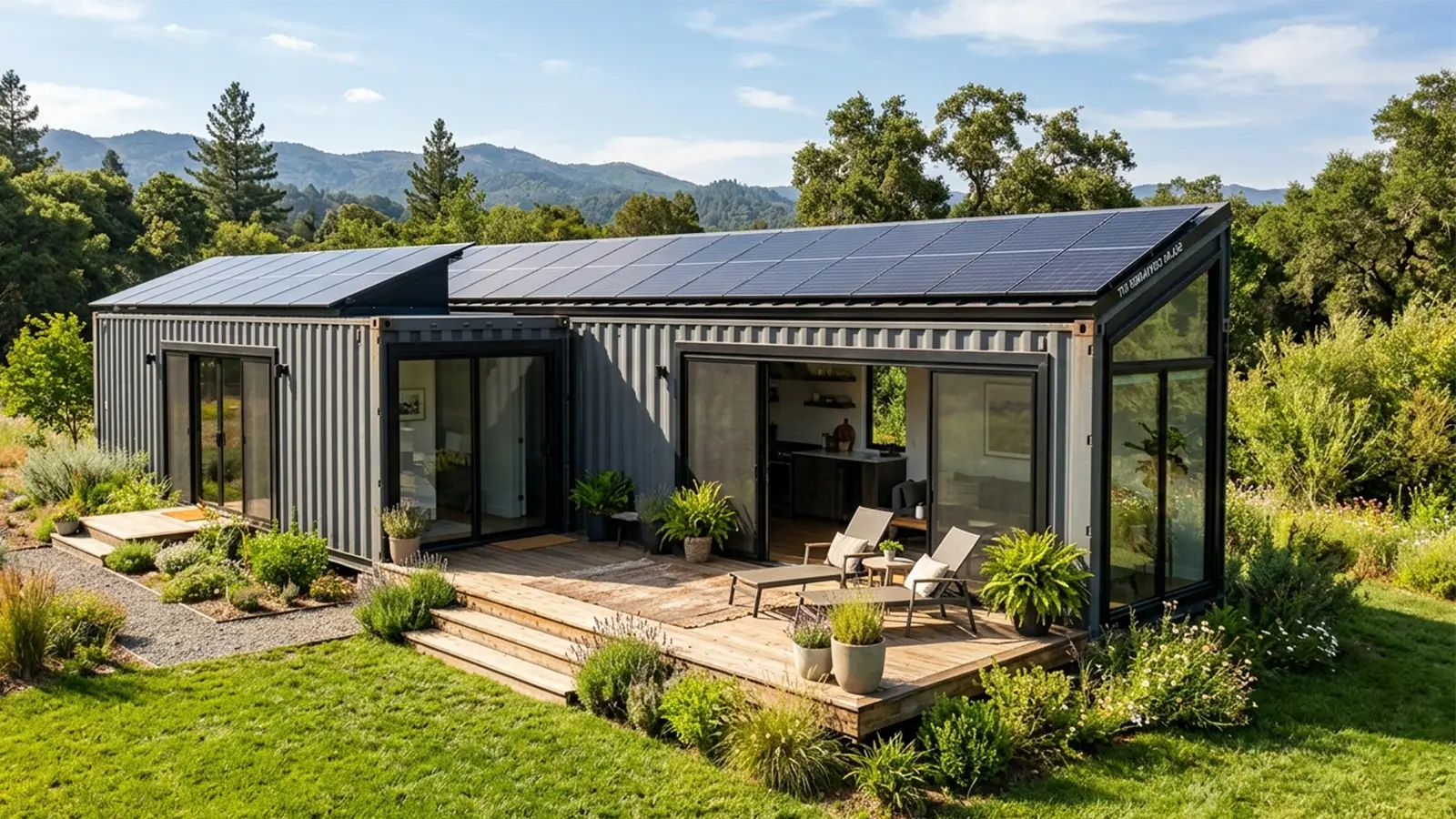
That’s where 2-container homes come in! Made from repurposed steel shipping containers, they’re strong, affordable, and pair perfectly with solar power—no need to rely on the grid. Our team has 15 years of experience and has renovated over 200 containers. We’ve found that 2 containers are just the right size: 60-90 square meters (645-969 square feet), perfect for couples, small families, or remote workers. Not too big to waste space, not too small to feel cramped.
This guide breaks it down in simple terms: why 2 containers, how to plan, how to install solar, how much it costs, and real-life examples. By the end, you’ll see—building a container home isn’t complicated at all!
I. Why 2 Containers? The Perfect Configuration
After testing different setups, we’ve found 2 containers are the most practical. Here’s why:
1. Save Big—60-70% Cheaper Than Traditional Homes
A typical 80 sqm (860 sqft) traditional home costs 150-250 per sqft, totaling 120,000-200,000. A 2-container home? Only 40,000-80,000 (land not included). One of our clients in Colorado built their home for $52,000 and used the savings to buy 7.4 acres (3,000+ sqm) of land!
2. Perfect Size for Comfort
Two 40-foot containers placed side by side give you 64 sqm (690 sqft) of indoor space—add a deck, and you’re up to 80+ sqm (860+ sqft). It easily fits:
- A full kitchen with a fridge and stove
- 1-2 bedrooms + 1 bathroom (with a shower and toilet)
- A living room + dining/office area
Ideal for young adults, retirees, or a vacation home—spacious enough to live comfortably, but small enough to clean easily.
3. Easy to Expand Later
Containers are modular. Start with 2 now, and if you need an extra guest room or home office later, just add another container. No need to rebuild the foundation—save time and money.
4. Fast Build—Move In in 3-6 Months
Traditional homes take 6-12 months to build. A 2-container home? Just 8-12 weeks! Containers are pre-made, so you don’t have to wait for materials or worry about weather delays. You can even build in winter.
5. Eco-Friendly + Low Energy Bills
Each container recycles 8,000 pounds of steel—keeping tons of waste out of landfills. Pair it with solar, and your energy bills drop 70-90%. Many families achieve “net-zero energy”—generating as much electricity as they use, so monthly bills are almost zero.
6. Flexible Designs—3 Simple Layouts
Two containers give you 3 easy setups:
- Side-by-side (single-story): No stairs—great for kids, seniors, or anyone who prefers single-level living
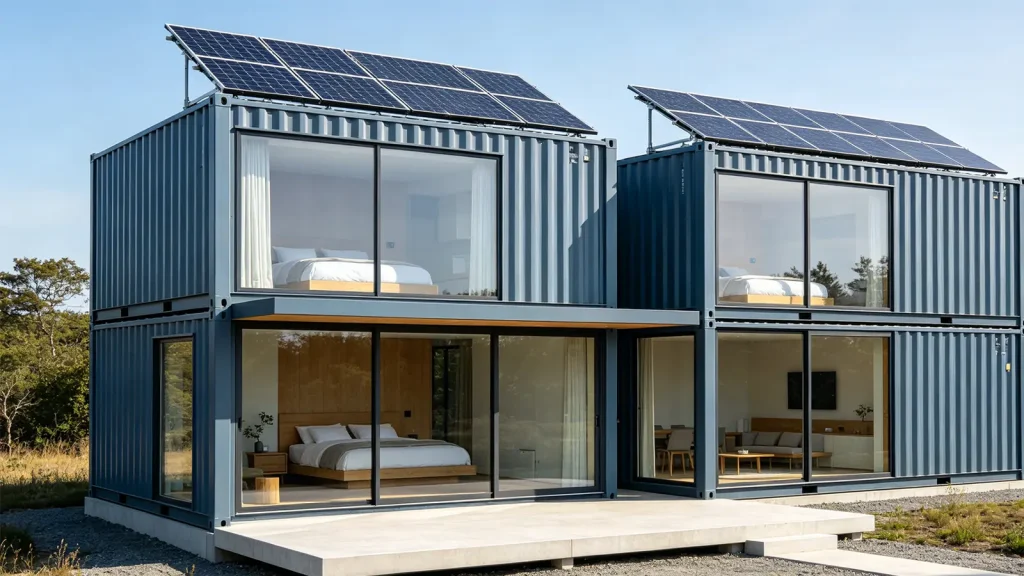
- Stacked (two-story): Saves space—perfect for narrow lots or urban areas
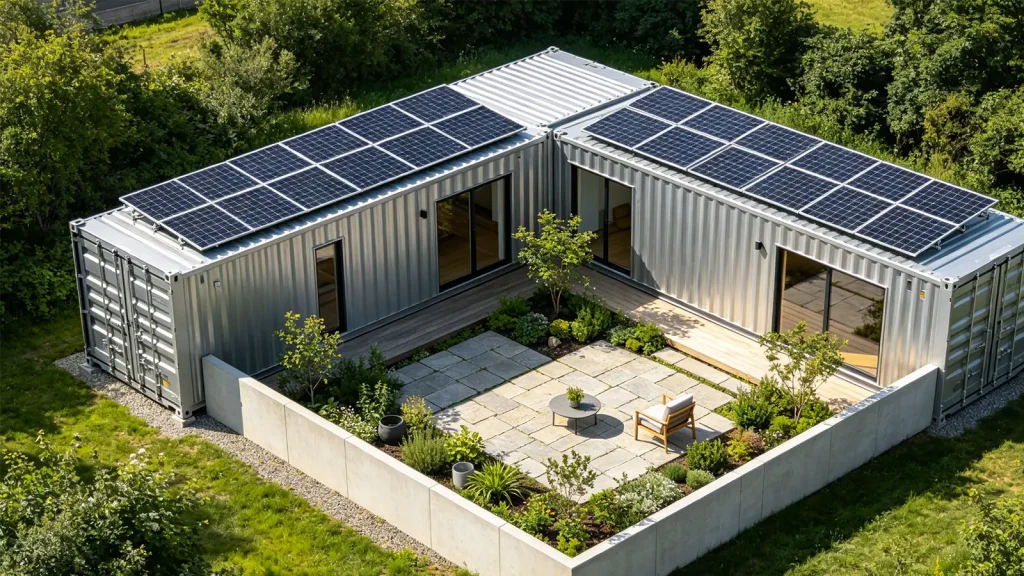
- L-shaped: Creates a small courtyard in the middle—ideal for summer gatherings
II. 5 Things to Do Before Building (Avoid Costly Mistakes)
Get these right upfront to skip headaches later:
1. Choose the Right Land
Look for land that:
- Is flat and well-drained (avoid flood zones or steep slopes)
- Gets plenty of sunlight (especially south-facing—critical for solar power)
- Has access for large trucks (containers need a 12-14 foot wide path to deliver)
- Either connects to municipal utilities or has space for solar panels and water storage
One client bought a steep hillside lot for the view—only to spend twice as much on the foundation. Don’t make that mistake!
2. Pick the Right Foundation (Depends on Your Land)
| Foundation Type | Cost | Best For | Pros | Cons |
| Concrete Slab | 8,000-15,000 | Long-term living, cold climates | Durable, helps insulate the home | More expensive, permanent (can’t move later) |
| Concrete Piers | 4,000-8,000 | Uneven terrain, average soil | Affordable, adapts to slopes | Less under-house space, possible settling over time |
| Helical Piles | 6,000-12,000 | Sensitive soil, uneven ground | Fast to install, minimal excavation | Slightly more expensive materials |
For a project in Colorado, we used helical piles—installed in 2 days with no damage to the mountain landscape.
3. Adapt the Design to Your Climate
- Hot, humid areas (e.g., Florida, Southeast Asia): Add plenty of windows for ventilation, use a reflective roof, and size up the solar system (AC uses lots of power)
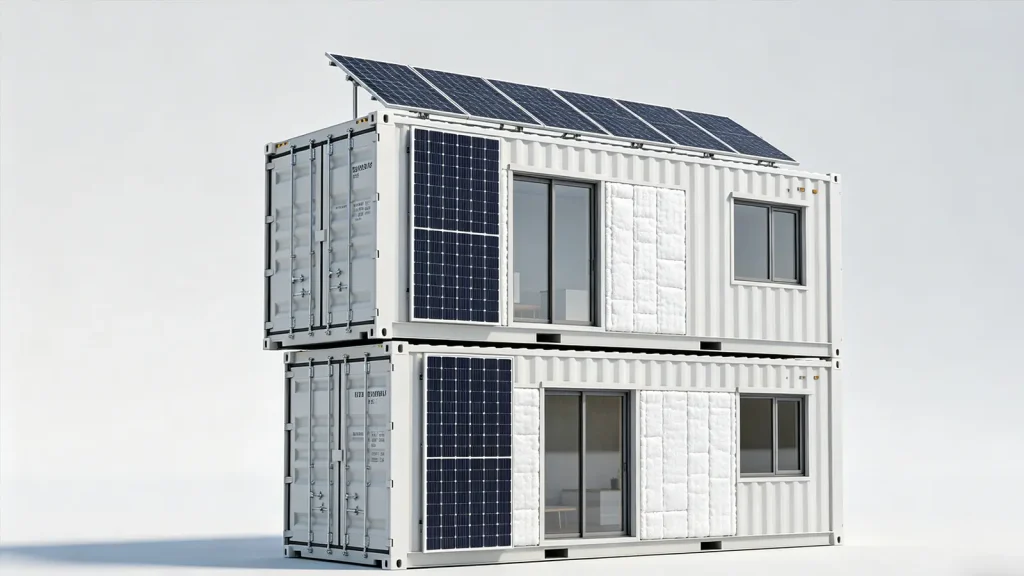
- Cold areas (e.g., Northeast US, Canada): Boost insulation (R-30+ walls, R-50+ roof), use double-glazed windows, and design for passive solar gain (letting sunlight warm the home)
- Mild climates (e.g., California, Mediterranean): Focus on cross-ventilation, rainwater harvesting, and high-quality windows
A client in Texas (where summer temps hit 100°F/38°C) got a reflective roof, large overhangs to block the sun, and a 5kW solar system. Their monthly AC bill? Only 30—saving 140 vs. a traditional home!
4. Don’t Skip Permits (You Could Get Fined or Demolished)
Container homes aren’t “temporary sheds”—you need permits. Here’s how to do it:
- Check local zoning laws: Visit your city/county’s building department to ask if container homes are allowed (some areas have restrictions)
- Hire a local engineer/architect: Their stamped plans speed up approvals—we’ve cut wait times from 4 months to 3 weeks with professional drawings
- Budget 2,000-5,000: Covers permits, engineer fees, and inspections
- Frame it as a “modular steel home”: Avoid saying “shipping container home”—many areas are more receptive to “modular steel construction”
5. Insulation + Waterproofing = Must-Haves!
A container without insulation hits 120°F (50°C) in summer and -4°F (-20°C) in winter—unlivable. Here’s how to fix it:
- Humid areas: Use spray foam insulation (seals gaps and resists moisture)
- Cold areas: Exterior rigid foam + interior spray foam (total R-30+)
- Extreme climates: 2-inch exterior rigid foam + 3-inch interior spray foam + vapor barrier
For a project in the Pacific Northwest (cold and wet), this combo kept the home warm all winter—no extra heating needed.
III. How to Install Solar: Achieve Energy Independence
Container homes and solar are a match made in heaven! The steel roof is perfect for mounting panels, and there’s plenty of space—even in remote areas, you’ll have power.
Why Containers + Solar Work So Well
- Ready-made roof: The corrugated steel roof needs no extra brackets—panels mount directly
- Ample space: Two 40-foot containers have enough roof space for 12-16 solar panels—plenty for daily use
- Less wiring: Panels are close to the inverter/battery—saves money on wiring and reduces energy loss
- Off-grid ready: Connecting to the grid in remote areas costs 50,000+; solar costs 10,000-$20,000 and lets you generate your own power
Sizing Your Solar System: 3 Simple Steps
Step 1: Calculate Your Daily Energy Use (Typical 2-Container Home)
| Appliance | Daily Energy Use (kWh) |
| 10 LED lights | 0.4 |
| Energy-efficient fridge | 1.2 |
| AC (3 hours/day) | 2-4 |
| Induction cooktop (1 hour/day) | 1.5 |
| Phone/laptop charging + water pump | 1.5 |
| Total (20% buffer) | 9-12 kWh |
Step 2: Choose Panel Size Based on Sunlight
| Climate | 1kW Solar Produces (kWh/day) | Size Needed for 10 kWh/day |
| Sunny (e.g., Arizona, Australia) | 5-6 | 2kW |
| Moderate sun (e.g., Colorado, Texas) | 4-5 | 2.2kW+ |
| Cloudy (e.g., Pacific Northwest, UK) | 3-4 | 3kW+ |
Pro Tip: Winter sunlight is half of summer’s—oversize the system by 30-50% to avoid shortages.
Step 3: Add Batteries for Storage (Lithium-Ion is Best)
- Store 2-3 days of energy: If you use 10 kWh/day, get a 20 kWh battery
- Lithium Iron Phosphate (LiFePO4) batteries: Last 10+ years, work down to 20% charge, low maintenance. Lead-acid batteries only last 3-5 years and can’t drain fully.
Solar Packages for Every Budget
| Package | Cost | Solar Size | Battery Capacity | Best For |
| Basic | 8,000-12,000 | 3kW | 10-12 kWh | Mild climates, seasonal use |
| Standard | 12,000-18,000 | 5kW | 20-24 kWh | Most areas, year-round living |
| Premium | 18,000-25,000 | 7-8kW | 30-40 kWh | Extreme heat/cold, lots of appliances (e.g., electric oven, large AC) |
Our Texas client chose the Premium package (7kW solar + 24kWh battery). They run the AC 24/7 in summer, cook, and charge devices—all off-grid, no electric bills.
Easy Installation Tips
- Face panels south (Northern Hemisphere) at a 30-45° angle for maximum sun
- Avoid shade: Trees or buildings cutting sunlight reduce output by 50%. Use microinverters if shade is unavoidable
- Choose pure sine wave inverters: They’re safe for sensitive electronics (phones, laptops)
- Backup generator (optional): A propane generator kicks in automatically during long cloudy spells—no manual start needed
IV. 3 Practical Layouts (Pick Based on Your Land)
1. Side-by-Side (Most Popular)
- Setup: Two containers placed parallel (single-story)
- Size: 64 sqm (690 sqft) indoor + 20 sqm (215 sqft) optional deck
- Layout: One container = kitchen, living room, half-bath; the other = bedrooms + full bath
- Pros: Easy to furnish, no stairs, simple foundation
- Best For: Small families, seniors, vacation homes
Our Texas client added a 12-foot (3.6m) deck between the two containers—perfect for outdoor dining in summer.
2. Stacked (Two-Story)
- Setup: One container on top of the other
- Size: 64 sqm (690 sqft) total (split between two floors)
- Layout: Ground floor = kitchen, living room, bath; upper floor = bedrooms + office
- Pros: Saves lot space, upper floor has great views, can add a roof deck
- Cons: Needs stairs, engineer-approved structural reinforcement for wind/snow
- Best For: Narrow lots, urban areas, hillside properties (minimizes land use)
Our Colorado mountain project uses this layout—upper floor has panoramic mountain views, lower floor is sheltered from wind. We added a glass-railed roof deck for stargazing.
3. L-Shaped (With Courtyard)
- Setup: Two containers at 90° angles, creating a small courtyard
- Size: 64 sqm (690 sqft) indoor + 30 sqm (323 sqft) courtyard
- Layout: One container = kitchen, living, dining; the other = bedrooms + bath
- Pros: Courtyard provides shade and privacy, great ventilation, space for plants
- Best For: Warm climates, garden lovers
Tips to Make Small Spaces Feel Bigger
- Use furniture as dividers: A bookshelf between living and dining areas instead of walls
- Multifunctional furniture: Sofa beds (for guests), fold-down tables (save space when not in use)
- Maximize storage: Floor-to-ceiling cabinets, under-bed storage, overhead shelves
- Group kitchen and bath: Place them next to each other to reduce plumbing runs—saves space and money
V. 3 Real-Life Examples (How Others Did It)
Example 1: Colorado Mountain Off-Grid Home
| Details | Specifications |
| Location | Colorado, 9,200 ft (2,800m) elevation |
| Climate | Winters -20°C (-4°F), cool summers |
| Layout | Stacked two-story |
| Containers | 2 x 40ft high cube (9.6ft ceiling height) |
| Size | 64 sqm (690 sqft) indoor + 24 sqm (258 sqft) roof deck |
| Foundation | Helical piles (poor soil quality) |
| Solar System | 5kW panels + 20kWh battery + 7kW propane generator |
| Total Cost | $67,500 |
| Build Time | 6 months (built in winter) |
Cost Breakdown:
- Containers: 6,800 | Foundation: 9,200 | Structural mods (windows/doors): $4,500
- Insulation: 7,800 | Plumbing/Electrical: 6,200 | Solar System: $18,500
- Interior Finish: 8,400 | Permits/Engineer: 3,100 | Deck/Courtyard: $3,000
Challenges & Solutions:
- Poor soil → Helical piles (saved excavation time)
- Winter construction → Heated temporary shelter
- Mountain shade → Raised solar panels + adjusted angle
Client Feedback: “95% of the time we’re off-grid. Winter propane bills are only 300/month—saving 2,000 vs. our old home!”
Example 2: Texas Off-Grid Farmhouse
| Details | Specifications |
| Location | Texas Hill Country |
| Climate | Summers 38°C+ (100°F+), mild winters |
| Layout | Side-by-side + 12ft deck |
| Containers | 2 x 40ft standard |
| Size | 64 sqm (690 sqft) indoor + 20 sqm (215 sqft) deck |
| Foundation | Concrete slab |
| Solar System | 7kW panels + 24kWh battery + 7kW propane generator |
| Total Cost | $58,200 |
| Build Time | 4 months |
Cost Breakdown:
- Containers: 5,600 | Foundation: 7,800 | Structural mods: $3,900
- Insulation: 6,700 | Plumbing/Electrical: 5,400 | Solar System: $22,300
- Interior Finish: 7,200 | Permits/Engineer: 2,300 | Deck/Courtyard: $2,000
Challenges & Solutions:
- Extreme heat → High-efficiency AC, reflective roof, oversized solar
- Humidity → Whole-house dehumidifier
- No municipal water → 5,000-gallon rainwater tank
Client Feedback: “Lived here 2 years—AC runs 24/7 in summer, never lost power. No electric bills, just occasional propane for the generator!”
Example 3: Pacific Northwest Vacation Home
| Details | Specifications |
| Location | Washington State Olympic Peninsula |
| Climate | Wet, cold winters; dry summers |
| Layout | L-shaped + small courtyard |
| Containers | 2 x 40ft standard |
| Size | 64 sqm (690 sqft) indoor + 30 sqm (323 sqft) courtyard |
| Foundation | Concrete piers (wet soil) |
| Solar System | 4kW panels + 16kWh battery + grid backup |
| Total Cost | $52,800 |
| Build Time | 5 months |
Cost Breakdown:
- Containers: 5,200 | Foundation: 6,100 | Structural mods: $3,400
- Insulation: 5,800 | Plumbing/Electrical: 4,900 | Solar System: $15,600
- Interior Finish: 6,500 | Permits/Engineer: 2,800 | Courtyard: 3,000 | Grid Connection: 2,400
Challenges & Solutions:
- Cloudy winters → Grid backup (70% of power from solar)
- Wet soil → Concrete piers (minimal excavation)
- Heavy rain → French drains + permeable courtyard pavers
Client Feedback: “Summer vacations are 100% solar. Winter (when we’re not here) we use grid backup—no worries about frozen pipes or dead batteries!”
VI. How Much Does It Cost? (2026 Prices)
1. Shipping Containers
| Container Type | Condition | Cost | Best For |
| 20ft Standard | Wind and water tight (WWT) | 1,800-2,500 | Budget-focused builds |
| 20ft Standard | Cargo-worthy (CW) | 2,500-3,500 | Good value, durable |
| 40ft Standard | Cargo-worthy (CW) | 3,000-4,500 | Most popular choice |
| 40ft High Cube | Cargo-worthy (CW) | 3,500-5,500 | Higher ceilings (9.6ft) |
| 40ft High Cube | One-trip (like new) | 7,000-9,000 | No wear, perfect finish |
Money-Saving Tip: Choose cargo-worthy containers (3,000-6,000 total for 2)—they’re affordable and built to last.
2. Foundation (for 64 sqm/690 sqft home)
- Concrete Slab: 4,500-7,700
- Concrete Piers: 4,000-6,500
- Helical Piles: 5,000-8,000
- Add 500-1,000 for soil testing—don’t skip this!
3. Solar System
- Basic (3kW + 10kWh battery): 12,000-18,000
- Standard (5kW + 20kWh battery): 20,000-29,000
- Premium (7kW + 30kWh battery): 28,500-41,000
4. Interior Finish (3 Tiers)
| Finish Level | Cost | Materials |
| Budget | 11,000-19,500 | Vinyl flooring, stock cabinets, basic fixtures |
| Mid-Range | 19,500-33,500 | Laminate/hardwood flooring, semi-custom cabinets, energy-efficient fixtures |
| High-End | 33,500-61,000 | Solid hardwood, custom cabinets, high-end appliances/fixtures |
5. Permits & Inspections
- Building Permit: 1,000-3,000
- Plumbing/Electrical Permits: 600-1,400
- Engineer/Architect Drawings: 1,000-2,500
- Inspection Fees: 500-1,000
- Total: 3,100-12,900 (varies by location)
6. Labor (DIY vs. Hire Pros)
- Full Professional Build: 6,000-16,000 (15-20% of total cost)
- Partial DIY: 8,000-15,000 (hire pros for plumbing/electrical/solar)
- Full DIY: 2,000-5,000 (only hire licensed trades for required work)
Total Budget Breakdown
| Tier | Total Cost | Key Features |
| Budget | 38,100-65,500 | Lots of DIY, basic finish, 3kW solar |
| Mid-Range | 56,500-94,500 | Partial DIY, mid-range finish, 5kW solar |
| High-End | 85,500-143,900 | Full professional build, high-end finish, 7kW+ solar |
Hidden Costs to Plan For
- Land: 10,000-100,000+ (varies by location)
- Septic System (no municipal sewer): 5,000-15,000
- Well Drilling (no municipal water): 5,000-20,000
- Furniture/Appliances: 5,000-15,000
- Contingency Fund (15-20%): 3,000-8,000 (always needed for unexpected costs!)
Financing Options (If You Need a Loan)
- Construction Loan: 20-30% down, 7-10% interest (2026 rates), short-term (converts to mortgage after build)
- Personal Loan: Up to $50,000, 10-15% interest, 3-7 year terms
- Home Equity Loan: 6-8% interest, 10-20 year terms (if you own another property)
- RV Loan: 5-8% interest (if the home is movable—classified as an RV)
VII. Permits & Zoning: Avoid Fines
Basic Requirements to Meet
- Structural: Must withstand wind, snow, and seismic activity. Reinforce steel after cutting windows/doors (engineer-approved)
- Egress: Windows must be at least 50x60cm (20x24in) for emergency exit. Ceilings minimum 2.1m (7ft) high. Stairs must meet width requirements.
- Electrical: Proper grounding (steel homes conduct electricity), GFCI outlets in wet areas (bathroom/kitchen)
- Plumbing: Backflow prevention, proper ventilation for drains
Key Zoning Rules to Check
- Minimum Square Footage: Many areas require homes to be 80-120 sqm (860-1,290 sqft). Ask about “tiny home exemptions” if your container home is smaller.
- Setbacks: The home must be a certain distance from property lines (front: 6-12m/20-40ft, sides: 1.5-4.5m/5-15ft, rear: 3-9m/10-30ft)
- Land Use: Industrial zones often ban residential use. Some areas restrict vacation homes vs. primary residences.
- Aesthetics: HOA or historic districts may require exterior cladding (wood, tile) to hide the steel container.
Step-by-Step Permit Process
- Pre-Application Meeting: Visit the building department to discuss your plans—they’ll tell you exactly what’s needed.
- Hire Professionals: Get an engineer/architect to draw plans (stamped plans = faster approvals)
- Submit Documents: Include site plan, foundation plan, floor plan, structural calculations, and energy efficiency forms.
- Review Period: 2-8 weeks. Address any comments from the building department promptly.
- Inspections: Pass inspections at key stages—foundation, structural mods, plumbing, electrical, insulation, final walkthrough.
Common Permit Issues & Fixes
- Structural Mods: Add steel beams after cutting windows/doors (engineer-calculated)
- Fire Safety: Install smoke/carbon monoxide detectors, fire extinguishers, and non-combustible interior materials
- Insulation: Meet local R-value requirements—keep receipts for insulation materials
- Electrical Grounding: Hire an electrician experienced with steel homes (extra grounding rods may be needed)
VIII. Build Timeline: When Can You Move In?
| Step | Timeframe | Key Tasks |
| Site Preparation | 2-4 weeks | Clear land, grade for drainage, prepare utility access |
| Foundation Installation | 1-3 weeks | Pour slab/set piers/piles, let concrete cure |
| Container Delivery & Placement | 1 week | Crane placement, leveling, temporary anchoring |
| Structural Modifications | 2-4 weeks | Cut windows/doors, weld containers together, roof modifications |
| Insulation & Vapor Barrier | 1-2 weeks | Install spray foam/rigid foam, seal gaps |
| Plumbing & Electrical | 2-3 weeks | Run pipes/wires, install fixtures, pass rough-in inspections |
| Solar Installation | 1-2 weeks | Mount panels, wire inverter/battery, test system |
| Interior Finish | 3-5 weeks | Install drywall/flooring/cabinets, paint, install appliances |
| Final Inspection & Move-In | 1-2 weeks | Test all systems, get occupancy permit, learn to operate solar |
Total Time: 12-20 weeks (professional build) or 6-12 months (DIY build)
IX. Maintenance: Make It Last 25-30 Years
Container homes are durable, but regular maintenance prevents rust and breakdowns:
Monthly Tasks
- Check solar production (use the app that comes with your inverter)
- Test smoke/carbon monoxide detectors
- Inspect for water leaks or mold
- Monitor battery charge level
Quarterly Tasks
- Clean solar panels (dust/leaves reduce output)
- Clear gutters and downspouts
- Test electrical outlets and switches
- Check plumbing for leaks or rust
Annual Tasks
- Hire a professional to inspect the solar system
- Test battery capacity
- Touch up exterior paint (prevents rust)
- Inspect foundation for cracks or settling
- Service AC and water heater
Solar System Maintenance
- Panels: Clean every 2-4 months with soap and a soft brush (no harsh chemicals)
- Batteries: Keep them cool (avoid extreme heat), check wiring for corrosion, test capacity annually
- Inverter: Keep it ventilated, update firmware as needed, check for error codes
Container Rust Prevention
- Inspect exterior annually—touch up scratches or chipped paint
- Lubricate door hinges and seals
- Ensure proper drainage around the foundation (no standing water)
- Check welded joints regularly (they’re prone to rust)
Seasonal Prep
- Winter: Insulate pipes to prevent freezing, remove snow from solar panels, test backup generator
- Summer: Ventilate battery storage area, clean AC filters, inspect roof for storm damage
X. FAQ (What Most People Ask)
1. Are 2-container homes legal?
Yes! Most rural and suburban areas allow them if you have the right permits and meet building codes. Always check local zoning first—some areas classify them as “temporary structures” if you don’t follow rules. Frame it as a “modular steel home” for better approval odds.
2. How much does it cost to build in 2026?
38,100-143,900 (land not included):
- Budget: 38k-65.5k (DIY-heavy, basic finish)
- Mid-Range: 56.5k-94.5k (partial DIY, mid-range finish)
- High-End: 85.5k-143.9k (professional build, high-end finish)
3. Can I really live off-grid?
Absolutely! A 5kW solar system + 20kWh battery powers AC, cooking, and charging—no grid needed. Add rainwater harvesting and a composting toilet, and you’re completely independent from municipal utilities.
4. How long will the home last?
25-30+ years with proper maintenance! Shipping containers are built to withstand ocean voyages—they’re wind and water tight. With regular rust prevention, they can last 50+ years.
5. Do I have to get permits?
Almost always! Container homes are permanent residences, not sheds. Budget 3,000-12,900 for permits, engineer fees, and inspections.
6. Can I stack containers for a two-story home?
Yes! But you need an engineer to design the structure—stacked containers need reinforcement for wind and snow loads. The foundation must also be stronger to support the weight.
7. How do I insulate it properly?
Best option: 2-inch exterior rigid foam + 3-inch interior spray foam (R-30+). Budget-friendly option: Fiberglass batts + vapor barrier (less effective but cheaper).
8. Is maintenance hard?
No—easier than traditional homes! No termites to worry about, no wood rot. Just monthly solar checks and annual paint touch-ups.
9. Can I add more containers later?
Yes! Plan ahead by installing extra electrical panels and plumbing stubs. When you’re ready to expand, just add a container and connect the utilities—no new foundation needed.
10. Can I get a loan to build it?
Yes! Options include construction loans, personal loans, home equity loans, or RV loans (if the home is movable). You’ll need plans and a budget to show the lender.
11. Is it wind and earthquake resistant?
Yes—steel is stronger than wood! As long as the foundation is properly anchored and the structure is reinforced, it can withstand hurricanes and earthquakes. Our projects have survived both with no damage.
XI. Are You a Good Fit for a 2-Container Home?
You’re a Good Fit If:
- You want to save money and live sustainably
- You’re okay with 64-80 sqm (690-860 sqft) of space
- You want to generate your own electricity (no bills!)
- You can wait 3-12 months for the build
- Local zoning allows container homes
It’s Not for You If:
- You have a large family needing 3+ bedrooms
- You have lots of belongings and need extra storage
- You live in a strict HOA or historic district that bans steel homes
- You don’t want to DIY or manage contractors
Quick Quiz: 4+ “Yes” = Perfect Fit
✅ Local zoning allows container homes
✅ Budget is 40k-80k (land not included)
✅ Can live in 64-80 sqm (690-860 sqft)
✅ Can wait 3-12 months for construction
✅ Willing to DIY or hire contractors
✅ Local permits are easy to obtain
XII. 5 Steps to Get Started Today
- Check Local Rules: Visit your building department or zoning office to confirm container homes are allowed.
- Evaluate Your Land: Test soil quality, check sunlight exposure, and ensure truck access.
- Set a Budget: Include all costs + a 15-20% contingency fund.
- Choose a Layout: Pick side-by-side, stacked, or L-shaped based on your land and needs.
- Hire Pros: Get an engineer for plans and a solar installer for the energy system.