After seven years of managing BESS (Battery Energy Storage Systems) and troubleshooting solar containers in places as unforgiving as Mauritania, I’ve noticed a pattern. Most people either buy a “power bank” that’s too weak for a coffee maker or a 30kg monster that never leaves their garage.
Here’s the reality of the 1000W market in 2026, without the marketing fluff.
The “Inverter Tax”: Why 1000Wh ≠ 1000Wh
Most brands boast about their “1000Wh Capacity.” In our HighJoule testing labs, we call this the “Sticker Lie.”
Every time you convert DC battery power to AC wall-plug power, you pay a tax. Between heat loss and inverter idling, most budget units see 15-20% efficiency loss.
The Math: If you have a 1000Wh unit, you really only have 800-850Wh of usable juice.
My Advice: If your gear strictly needs 1000Wh to get through the night, don’t buy a 1000W unit. Step up to 1500W or bring a folding solar blanket to top it off during the day.
Don’t Touch NCM (Even if it’s Cheap)
You’ll still see “deals” on Amazon or at local hardware stores for lightweight 1000W generators using NCM (Nickel Cobalt Manganese) cells.
Just don’t.
In a professional setting, we look for ROI and Safety.
Cycle Life: Budget NCM cells degrade noticeably after 500–800 full cycles. With regular weekend use, these cheaper units will lose most of their capacity within 2–3 years.
The LFP Standard: We use LiFePO4 (Lithium Iron Phosphate) in our containers for a reason. It handles 3,000+ cycles. It’s heavier, yes, but it’s the difference between a “disposable toy” and “infrastructure.”
The “Surge” Reality Check
I get emails constantly: “Why won’t my 1000W station start my small 900W fridge?”
It’s about inrush current. Fridge and tool compressors need a strong startup kick, usually 1.5–2.5x their running wattage. A standard 1000W station needs a solid peak surge rating of at least 2000W, backed by a quality inverter and BMS, otherwise it will simply click and shut down.
Pro Tip: If you’re running tools or anything with a motor, ignore the “1000W” label and look specifically for the Peak/Surge rating. If it’s not double the rated power, skip it.
How I View the Big Brands (The Brutal Truth)
I’ve torn these units down. Here’s how they actually stack up for a pro user:
- EcoFlow (Delta 2): They are the “speed freaks.” If you forgot to charge and need to head out in an hour, their 0-80% AC charging is unbeatable. But, their fans are loud. Really loud.
- Bluetti (AC180): This is what I’d give to a technician. It’s built like a tank, the UPS mode is actually reliable, and they don’t over-complicate the app.
- DJI (Power 1000): A newcomer, but if you’re using drones for site inspections, their proprietary fast-charging cables are a game-changer. Otherwise, it’s a bit of a niche play.
- Jackery: The “Apple” of the group. Beautiful design, great UI, but you’re paying a premium for the orange handle and the brand name.
Why a Portable Station belongs in your Solar Container Setup
Why do we talk about 15kg portable boxes on a site dedicated to massive shipping-container solar arrays?
Because of Redundancy.
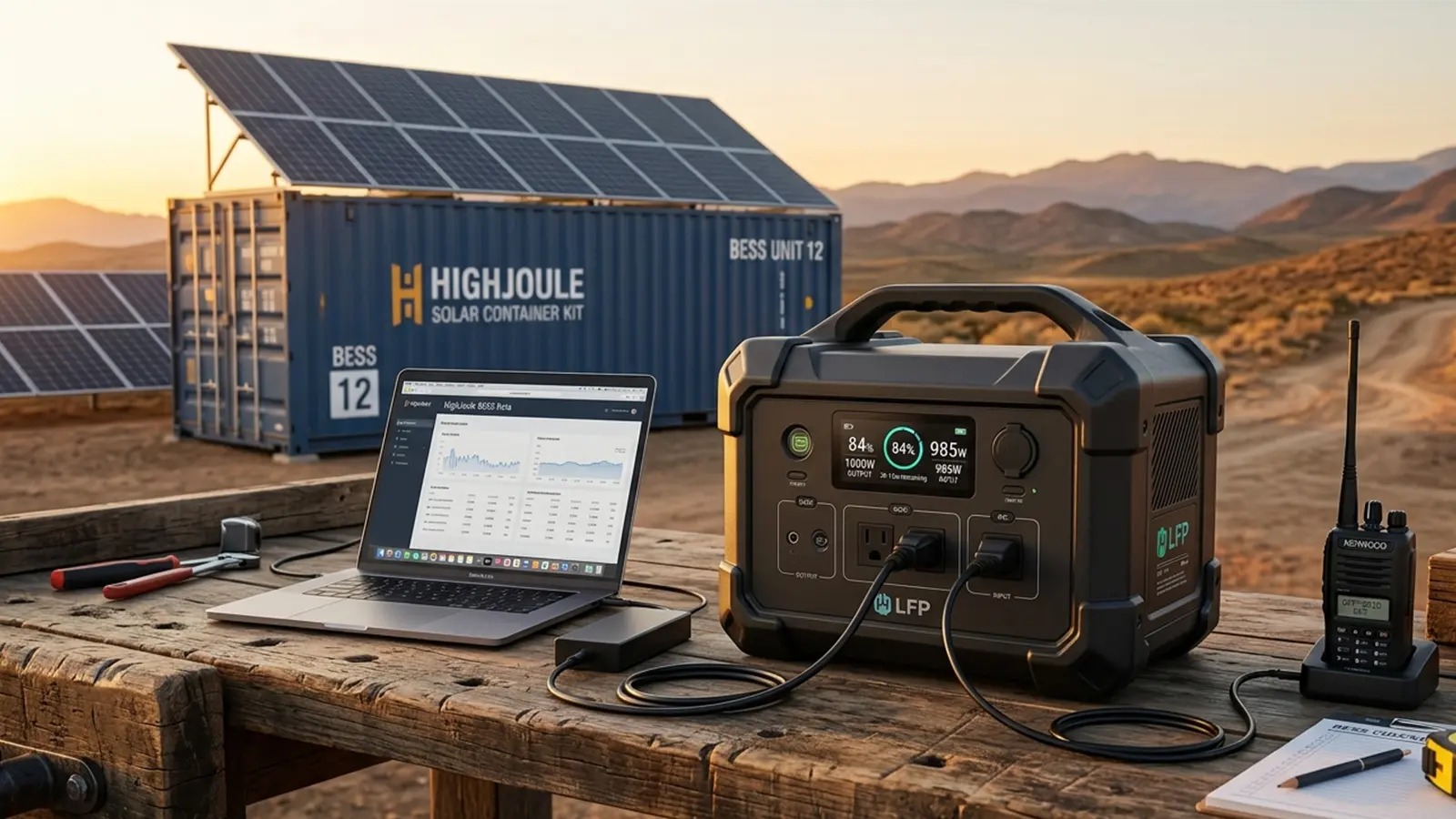
Even the best BESS needs maintenance. When we’re cycling the main racks or doing a firmware update on the container’s master BMS, we use these 1000W units to keep the site’s comms, laptops, and emergency lighting online. Think of your Solar Container as the “Power Plant” and the 1000W station as your “Mobile Outlet.”
The Verdict
- Don’t buy a 1000W power station based on a pretty photo. Buy it because it has:
- LiFePO4 cells (10-year life).
- Pure Sine Wave (so you don’t fry your laptop’s power brick).
- True UPS capability plus pass-through charging (keeps critical gear running while the unit recharges from solar during main system downtime).
Got a specific appliance you’re worried about? Comment below with the model number. I’ve probably tested it against one of these units and can tell you exactly how many hours it’ll actually run.