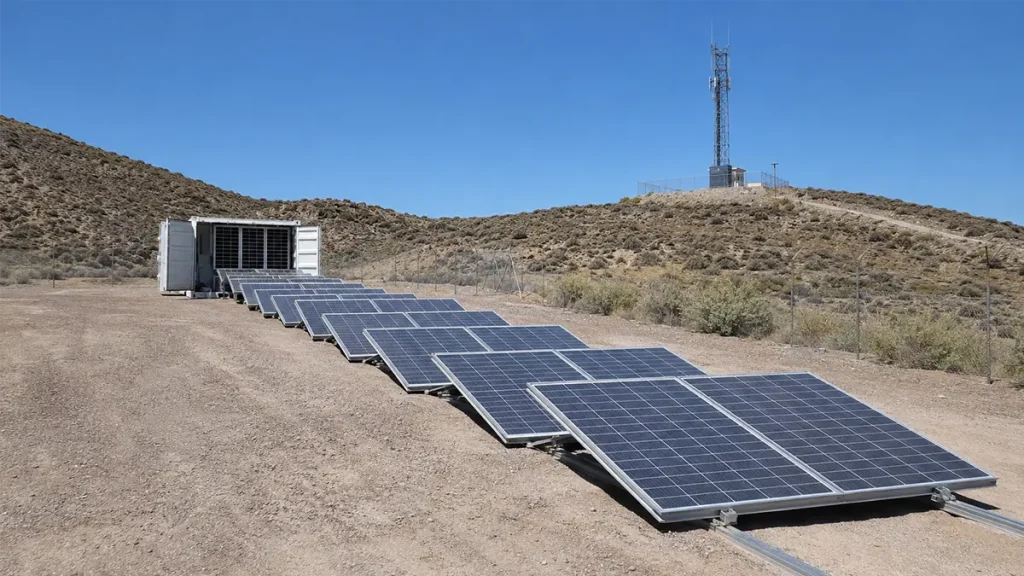
In our project experience, many of the problems that delay containerized solar BESS projects emerge after the system leaves the factory. They emerge in a container exposed to excessive handling shock at the port, at a site where the concrete pad was poured to the wrong specification, or in a control room where operators do not understand the BMS alarms. A solar container deployment risk assessment that focuses only on thermal runaway misses the risks that actually delay projects and inflate budgets.
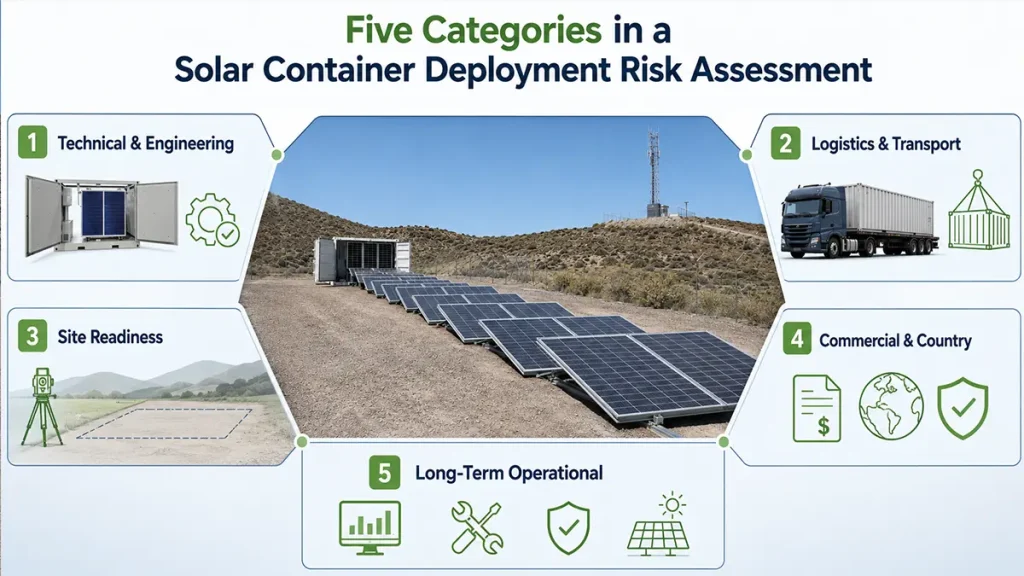
This guide organizes deployment risk into five categories: technical and engineering, logistics and transport, site readiness, commercial and country, and long-term operational. For a deeper look at the underlying hardware — battery chemistry, thermal management, PCS architecture — see our separate Container BESS Engineering Guide. This article focuses on what happens after the system leaves the factory and before it enters steady-state operation — using our experience shipping foldable PV container systems from Shanghai to sites in Sudan, Romania, Ukraine, Cambodia, and the Maldives.
Five Categories in a Solar Container Deployment Risk Assessment
1. Technical and Engineering Risks
These are the risks that should be caught during design review but often are not — either because the specification was too generic, or because interactions between subsystems only become visible under real operating conditions.
PCS and architecture mismatch: A DC-coupled container system can reduce conversion stages in certain PV-to-battery operating paths and may provide higher round-trip efficiency than an AC-coupled design under comparable conditions, but it also ties the PV and battery subsystems to a shared DC bus. If the PCS is sized for grid-parallel operation but the site requires off-grid black-start capability, the system may not meet the actual load profile. Our Sudan deployment exposed this during commissioning — the site’s actual peak demand was higher than the load data provided during the bidding phase. The fix required a PCS firmware update and a revised battery dispatch strategy. The takeaway: validate the PCS operating modes against site-specific use cases before locking the specification.
Foldable mechanism mechanical fatigue: Foldable PV systems are deployed and retracted far more often in the field than in factory cycling tests. During our Romania project — four 46 kW foldable containers on a site with seasonal wind gusts — we observed higher-than-expected wear on the hinge locking pins after the first winter. The fix was a change in material specification for the locking mechanism. For an RFQ, we now recommend requiring the supplier to declare the tested deployment cycle count and the maintenance interval for the folding mechanism.
Thermal management assumptions: Liquid cooling performs well in controlled environments, but desert sites with ambient temperatures above 45°C push the coolant loop harder than standard factory tests. In one of our Middle East deployments, the cooling system tripped on high coolant temperature during the second week of operation because the site’s actual ambient was 4°C higher than the design specification. The lesson: specify the cooling system’s maximum ambient temperature with a margin, and require the supplier to provide the derating curve.
2. Logistics and Transport Risks
Transport is where containerized BESS has a clear advantage over site-built systems — the container IS the shipping unit. But that advantage only works if the logistics chain is planned end-to-end.
Container handling damage: ISO containers with CSC safety approval plates are designed for standardized handling, but the internal equipment — battery racks, PCS cabinets, cable trays — must survive the same journey. A container that is structurally sound can still arrive with loose busbar connections or cracked module frames if internal bracing was designed for road transport only, not for the lateral forces during ship loading. Specify internal bracing and shock monitoring in the transport requirements section of the procurement document.
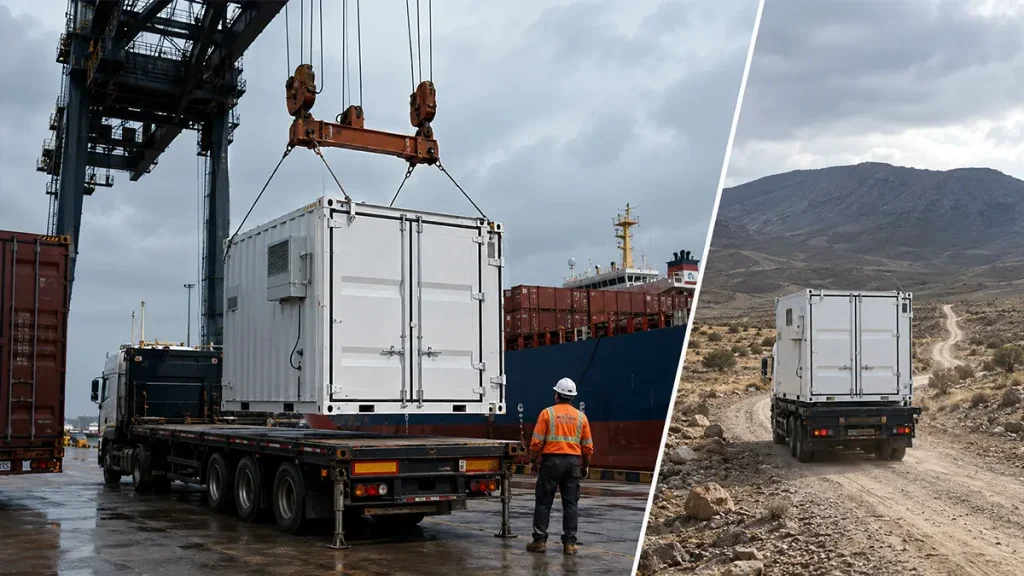
UN 3536 and IMDG Code compliance: A containerized BESS with lithium batteries installed may be classified under UN 3536 when the batteries are installed in a cargo transport unit and are designed to supply power external to that unit. Final classification must be confirmed with the carrier, the dangerous-goods adviser, and the competent authority. The IMDG Code, 2024 Edition (Amendment 42-24, mandatory from 1 January 2026), governs sea transport. One of the most common delay triggers we encounter is missing or incomplete Dangerous Goods documentation. The supplier must provide the UN 38.3 test summaries, the Dangerous Goods declaration, and the transport compliance statement well before the planned shipment date — the documentation lead time alone can be 2 to 3 weeks.
Multi-modal transfer risk: A container that leaves Shanghai by truck, transfers to a container ship, is offloaded at a regional hub port, and travels the last 300 km by road to a remote mine site goes through four handling transitions. Each transition is a damage risk point. In many of our projects, the highest-risk transfer has been the final road segment, particularly where local infrastructure was not designed for fully loaded 20 ft or 40 ft containers. Request a route survey as part of the supplier’s logistics plan.
3. Site Readiness Risks
Site readiness failures are frustrating because they are almost always preventable. They are also the most expensive — crane standby charges and idle commissioning teams can quickly exceed the contingency allocated for site preparation.
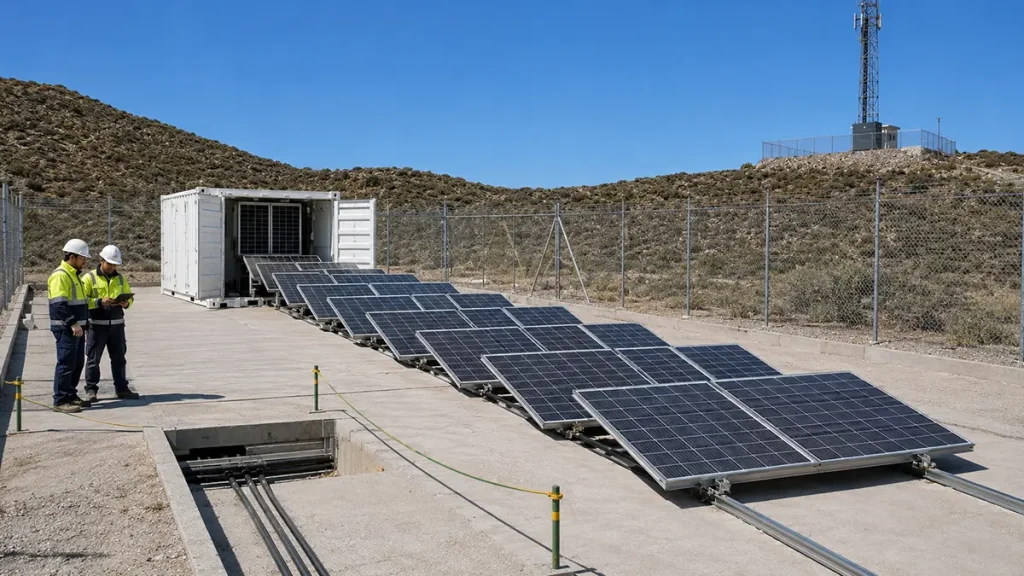
Foundation and civil works: A 20 ft containerized BESS can weigh over 15 metric tons when fully equipped with batteries and PV mechanisms. The foundation must handle not just the static load but the dynamic load during deployment of foldable arrays. A concrete pad poured to a standard warehouse floor specification will not necessarily survive a 40 ft container with unfolding PV wings. We have seen pads crack within the first week because the specification assumed uniform load distribution and the actual load concentrated on the corner castings. The RFQ should include a foundation load specification sheet.
Grid interface mismatch: A BESS configured or certified only for a 50 Hz grid may fail to connect or operate correctly at a 60 Hz site unless the PCS supports the required frequency and is properly reconfigured and recommissioned. We have received support calls from sites where the procurement team ordered the correct model but the actual site supply was a local generator running at a different frequency. Specify the grid parameters — voltage, frequency, phase configuration, earthing scheme — in the site readiness checklist, and have the site owner confirm them in writing before the container leaves the factory.
Local technical capability gap: Sites in remote or developing regions may lack technicians familiar with DC-coupled solar-storage systems. Our Sudan and Cambodia deployments both required remote commissioning support — our engineers guided the local team via satellite link. If the supplier does not offer remote commissioning, the RFQ should explicitly require a commissioning engineer on-site, and the project budget should include travel, accommodation, and per-diem for that person.
4. Commercial and Country Risks
These risks are the hardest to quantify but often have the largest financial impact. They sit outside the technical specification entirely — in the realm of trade policy, currency markets, and local bureaucracy.
Customs clearance and import duties: Containerized BESS crosses multiple tariff classification boundaries. It contains PV modules (HS code for solar panels), lithium batteries (separate tariff line), power electronics (inverters/converters), and the container structure itself. Different countries classify integrated systems differently. In one of our African projects, the container was initially classified as a “prefabricated building” by local customs, triggering a 25% duty rate instead of the expected renewable energy equipment rate. Resolution took three weeks. Include customs classification and duty assessment in your pre-shipment checklist.
Currency and payment risk: International container BESS transactions are typically denominated in USD or EUR, but the buyer’s budget may be in a local currency that fluctuates between contract signing and final payment. Exchange-rate movements during a 30- to 45-day production window can materially affect the buyer’s local-currency project cost. We recommend structuring payment milestones so that the majority of the contract value is settled before the container leaves the factory — this reduces the window of currency exposure for the buyer.
5. Long-Term Operational Risks
Deployment risk does not end at commissioning. The first 6 to 12 months of operation reveal whether the system was genuinely designed for its environment.
Performance degradation: A solar container deployed in a high-irradiance, high-temperature environment will experience faster battery degradation than the standard cycle-life curve suggests. After the first 12 months of operation at our Sudan site, measured usable battery capacity was approximately three percentage points below the temperate-climate projection used in the original performance model. The comparison was based on corrected capacity-test data rather than BMS display values alone. This was within the warranty envelope. Ask the supplier to provide a degradation model specific to the site’s climate profile, not a generic datasheet curve.
Remote monitoring reliability: Satellite and cellular connectivity work well in theory. In practice, Sudan’s cellular coverage map showed coverage at the mine site, but the actual signal strength was marginal during sandstorms. Our system defaulted to local data logging with periodic satellite bursts, which worked but delayed fault detection by hours. Specify the minimum acceptable data latency for remote monitoring and require the supplier to describe the failover behavior when primary connectivity is lost.
Spare parts and consumables: A container BESS in a remote location cannot wait 4 to 6 weeks for a replacement PCS module. Include a recommended spares list in the RFQ response — not just major components but consumables like coolant, air filters, and connector seals. Our standard recommendation: a commissioning spares kit shipped with the container, and a 2-year consumables package shipped separately.
How Containerization Reduces Deployment Risk
The container form factor itself is a risk mitigation tool — if the procurement specification uses it correctly. Here is how a factory-built container system addresses each category:
| Risk Category | Container-Specific Mitigation | Why It Matters |
| Technical | Factory pre-integration and FAT | Subsystem interactions are tested before shipping; on-site integration errors can be substantially reduced |
| Logistics | ISO/CSC standard container | Standardized global handling, lift, and transport equipment; containerized cargo may reduce special handling requirements |
| Site readiness | Self-contained, pre-wired | Significantly less on-site DC wiring and PV structural assembly compared with a conventional ground-mounted system |
| Commercial | Single-supplier, single-shipment | May simplify customs documentation with one logistics chain and one set of shipping documents; simpler than multi-vendor site integration |
| Operational | Integrated EMS with remote access | Factory-configured monitoring; satellite/cellular failover; factory-integrated EMS can reduce external SCADA integration work |
What a Real Deployment Looks Like: Sudan Case
In 2025, we shipped a 40-foot foldable photovoltaic energy storage container to a mining site in Sudan. The deployment plan assumed the container would travel by road from Port Sudan to the mine site along a route surveyed six months earlier. Between the route survey and the actual shipment, the rainy season had washed out a 40 km section of the planned route, forcing a 120 km detour on unimproved roads. The container arrived intact — the CSC certification and internal bracing did their job — but the detour added four days to the delivery schedule and consumed fuel budget allocated for commissioning.
The takeaway: include both schedule contingency and additional transport budget for the final 100 km. These contingencies are often omitted from the original project plan but are frequently needed during last-mile delivery.
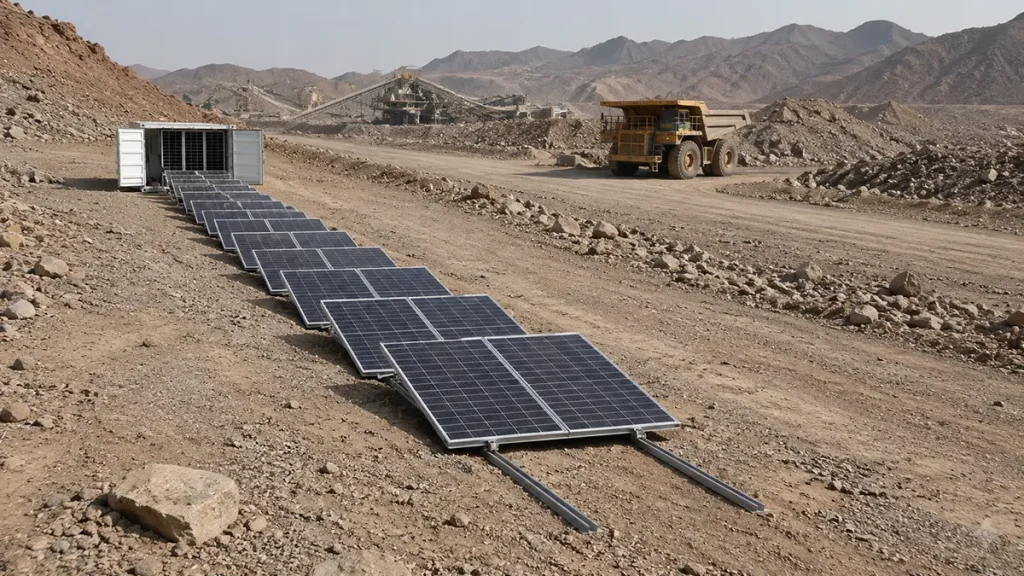
Download the Solar Container Deployment Risk Assessment Checklist
We have compiled a one-page solar container deployment risk assessment checklist covering all five risk categories with a simple traffic-light rating system (Red/Amber/Green) for each item. It is designed to be completed jointly by the buyer, the supplier, and the site owner before the container leaves the factory — because the most expensive risks are the ones discovered after that point.
Get the checklist: Contact our engineering team at [email protected]. We send it as a free PDF. Use this solar container deployment risk assessment as a pre-shipment gate review — if any item is Red, fix it before the container moves.
Need a Project-Specific Risk Review?
Our engineering team reviews deployment risk assessments for projects across Africa, Europe, Southeast Asia, and the Middle East. If you have a project in planning or a supplier proposal you want validated against real-world conditions, reach out to our team. We would rather spend an hour reviewing your deployment plan now than troubleshoot problems at a remote site later.
Frequently Asked Questions
What is the single most common deployment failure in containerized BESS projects?
Site readiness — specifically, the foundation or concrete pad not matching the container’s load specification. It has been one of the most frequent causes of deployment delay in our project experience. It requires no specialized BESS knowledge to verify, just a tape measure, a level, and someone who reads the foundation drawing.
How early should logistics planning start for an international container BESS shipment?
At the RFQ stage — not after contract award. The shipping route, port infrastructure, and last-mile road conditions determine whether a 20 ft or 40 ft container is feasible, which in turn determines the system configuration. Changing container size after the specification is locked triggers a cascade of rework. In our project experience, starting logistics planning only after contract signing can add several weeks to the delivery timeline compared with logistics planning that begins during the RFQ phase.
Do I need a separate risk assessment for each country I deploy in?
Yes — but the technical core of your solar container deployment risk assessment transfers across jurisdictions. What changes are the logistics profile (port-to-site route, customs regime), the grid interface parameters, and the commercial conditions (currency, duties, payment terms). Create a master risk template with the five categories, then customize the logistics and commercial sections for each destination country.
What insurance coverage applies to containerized BESS during deployment?
Marine cargo insurance typically covers the container and its contents from factory to site, but coverage terms vary widely for lithium battery shipments. Some policies exclude thermal runaway damage or require the system to be shipped at a specified state of charge. The buyer should confirm coverage terms with their insurer before shipment and provide the insurer with the supplier’s UN 38.3 test summaries and transport compliance documentation. For buyers developing their deployment risk framework, the EPA BESS safety considerations page EPA BESS safety considerations and the IMDG Code (2024 Edition) provide regulatory and safety context.
How do I verify that the supplier has actually tested for the risks they claim to have addressed?
Three documents: the FAT report, showing what was tested at the factory; the transport compliance statement, confirming the applicable dangerous-goods classification and transport requirements; and the commissioning checklist, showing what was verified on site before handover. If the supplier cannot produce all three with test data — not just checkmarks — treat the untested items as residual risks in your project risk register. A checkmark without test data is a declaration, not evidence.
About the Engineering Team
We are the engineering team at Shanghai HighJoule Energy Technologies Ltd., designing and manufacturing containerized solar BESS in Shanghai and deploying them globally. Our systems have been shipped to and commissioned in Sudan, Romania, Ukraine, Cambodia, Bulgaria, Maldives, and other countries across Africa, Europe, and Asia — each deployment teaching us something new about what can go wrong between the factory and the field.
Learn more about the HJ-FBESS solar container, read our the Container BESS Engineering Guide
Disclaimer
This guide is based on our experience deploying containerized solar BESS internationally. The risks described are real risks we have encountered on projects, but every site and supply chain is different. This article is not a substitute for a formal project risk assessment conducted by qualified engineers familiar with the specific site, route, and regulatory environment. Insurance coverage, customs classifications, and transport regulations referenced are indicative and should be verified with your insurer, freight forwarder, and local authority before shipment.
Last Updated on 07/30/2026