A quick word before we begin. If you are looking for a portable power station for camping, RV trips, or home backup during a blackout, this is not the right page. The industrial mobile power infrastructure discussed here starts at the scale of a construction site and goes up — kilowatts and megawatts, not watts and watt-hours. If you operate a mine, a construction project, a remote industrial facility, or a field camp that runs on diesel generators and you are wondering whether there is a better way, keep reading.
Industrial mobile power is not one product. It is a spectrum. At one end, a 5-kilowatt portable generator on a pickup truck. At the other, a 500-kilowatt containerized microgrid on a flatbed. Most site operators already know what power level they need. What many do not realize is that the options at that power level have changed significantly in the last five years. The diesel generator that would have been the only realistic choice in 2020 now competes with hybrid trailer systems, battery energy storage, and fully solar-integrated containers.
This article maps the full spectrum of industrial mobile power infrastructure so you can see exactly where your site sits, and what your options are at each tier. One thing to be clear about up front: no single power system is right for every site. Portable generators are the correct answer for small, short jobs. Trailer-mounted diesel units remain the workhorse for projects with reliable fuel access. Containerized solar-battery systems earn their place when fuel logistics become the binding constraint. The goal is not to sell you a specific product — it is to give you a framework for matching your actual site requirements to the right tier of mobile power.
The Mobile Power Spectrum: Three Tiers of Industrial Mobile Power Infrastructure
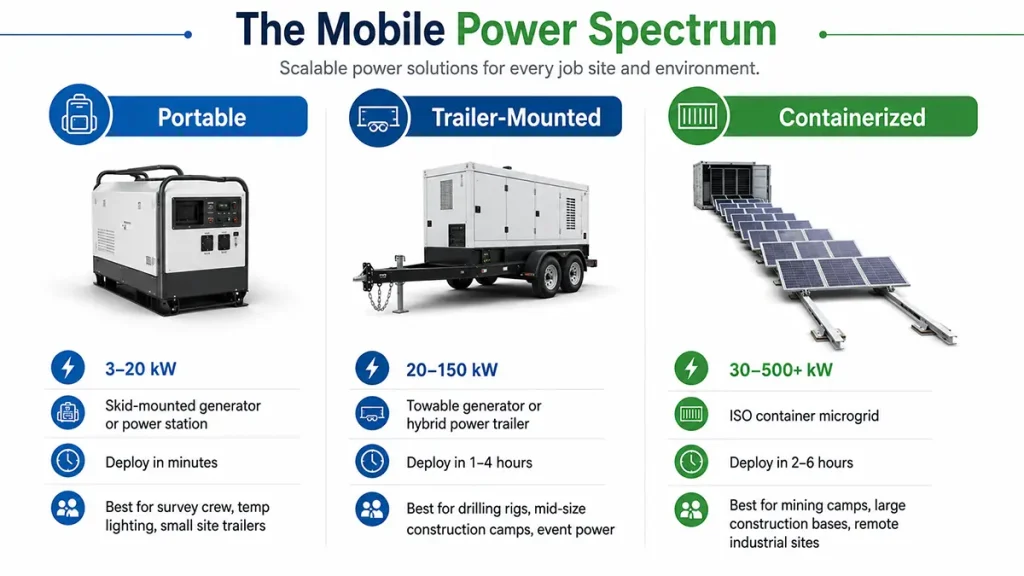
Every remote site needs power. The question is not whether to have it — it is what form it should take. A useful way to think about industrial mobile power infrastructure is three tiers, defined by two practical questions: how many kilowatts do you actually need, and how long will you be there?
| Tier | Power Range | Form Factor | Fuel Model | Deploy Time | Example Sites |
| Portable | 3-20 kW | Skid-mounted generator or power station | Diesel, gasoline, or battery | Minutes | Survey crew, small construction trailer, temp lighting |
| Trailer-Mounted | 20-150 kW | Towable generator or hybrid power trailer | Diesel, diesel-battery hybrid, or diesel-solar hybrid | 1-4 hours | Drilling rig, mid-size construction camp, event power |
| Containerized | 30-500+ kW | ISO container: gen-set, BESS, or solar-plus-storage | Solar-plus-battery, battery-only, or diesel-battery hybrid | 2-6 hours | Mining camp, large construction base, remote processing plant |
Notice something about that table? The tiers overlap. A 30 kW load can be served by a trailer or a container. The deciding factors are usually operational: fuel logistics, runtime duration, and whether the site relocates during the project. A drill rig that moves every three weeks needs something different from a mine camp that stays put for three years. The sections that follow walk through each tier, focusing on where containerized systems begin to outperform the traditional alternatives.
Tier 1: Portable Power — When Small and Fast Is All Your Site Needs
For loads under 20 kilowatts — a survey trailer, a small communications hut, temporary site lighting — a portable generator or battery power station is the right answer. These units fit on a pickup truck and start with a pull cord or a button. A 10 kW diesel generator running 12 hours a day burns roughly 25 to 35 liters of fuel. At remote-site prices — roughly $1.00 to $1.50 per liter once transport is included — that is $25 to $50 per day. For a two-week survey, the fuel budget is manageable. For a six-month construction camp, the arithmetic changes dramatically.
So when does a portable generator stop being the right answer? Not when it breaks — when the fuel truck cannot reach it. We worked with a mining exploration camp in West Africa that started with two 15 kW diesel generators for a 12-person survey team — perfectly adequate at that scale. Six months later, the camp had grown to 45 people with a core-drilling rig, and fuel consumption jumped from 70 liters per day to over 300.
The nearest fuel depot was 180 kilometers away on unpaved roads that washed out every rainy season. Fuel logistics — not generator cost — became the binding constraint. The camp added a solar-battery container to absorb the daytime base load, cutting diesel consumption back to about 80 liters per day and eliminating one full fuel run per week. The container achieved an estimated fuel-savings payback of about 14 months under the site’s fuel price and load profile.
Tier 2: Trailer-Mounted Generators — The Construction Site Power Workhorse
From roughly 20 kW to 150 kW, trailer-mounted diesel generators dominate industrial mobile power infrastructure. These machines power drilling rigs, construction site offices, concrete batch plants, and event stages. They are a known quantity: every rental company stocks them, every site electrician connects them, and every project budget has a line item for generator fuel. Manufacturers like Atlas Copco, Cummins, and HIMOINSA have refined this category over decades into reliable, standardized equipment.
About five years ago, the trailer segment started getting interesting. Several manufacturers now offer diesel-battery hybrid trailers that cut fuel consumption by 40 to 60 percent. A battery bank handles variable loads, and the diesel generator runs near its most efficient operating point to recharge the batteries. This eliminates the inefficiency of a large diesel engine running at 20 percent load overnight to power a few lights and a communications rack. For sites with highly variable load profiles, a hybrid trailer can pay back its cost premium in under two years.
Trailer-mounted systems have one structural limitation, though: they still need diesel. Even a hybrid trailer that cuts fuel use by half still needs a fuel truck every week or two. For construction projects within 50 kilometers of a fuel station, this is not a problem worth solving. For sites where fuel is the single largest operational risk, it is the entire problem. That is where the containerized tier of industrial mobile power infrastructure becomes relevant.
Tier 3: Containerized Microgrids and Solar Battery Containers — When the Remote Site Outgrows Trailers
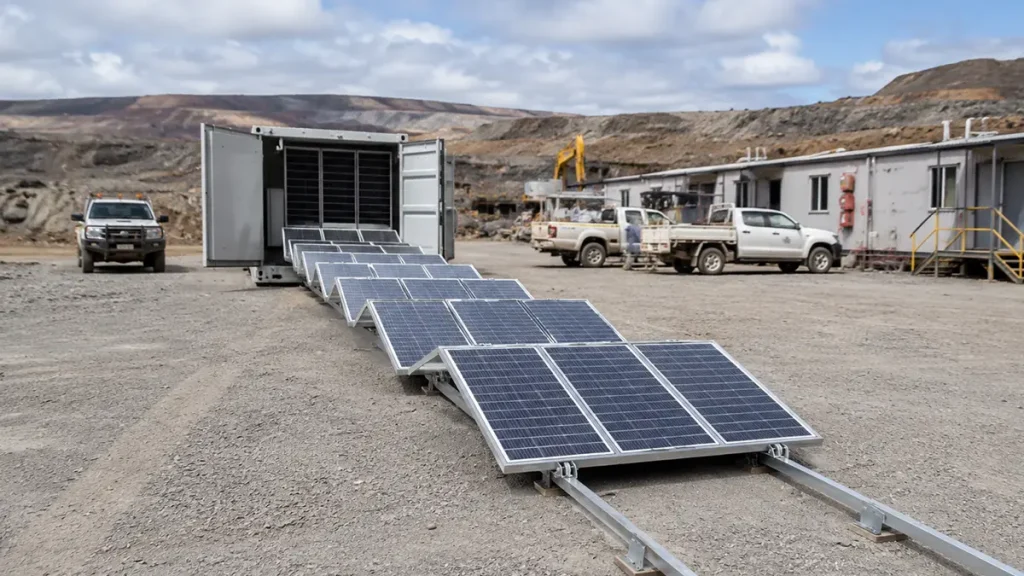
We learned the difference between trailers and containers on a copper mine site in the Congolese copper belt. A containerized mobile power system is a permanent installation that happens to be movable, rather than a portable unit that happens to be powerful. This distinction matters for three reasons.
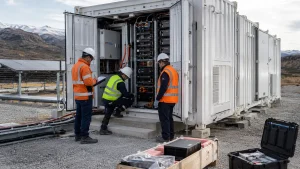
First, a standard ISO shipping container opens up global logistics. The same unit travels from our factory in Shanghai by container ship to Dar es Salaam, transfers to a flatbed truck, and arrives at a mine site without ever being unpacked or reconfigured. The container is the shipping crate, the equipment housing, and the weatherproof enclosure — all in one. Second, the physical volume of a 20-foot or 40-foot container allows photovoltaic panels, large battery banks, and power conversion equipment to coexist in a single integrated unit. A trailer does not have the surface area for meaningful solar generation alongside the generator and fuel tank. Third, containerized systems are factory pre-commissioned. Every cable, every protection relay, every control setting is configured and tested before the unit leaves Shanghai. The site crew connects the output cable and turns the key. Minimal on-site commissioning required.
Solar-Plus-Storage: A Mobile Solar Power Container for the Base Load
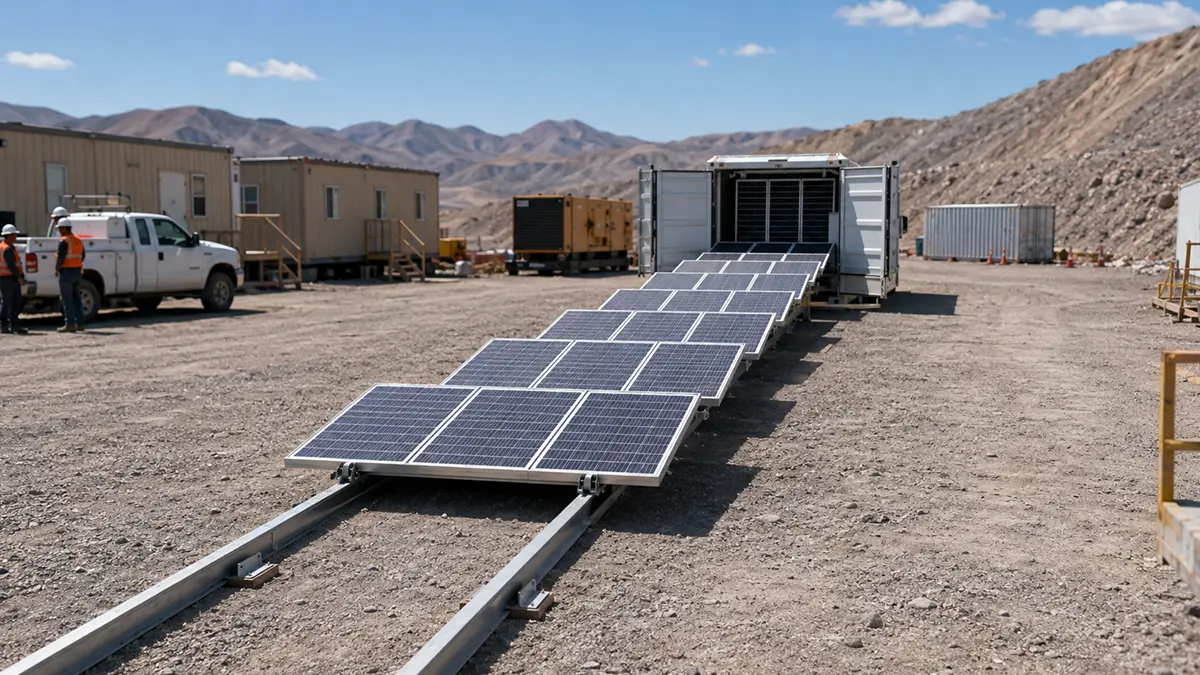
Within the containerized tier, solar-plus-storage systems represent the most significant advance in industrial mobile power infrastructure in decades. A diesel-only container generator can deliver 200 kW of prime power — on paper. In practice, it burns roughly 40 to 50 liters of fuel per hour at full load, and considerably more when operating below its efficient range. A solar-battery container of the same footprint, depending on solar resource and battery sizing, delivers 50 to 100 kW of continuous power with no diesel fuel consumption during solar-battery operation. The diesel unit wins on peak power. The solar unit wins on fuel logistics, noise, and emissions compliance — increasingly relevant as jurisdictions from the EU to Chile to Indonesia tighten emissions rules for remote industrial sites — a shift the IEA documented in its 2025 World Energy Outlook.
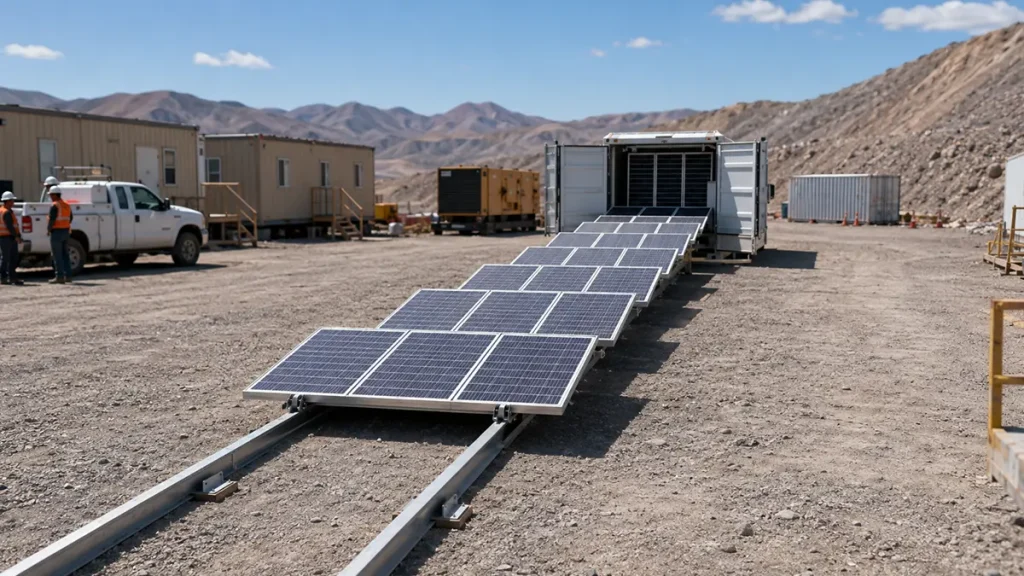
Here is the comparison that actually matters. It is not “solar vs diesel” at the same power rating. It is “solar for the base load, diesel for the peaks.” A mine camp that needs 150 kW for the full site might have a 60 kW base load — lighting, communications, water pumping, camp facilities — that runs 24 hours a day regardless of what the heavy equipment is doing.
A single solar-battery container can absorb that entire base load. The diesel generators handle the intermittent heavy loads. We had one site in the Andes where the camp sat in a narrow valley. The diesel generator noise bounced off the rock walls and kept the night-shift crew awake in their quarters 200 meters away. After switching the base load to a solar-battery container, the camp went silent at night for the first time in three years. The site manager told us that was worth more to him than the fuel savings.
Remote Site Power System Sizing: How Many Kilowatts Do You Actually Need
We see the same mistake on roughly half the sites we visit: over-provisioning. A project manager looks at the nameplate rating of every piece of equipment, adds them up, multiplies by 1.5 for margin, and orders a generator rated for that total — then runs it at 25 percent load for 90 percent of its operating hours. Diesel generators are least efficient at low load. Below 30 percent of rated output, fuel consumption per kilowatt-hour rises sharply, and unburned fuel accumulates in the exhaust — a condition called wet-stacking that shortens engine life. A better approach splits the site load into two categories.
Base Load vs Peak Load
Base load is what the site draws continuously, 24 hours a day: lighting, communications, camp facilities, water pumps, ventilation fans. Peak load is the intermittent draw from heavy equipment: crushers, conveyors, welding machines, drill rigs. For a typical mining exploration camp of 80 to 120 people, the base load might be 40 to 60 kW. The peak load — when the core drill is running and the welding shop is active — might hit 120 to 150 kW. Sized naively, you order a 200 kW generator. Sized intelligently, you use a 60 kW solar-battery container for the base load and a 100 kW diesel generator for the peaks. Total fuel consumption drops by roughly two-thirds.
Motor Starting: The Hidden Sizing Factor
Electric motors draw three to seven times their running current during startup. A 30 kW crusher motor can demand 150 kW or more for the first two to three seconds. A battery-based system handles this naturally — the battery bank delivers high burst current without the voltage sag that a diesel generator experiences when a large load hits. A diesel generator sized to start a large motor direct-online may need to be rated at two to three times the motor’s running power. In practice, a battery system sized for the running load, with inverter headroom for the inrush, can be smaller overall. If your site includes large motors, factor starting current into the power system specification. Soft starters or variable-frequency drives (VFDs) reduce the inrush to roughly 1.5 to 2 times running current, making battery-plus-diesel architectures even more favorable.
Hybrid Power System for Mining and Remote Sites: Diesel Today, Solar Tomorrow
We have yet to see a site go from pure diesel to pure solar in one jump. It almost never makes sense. The typical path for upgrading industrial mobile power infrastructure is incremental: add a solar-battery container sized for the base load, keep the existing diesel generators for peaks and backup, and let six months of operating data tell you whether a second container makes economic sense. The first container typically reduces diesel consumption by 50 to 70 percent. The site manager sees the fuel invoices drop, gains confidence in the technology, and often orders a second unit for the next dry season. This is not a compromise — it is rational procurement. The economics prove themselves on your actual load data, not a spreadsheet forecast.
One practical note: specify the container with a generator input port and automatic transfer logic from day one, even if you plan to operate mostly on solar. The integration cost is trivial compared to retrofitting later. During the rainy season in equatorial Africa, when cloud cover can persist for days, the energy management system (EMS) automatically starts the diesel, runs it at optimal load until the batteries recover, and shuts it down — all without operator intervention. The site crew keeps the fuel tank topped up. They do not manage generator runtime.
Case Evidence: Industrial Mobile Power Infrastructure in the Field
Xinjiang Desert — Replacing Diesel Base Load at a Remote Industrial Site
A remote processing facility in the Xinjiang desert ran on two 150 kW diesel generators burning a combined 600 liters of fuel per day. The site’s base load of 50 to 60 kW — lighting, HVAC, monitoring equipment, camp services — accounted for roughly a third of the generator runtime but half the fuel consumption, because the generators ran at inefficient low loads through the night. We installed a 57 kWp solar-battery container with 241 kWh of storage, sized to absorb the entire base load. The diesel generators now run only during daytime peak processing hours. Fuel consumption dropped from 600 to approximately 180 liters per day — a 70 percent reduction. The container’s installed cost was recovered in 16 months of fuel savings alone, not counting reduced generator maintenance intervals.
West Africa — When Fuel Logistics Become the Real Constraint
A mineral exploration camp in West Africa grew from a 12-person survey team to a 45-person operation with core drilling over a single field season. The camp’s two 15 kW generators were replaced by a 60 kW trailer-mounted diesel unit — which then consumed over 300 liters per day. The nearest fuel depot was 180 kilometers away on unpaved roads that became impassable during the rainy season. The site’s fuel autonomy was roughly four to five days. We added a 20-foot solar-battery container to handle the camp’s 25 kW base load. The diesel generator now runs about four hours per day at efficient load to support the drilling rig and recharge batteries during sustained cloud cover. Fuel consumption fell to about 80 liters per day.
Here is what that number actually means on the ground: the camp went from four to five days of fuel autonomy to over three weeks. During the rainy season, that is the difference between keeping the drill turning and sending everyone home. The fuel truck now visits once every three weeks instead of twice a week.
HJ-FBESS Mobile Power Solutions for Mining and Remote Industrial Sites
The table below shows where our containerized systems fit within industrial mobile power infrastructure. Every model shares the same architecture: DC-coupled solar and battery storage, factory pre-commissioned in an ISO-certified container, deployable with standard site handling equipment and a small crew.
| Model | Container | PV | Storage | Inverter | Spectrum Position | Best Fit |
| HJ-10G-P024E040 | 10 ft | 24 kWp | 40 kWh | 20 kW | Portable-Container crossover | Survey camp, small comms hub, field office |
| HJ-20G-P057E241 | 20 ft | 57 kWp | 241 kWh | 50 kW | Mid-container: base load workhorse | Mining camp base load, construction site complex |
| HJ-20H-P068E241 | 20 ft HC | 68 kWp | 241 kWh | 60 kW | Mid-container: high PV for equatorial | Tropical mining, agri-processing, telecom hub |
| HJ-40H-P136E482 | 40 ft HC | 136 kWp | 482 kWh | 120 kW | Upper-container: large base load | Large mine camp, processing plant, multi-building complex |
Models above 50 kW are typically paired with existing diesel generators in a hybrid configuration. All models include an integrated generator input port and automatic transfer for seamless diesel integration.
For detailed specifications, visit our HJ-FBESS Solar Container.
Decision Framework: Where Does Your Site Sit on the Spectrum
Answering three questions will place your site on the mobile power spectrum with more precision than any product brochure. Many site operators know their generator rating by heart but have never calculated their actual average load. That number changes everything about how you should configure industrial mobile power infrastructure.
| Question | If Your Answer Is… | Your Tier Is Likely… | Next Step |
| Continuous base load? | Under 10 kW | Portable | Generator or battery station. Fuel logistics manageable. |
| Continuous base load? | 10-40 kW | Trailer or container | Trailer if fuel accessible. Container if fuel distance >50 km. |
| Continuous base load? | 40+ kW | Containerized | Containerized solar-battery gives best fuel economics and weather protection. |
| Distance to reliable fuel? | Under 20 km, all-season | Trailer-mounted | Diesel logistics not your binding constraint. Hybrid trailer cost-effective. |
| Distance to reliable fuel? | Over 50 km, or seasonal | Containerized solar | Fuel logistics are your primary risk. Solar-battery for base load independence. |
| Site duration? | Under 6 months | Portable or trailer | Containerized may not amortize. Lease portable or trailer for short projects. |
| Site duration? | 12+ months | Containerized | Fuel savings from solar-battery typically pay back within 12-18 months. |
If your site does not fit neatly into one row, our engineering team provides a free site-specific analysis. Send us your generator fuel logs for a typical month; we calculate your actual base load and recommend a industrial mobile power configuration that fits your operational reality, not a catalog specification.
For a site-specific mobile power analysis, visit our mining energy solutions.
Frequently Asked Questions
What is the difference between a trailer generator and a containerized system?
A trailer-mounted unit is built to move frequently and connect fast. A containerized system is built to stay put, handle weather, and integrate solar. If your site relocates monthly, stay with trailers. If it stays for a year or more, the container starts to pull ahead on fuel economics and crew comfort.
How much fuel can a solar-battery container actually save?
For sites where the base load is 40 to 60 percent of total demand, a solar-battery container absorbing that base load typically reduces total diesel consumption by 50 to 70 percent. The exact figure depends on solar resource, base load fraction, and how well the load profile aligns with daylight hours. Sites with predominantly daytime loads — water pumping, processing plants — see the highest savings.
Can a containerized system power heavy equipment like crushers and drills?
Yes, with the right architecture. Motor-driven equipment with high starting currents benefits from a battery system’s burst-power capability without voltage sag. The key is sizing the inverter for the starting inrush, not just the running load. For motors above 100 kW, we typically recommend soft starters or VFDs and a hybrid configuration where the battery handles the running load and the diesel generator covers the starting surge.
How do these systems hold up in extreme heat or dust?
Better than you might expect. The container is a sealed steel box — it handles conditions that would destroy an open-frame generator in weeks. Lithium iron phosphate (LFP) batteries with liquid cooling maintain internal temperature below 35°C even at 50°C ambient. That part works reliably.
What surprised us was the dust. At our Xinjiang site, fine desert silt coated the PV panels fast enough to drop output by 8 to 10 percent within two weeks. We had budgeted for quarterly manual cleaning; within the first month it was clear that was nowhere near enough. We switched to automated dry-brush cleaning robots running every 48 hours, and output stabilized within 2 percent of rated capacity. If your site has airborne particulates, budget for automated cleaning from day one. It costs less than the lost production from dirty panels.
What happens during a week of rain with no solar production?
The EMS monitors battery state-of-charge and weather forecasts. If a multi-day cloudy period is predicted, the system pre-charges the batteries from the diesel generator before the weather arrives, then maintains the base load on battery power through the event. The diesel starts automatically if the battery drops below a configurable threshold — usually 20 percent. The site always has power. The only variable is whether it comes from sun or fuel.
Can a containerized system ship to a landlocked mine in Africa or Central Asia?
Yes — and this is where the ISO container proves its value. The container travels by ship to the nearest major port, transfers to rail or truck for the inland leg, and arrives on site as a fully functional power station. We have delivered units to sites in the Congolese copper belt, the Mongolian steppe, and the Peruvian Andes using standard multimodal logistics. No separate packing or unpacking required. The container is the shipping crate, the equipment housing, and the weatherproof enclosure.
What maintenance does a solar-battery container need compared to a diesel generator?
Ask any site mechanic what they spend their time on, and the answer is almost always the same: generator maintenance. A diesel generator in continuous service needs oil and filter changes every 250 to 500 hours, plus coolant, belts, and eventual engine overhauls. A solar-battery container requires quarterly panel cleaning, an annual connector inspection, and battery cell voltage checks. The liquid cooling loop is sealed and maintenance-free. The EMS monitors itself and sends alerts if anything drifts. In three years of operation at our Xinjiang site, no unscheduled maintenance interventions were reported during the operating period.
Can I start with one container and add more later?
Yes. The DC-coupled architecture is modular. Additional PV capacity connects via the auxiliary DC input, and additional battery cabinets can be paralleled. Multiple containers operate together through the EMS. A site that starts with one HJ-20G-P057E241 can add a second unit later to create a 114 kWp, 482 kWh microgrid — without replacing the original equipment. This is how most of our mining clients deploy: prove the economics with one unit, scale with the data.
About the Engineering Team
Shanghai HighJoule Energy Technologies Ltd. has designed and manufactured distributed energy systems since 2005. Our engineering team includes specialists in power electronics, battery thermal management, structural engineering for ISO container integration, and remote microgrid control, and we participated in drafting the Technical Specification for Energy Management Systems of Commercial and Industrial Energy Storage. We hold certifications across UL, CE, CCC, and GB/T frameworks, and our containerized systems have been deployed on the Tibetan Plateau at 4,500 meters, in the Xinjiang desert at 50°C, and at mine sites and industrial facilities across Africa, South America, and Central Asia.
Disclaimer
Fuel savings estimates in this article are based on HighJoule’s field measurements and customer-reported data from specific deployments. Actual savings vary with site-specific solar irradiance, load profile, ambient temperature, diesel generator efficiency, and fuel pricing. The mobile power spectrum framework is an educational model; individual site requirements may not fit cleanly into a single tier. Certification and standards information reflects requirements as of July 2026; buyers should verify current requirements for their jurisdiction. This article is for educational purposes and does not constitute engineering or procurement advice for any specific facility.
Last Updated on 07/30/2026