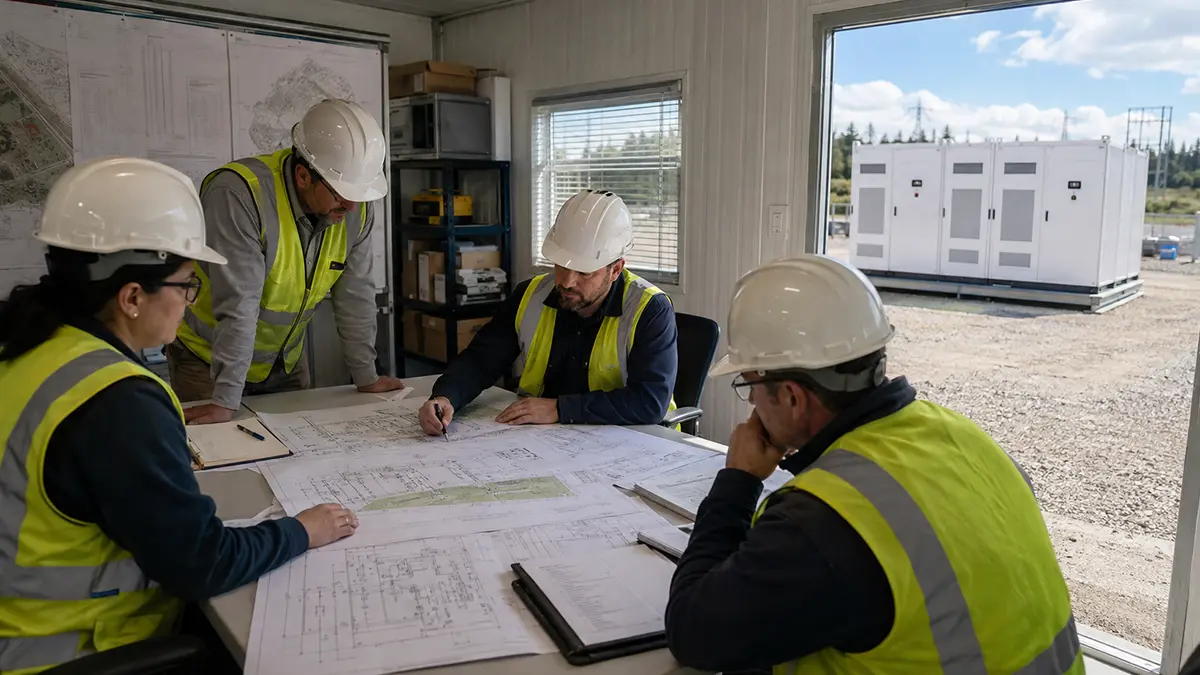
Field-power procurement begins with the operating boundary, not with a “portable” label. Before award, the project team should record the required load boundary, site conditions, access, interfaces, delivery condition, acceptance path and accountable owners. A deployable power package can be compared only when these project inputs are explicit.
The U.S. Department of Energy Federal Energy Management Program’s BESS procurement checklist is for federal agencies and is intended for commercial-scale lithium-ion BESS procurement. It provides early-stage tasks, questions and reference points.
This article uses that limited DOE scope as a procurement reference and applies a buyer-controlled project record to field-power comparison. It is not military qualification or tactical-use guidance.
Define the field-power decision before requesting offers
A civil-protection or field-operations requirement may involve temporary service, remote access, an existing load, a new installation, or a staged handover. Those scenarios do not establish a universal technology choice. They do establish questions that an award record must answer: what is the project load boundary, what must connect at site, who owns the interfaces, and what evidence closes each phase?
Field Power Evidence Matrix
Transfer this buyer-controlled matrix to the RFQ, bid-review or project-interface log. It is not a fillable website record, technical specification or approval.
| Decision area | Evidence to request or record | Accountable project owner | Hold condition |
|---|---|---|---|
| Portable/deployable configuration | Quoted package dimensions, mass, handling points/equipment, transport configuration, deployment footprint, setup sequence, stated environmental limits and power/energy/load profile | Supplier submits; owner/EPC reviews | Portability is asserted without a configuration-specific record. |
| Operating boundary | Required load boundary, operating mode, duty assumptions and explicitly excluded loads | Owner / operations lead | Load boundary is unknown or different bidders use different assumptions. |
| Site and access | Site location, access route, lifting/handling constraints, operating clearance and site limitations | Owner / EPC site lead | Access, handling or clearance evidence is absent. |
| Electrical and controls interfaces | Single-line boundary, cable/interface schedule, earthing/protection/communications responsibilities as applicable | EPC electrical and controls leads | No accountable owner is assigned to an interface. |
| Configuration control | Controlled offer revision, equipment schedule, drawings, stated exclusions and substitution process | Procurement lead / owner’s engineer | The proposed configuration cannot be traced to the reviewed offer. |
| Delivery and condition | Contract-defined delivery point, handling evidence, inspection record and condition-report responsibility | Party named in contract / logistics lead | Shipment release, carrier acceptance or delivery condition is being assumed. |
| Acceptance path | Factory-scope record, installation verification, functional test, open-item register and handover criteria | Commissioning manager / owner | One test is assumed to close every phase. |
Decision rule: issue an award only when the proposed configuration is traceable to the project basis and every applicable row has evidence or a named, contract-controlled closure path. Use conditional award when open interfaces have owners and deadlines. Use hold when the operating boundary, interface owner or acceptance path is unresolved.
Keep field deployment stages separate
| Stage | Project record | What it does not prove |
|---|---|---|
| Award | Controlled offer, project basis, named exclusions and interface register | Shipment release, site readiness or operational acceptance. |
| Shipment release | Contract-defined release authority, required documents and condition/handling record | Carrier acceptance, import clearance, installation completion or commissioning. |
| Site installation | Site access, placement, civil/electrical/control interface verification and open-item record | Functional performance, authority approval or operator readiness. |
| Functional test | Agreed test scope, conditions, results, witness status and exceptions | Final handover unless contract criteria say so. |
| Handover | Contract-defined document set, open-item disposition, training/operations records where specified and acceptance decision | Any separate authority, insurer, transport or future operational decision. |
The matrix and gate are buyer-controlled project-governance tools. They do not determine military qualification, transport acceptance, site approval, authority approval or operational acceptance.
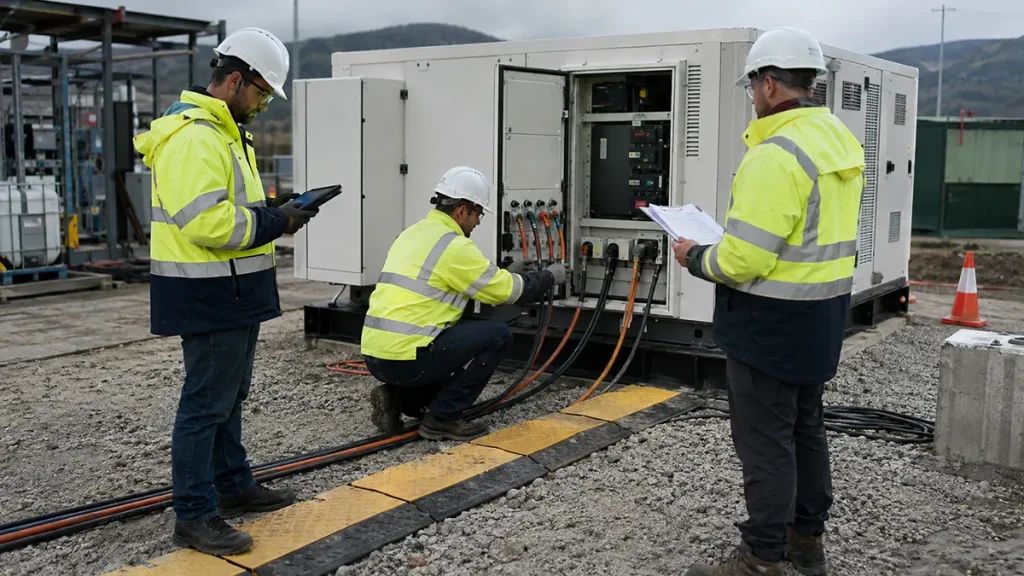
Questions to put in the procurement meeting
- What exact loads and operating modes are inside the requested project boundary?
- Which site, access, handling and interface constraints must every bidder use?
- Which documents identify the configuration being compared, and how are changes controlled?
- Who can release the package for shipment, and what record is required at delivery?
- Which test belongs to factory scope, site scope and contractual handover?
- Which decisions remain with the owner, EPC, authority, carrier or insurer?
Do not infer a project capability, qualification or acceptance outcome from a product category. Record the proposed configuration and the project evidence needed to make the next decision.
Request an EPC Interface Review
You may share the operating boundary, project location, site/access constraints, required interfaces, delivery conditions and open acceptance questions. Final configuration, transport, installation, authority decisions and contractual acceptance remain subject to the project specification and responsible parties.
Last Updated on 08/19/2026