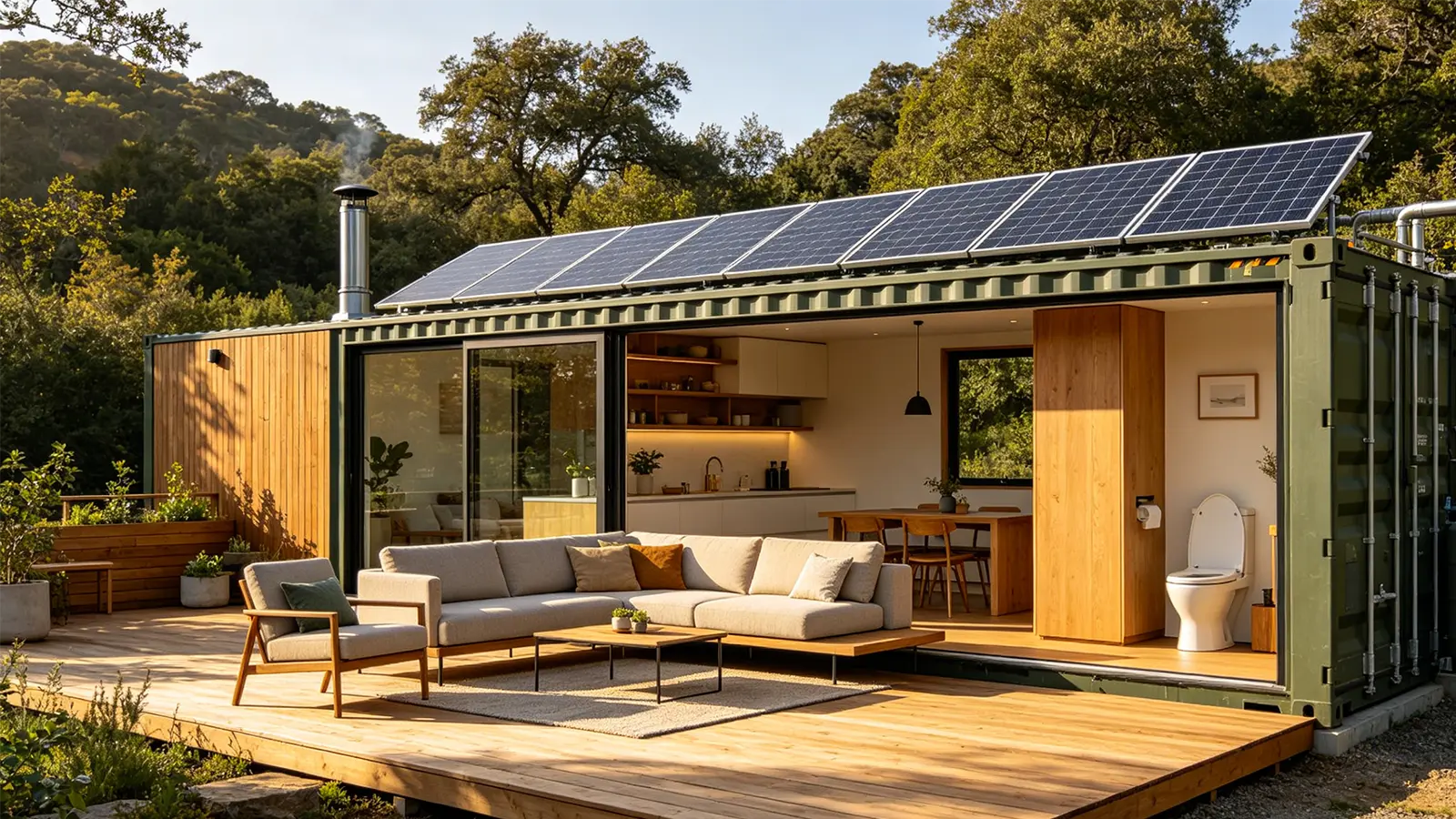
Let’s keep it real—40ft shipping container homes are blowing up in 2026, and for good reason! They’re cheap, tough as nails, and way better for the planet than regular houses. Plus, pairing them with off-grid solar? Total game-changer if you want to skip those sky-high electric bills and live independently.
This guide is written like we’re chatting over coffee—no fancy jargon, just straight-up useful info. I’m sharing real build costs, safe solar setup steps, actual stories from people who built these homes, and clear rules so you don’t get fined. Everything here lines up with real construction work, electrical safety standards, and local government requirements.
1. Introduction: Why 40ft Container Homes + Solar Are Popular in 2026
Let’s be honest—regular houses are crazy expensive, take 6+ months to build, and you’re stuck tied to the power grid. High electric bills and unexpected blackouts are frustrating for everyone.
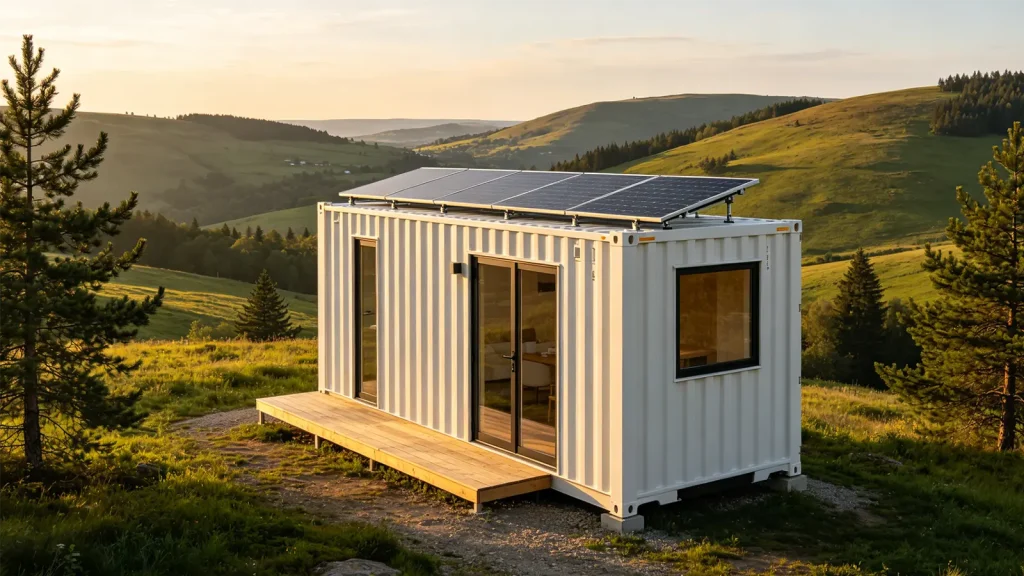
A 40ft shipping container is built to survive ocean storms and heavy stacking. It can be turned into a comfortable small home in just 4 to 8 weeks, at a much lower cost.
But most online guides give bad solar advice, fake cost numbers, and confusing permit rules. This guide fixes all those problems.
Common Headaches This Guide Fixes
- Wrong solar setups that leave you without power in winter
- Hidden costs that blow your whole budget
- Getting fined because you didn’t know local building laws
- Poor insulation that makes your home boiling hot or freezing cold
What You’ll Learn
- How to size solar panels and batteries safely with no fire risk
- Realistic build costs with no hidden fees
- Permit rules for USA, Europe, Australia and New Zealand
- Real case stories from actual container home builders
- How to avoid dangerous mistakes most first-timers make
2. Basics of 40ft Shipping Container Homes
2.1 Main Benefits
- Affordable: Used 40ft containers cost $5,000 to $8,000 delivered in the US
- Fast build: Move-in ready in just 4 to 8 weeks
- Super strong: Resists heavy wind, storms and snow
- Eco-friendly: Reuse steel instead of building new structures
- Solar ready: Flat roof perfect for solar panel installation
2.2 Standard Size Info
- Length: 40ft
- Width: 8ft
- Standard height: 8ft 6in
- High cube height: 9ft 6in (more headroom, worth extra cost)
- Living space: Around 323 sq ft
Important rule:
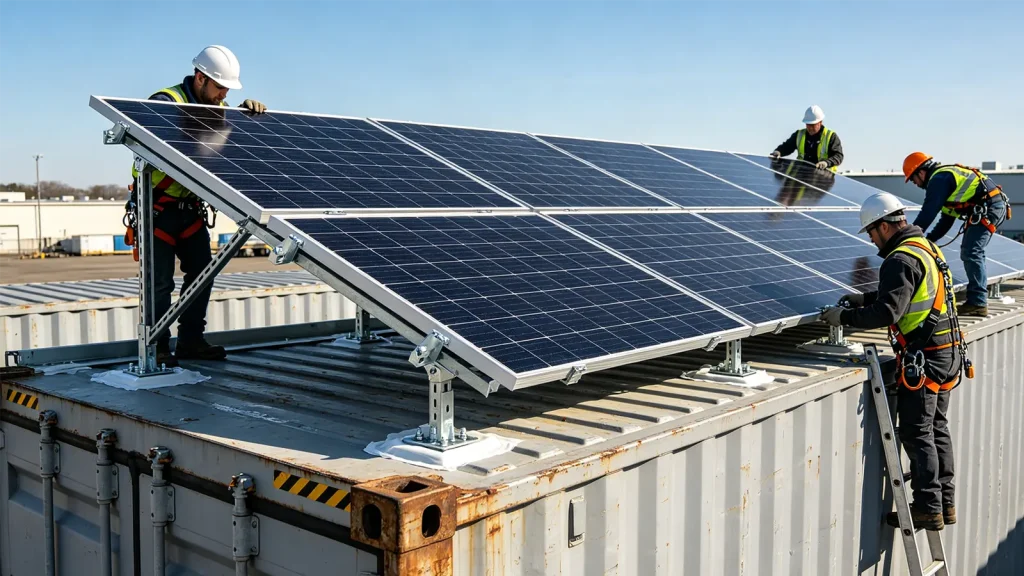
Container roofs are not designed for heavy concentrated weight. You can install solar panels, but only use factory reinforced roof rails. Do not drill random holes, or you will get dents and water leaks.
2.3 Steel vs Aluminum Container
Steel Container
Cheap, extremely strong, perfect for solar mounting. Just use anti-rust paint and proper insulation, it will last 25+ years.
Aluminum Container
No rust and lightweight, but much more expensive and easy to dent. Only recommended for humid coastal areas.
2.4 Insulation Must-Know
A metal container without insulation is too hot in summer and freezing in winter.
- Spray foam: Best for extreme hot or cold weather
- Rigid foam: DIY friendly for mild climate
- Mineral wool: Great fire resistance
Recommended standard: Walls R-21, Roof R-30. Never skip insulation.
3. Off-Grid Solar System Complete Safe Setup
Basic Solar Safety Rules
- Always use 24V or 48V system for off-grid solar. Never use 12V for large panels, it brings fire risk.
- Refrigerators do not run 24 hours at full power, they cycle on and off.
- Add 30% extra power to cover wire loss, inverter loss and cloudy winter days.
- Cold weather reduces lithium battery capacity, so size your battery larger for cold regions.
3.1 Real Daily Power Calculation
For a standard 2-person home:
Total daily power use is around 6.6 kWh.
Add 30% extra for power loss and bad weather.
Final required daily energy: 8.58 kWh.
3.2 How Many Solar Panels You Need
Based on local peak sun hours:
- Most US average areas: 5 pieces of 400W solar panels
- Cloudy areas like Seattle: 6 panels
- Sunny areas like Arizona: 4 panels
Best panel type: HighJoule’s N-type TOPCon half-cut monocrystalline panels (480W, bifacial double-glass) — 22%+ efficiency, 25-30 year lifespan, and optimized for container roof/ground mount setups . Perfect for both roof and ground installations, their durable design resists wind and snow loads common in container home locations.
3.3 Roof Mount vs Ground Mount
Roof Mount
Saves space, good sun exposure. Only drill on factory roof rails and seal every hole perfectly.
Ground Mount
No roof drilling, easy snow removal, adjustable angle for seasons. Best for shaded or snowy locations.
3.4 Battery Bank Sizing
Plan for 3 full cloudy days without sunlight.
- Lithium LiFePO4: Use up to 80% capacity, lifespan 10 to 15 years
- Lead-acid: Only use up to 40% capacity, lifespan 3 to 5 years
Cold areas need extra 20% battery to fix winter capacity loss.
Most 2-person homes need 30kWh lithium battery bank.
3.5 Charge Controller & Inverter
- Use MPPT charge controller for better efficiency on cloudy days
- Use pure sine wave inverter for home electronics
- Inverter size should be 2.5 times your maximum load, to support fridge and water pump startup surge power
3.6 Solar Installation Practical Tips
- Check roof rust and apply anti-rust paint before installation
- Mount brackets only on factory reinforced roof rails
- Seal all bolt holes with waterproof sealant
- Keep electric wires short to reduce power loss
- Always hire a licensed electrician for final connection
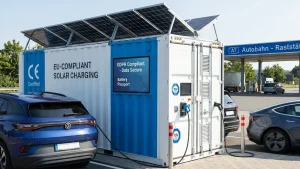
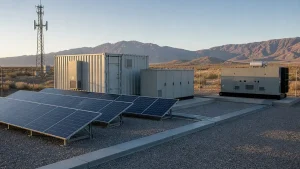
If you don’t want to calculate and match parts yourself, HighJoule Solar Container kits are purpose-built for 40ft container homes — pre-integrated with foldable PV systems, MPPT charge controllers, pure sine wave inverters, and LiFePO4 batteries . Choose from 20kw-200kw scalable options (e.g., HighJoule HJ 40 HQ-M-200K for luxury/Airbnb setups) that include factory-tested wiring and reinforced mounting rails to avoid roof damage . Get turnkey packages here: HighJoule Solar Container Kits
3.7 Rainwater & Off-Grid Living
A 40ft container roof collects 150 to 200 gallons of rainwater per inch of rainfall.
Use 3-stage filtration system: sediment filter, carbon filter and UV sterilizer, powered by solar energy.
Composting toilet is perfect for off-grid homes, no sewer required.
4. Real Build Cost & ROI 2026
Realistic Price Ranges 2026 USA
Budget Basic: $35,000 – $50,000
Used container + basic insulation + simple solar + basic living setup.
Mid-Range Most Popular: $50,000 – $75,000
New high cube container + full insulation + complete solar + kitchen and bathroom move-in ready.
Luxury Airbnb Turnkey: $75,000 – $95,000+
Connected containers + modern interior + large solar system + deck and full amenities.
Hidden Costs You Must Budget
- Delivery and crane fee
- Foundation piers or concrete slab
- Window and door cutting
- Professional insulation work
- Electrical and plumbing fees
- Permit and inspection charges
- 10% emergency budget for unexpected costs
ROI Profit Explanation
Residential Living
Save $1,200 to $1,800 per year on electric and water bills. Long term living saves massive money.
Airbnb Rental
Off-grid eco container homes attract high occupancy and higher nightly rates. Low utility cost brings stable high profit every year.
5. Real Case Studies
5.1 Colorado Mountain Container Airbnb
Two connected 40ft high cube containers… They opted for a HighJoule 160kw ground-mount solar container system (HJ 40 GP-M-160K) — its foldable panels make snow removal a breeze, and the integrated battery bank eliminates reliance on propane backups even during 3+ cloudy winter days. Guests love the eco-friendly vibe, and the owners report 0 power outages since installation.
Solar panels installed on ground mount for easy snow cleaning.
Small backup propane generator for long cloudy winter days.
This eco off-grid style attracts many travelers. Occupancy rate stays high all year, with low monthly running cost and fast investment return.
5.2 Alaska Cold Climate Container Home
40ft high cube container with full professional insulation.
They installed a HighJoule cold-climate optimized solar container system with insulated battery enclosures and low-temperature performance panels . The 80kw setup (HJ 20 GP-M-80K) powers lights, fridge, and even a small heating pump alongside the wood stove — solving the common winter power shortage issue. The system’s IP65 waterproof/dustproof rating handles Alaska’s harsh weather .
Wood stove works as the main winter heating source. Solar only supports lights, fridge and small daily devices. All water pipes are buried deep below frost line to avoid freezing.
This setup perfectly fits extremely cold northern climate and works reliably all year round.
6. Legal Rules & Building Codes
USA
Container cannot be used as permanent home automatically.
You need structural inspection, insulation standard check, electrical permit and zoning approval.
Temporary cabin permission is much easier to get.
Airbnb requires local short-term rental license.
Europe
Must follow EU fire safety and energy saving rules.
Rural areas have more freedom for container home construction.
Germany has very strict building certification requirements.
Australia & New Zealand
Need engineer structural certificate.
Insulation and fire safety must follow national building code.
Rural properties require fixed rainwater storage system by law.
Global Solar Rule
Solar installation must follow local electrical code. Always use licensed local installer to avoid safety and permit problems.
7. How to Choose Your Best Container Home Setup
Budget Under $50k
Used steel container, DIY insulation, basic solar system — best for vacation cabin.
Budget $50k – $75k
New high cube container, professional spray foam insulation, full off-grid solar — best for permanent family living.
Budget $75k – $95k+
Dual connected containers, luxury interior, large solar battery — perfect for Airbnb investment.
Common Mistakes to Avoid
- Drilling too many random roof holes causing water leaks
- Using 12V large solar system with fire danger
- Making battery bank too small for winter cloudy days
- Skipping permits and facing heavy fines
- Under-budgeting construction cost
8. Simple Next Steps to Build Your Own
- Check local zoning rules first
- Find suitable rural or allowed land
- Buy one-trip used or new high cube container
- Plan window, door and solar layout design
- Apply for building and electrical permits
- Hire experienced container builder and solar installer
- Finish insulation, interior decoration and water system
- Move in or start your Airbnb rental business
Final Thoughts
40ft shipping container homes paired with HighJoule Solar Container systems are the ultimate practical, affordable, and sustainable choice for 2026. HighJoule’s pre-integrated, rugged designs eliminate guesswork, reduce installation time by 50% , and back your system with industry-leading support — making off-grid living accessible even for first-timers.
If you follow correct structure rules, safe solar design, realistic budget and local legal requirements, you can easily build a comfortable personal home or profitable Airbnb property.
Last Updated on 05/12/2026