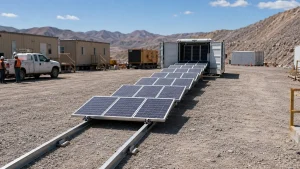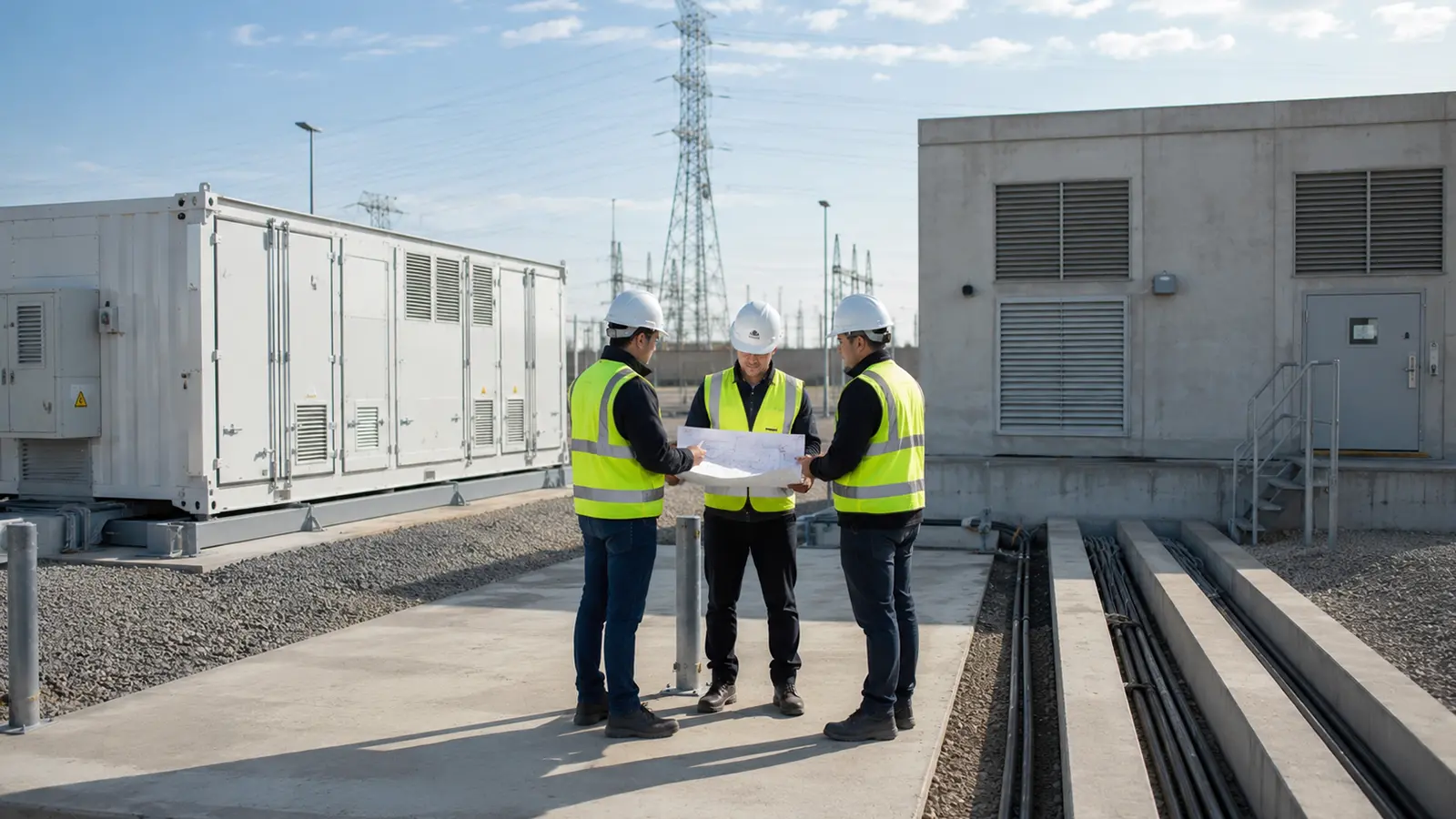
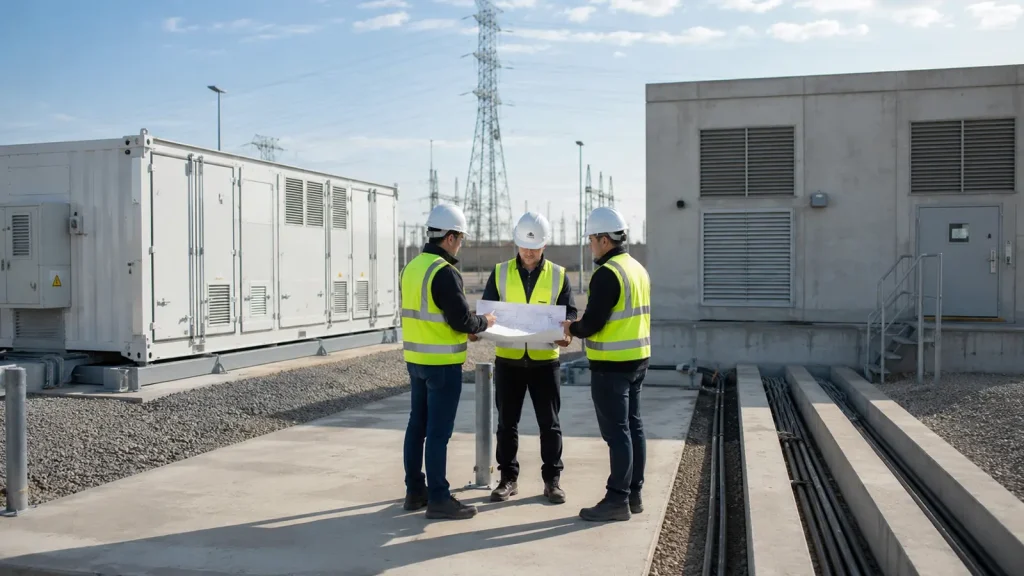
A containerized battery energy storage system (BESS) and a fixed energy-storage-system (ESS) building are different delivery routes, not a universal good-versus-bad choice. Select the route whose documented site, construction, logistics, operating and acceptance interfaces fit the project. If the project basis is incomplete, hold the selection rather than treating a generic format claim as an answer.
The U.S. Department of Energy Federal Energy Management Program (FEMP) publishes a BESS procurement checklist with early-stage tasks, questions and reference points for commercial-scale lithium-ion BESS. It is not a housing-route recommendation. For a container-versus-building decision, the buyer needs to add a controlled record of the project interfaces that each route must satisfy.
Start with the project basis, not the enclosure label
Before comparing routes, record the intended operating use, required power and usable energy at the project boundary, site footprint, access and lifting constraints, environmental envelope, grid or off-grid operating mode, construction interfaces, target energization sequence and acceptance criteria. These inputs do not prove that either route is suitable; they establish the evidence a project team must compare.
Housing Route Fit Matrix
Transfer this matrix to the project’s bid-review or concept-selection log. It is a buyer-controlled tool, not a fillable website record or a design approval. The signals below are not universal technical rankings: they are prompts to test against the documented project basis.
| Decision area | Container route signal | Fixed-building route signal | Hold condition / evidence needed | Project owner to name |
|---|---|---|---|---|
| Site and access | The proposed transport, lifting, foundation and service-clearance record fits the defined site. | The proposed building footprint, construction staging, access and service-clearance record fits the defined site. | Either route lacks a route, lifting, footprint, staging or clearance record. | Owner / EPC civil lead |
| Construction interfaces | The proposed container general arrangement and external interfaces have a defined project boundary. | The proposed building package, equipment rooms and civil/electrical interfaces have a defined project boundary. | Interface scope is divided between packages without a named owner. | EPC design lead |
| Configuration control | Controlled equipment schedule, drawings and substitution route are available for the proposed unit. | Controlled building/equipment interface schedule, drawings and substitution route are available for the proposed route. | Configuration or change-control basis is not defined. | Owner’s engineer / EPC |
| Operations and maintenance | The proposed access, isolation and maintenance envelope fits the operator’s documented operating record. | The proposed access, isolation and maintenance envelope fits the operator’s documented operating record. | The operator’s access, isolation or maintenance requirements are open. | Operator / owner representative |
| Acceptance path | Factory, delivery, installation and site-test records can be assigned in the contract for the proposed route. | Construction, equipment delivery, installation and site-test records can be assigned in the contract for the proposed route. | Acceptance criteria or accountable parties are not assigned. | Commissioning manager |
Decision rule: Record a preliminary route only when one route has a documented fit signal in every applicable row and no unresolved Hold condition. If both routes fit, record both as viable and compare their controlled offers against the same project basis. If neither route clears the matrix, or the result depends on an unresolved assumption, issue a Hold rather than selecting a housing route.
Separate route selection from final design and approval
Choosing a housing route does not complete electrical design, civil design, fire-protection design, utility review, authority-having-jurisdiction review, insurer review, transport acceptance or operational acceptance. Those remain separate project decisions. A containerized system can still require site interfaces; a fixed building can still require controlled equipment and delivery evidence.
Existing container BESS engineering guidance explains the container-system topic, while our EPC interface review addresses configuration, delivery and handover ownership. This comparison page starts one step earlier: which physical delivery route should enter the project definition, and what must be true before that choice is defensible?
Award, conditional award and hold register
| Gate | What must be documented | Decision output | Do not assume |
|---|---|---|---|
| Route selection | Completed Housing Route Fit Matrix or named deviations | Award route / Conditional award / Hold | A selected route proves final design or approval. |
| Configuration baseline | Controlled equipment/building boundary, drawings, exclusions and change-control route | Configuration baseline accepted / Hold | A generic brochure identifies the delivered configuration. |
| Site and delivery interfaces | Named civil, electrical, logistics, access and commissioning owners | Interface register accepted / Conditional award / Hold | Factory scope equals delivery, installation or site scope. |
| Acceptance chain | Factory, delivery, installation, commissioning and owner-handover criteria | Acceptance plan accepted / Hold | One test or one document closes every acceptance phase. |
The contract should define who may accept a deviation and who may release equipment or construction work at each gate. Neither a container nor a building format assigns that authority automatically.
Questions to put in the RFQ
- Which route is proposed, and what project basis does the bid assume?
- Which route-specific site, civil, electrical, access and logistics inputs are excluded from the offer?
- Which controlled documents define the selected configuration, and how will substitutions be assessed?
- Which party owns each interface from concept selection through commissioning and handover?
- Which evidence blocks award, shipment release, construction release, energization and final acceptance?
The decision is ready when the project team can show why the selected route fits the defined project and who owns its open interfaces. It is not ready merely because one route appears simpler in a generic comparison.
Request an EPC Interface Review
You may share the project location, operating mode, site constraints, proposed power and energy boundary, route under consideration and open interface questions. Final design, standards applicability, approval and acceptance remain subject to the project specification and responsible parties.
Last Updated on 08/18/2026