3 Ways to Mount Solar Panels on Metal Roofs
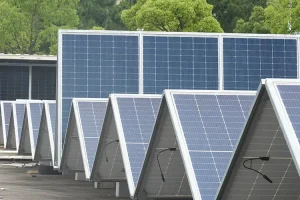
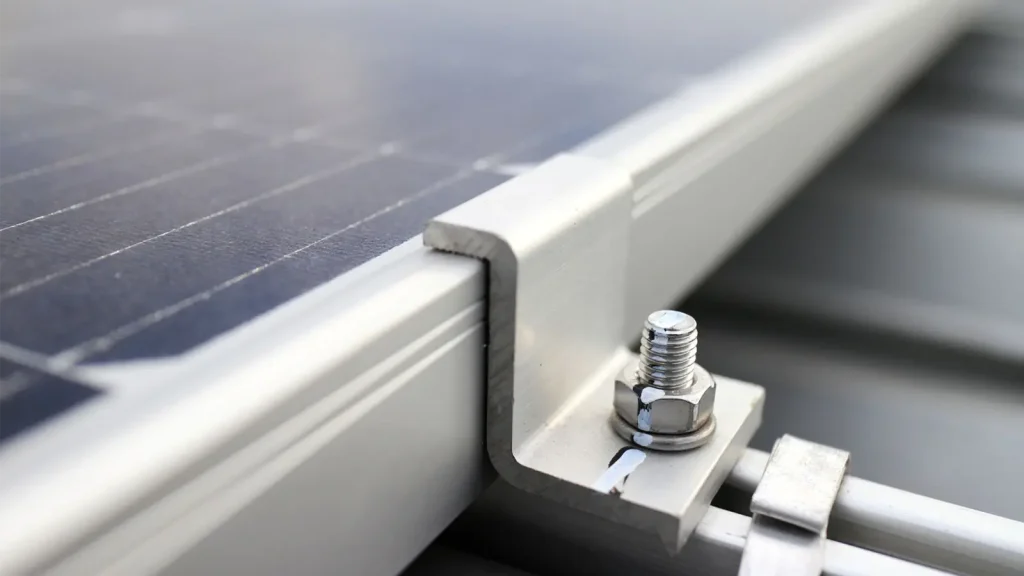
When installing solar on a metal roof, you have three primary choices. First, you can clamp panels to standing seams without piercing the roof. Second, you can bolt brackets through corrugated or trapezoidal panels and seal every hole. Third — and this is the option most people overlook — you can avoid mounting headaches entirely with a factory-built solar container. These units come with pre-integrated panels, wiring, and testing, so they’re ready to generate power 30 minutes after arriving on site.
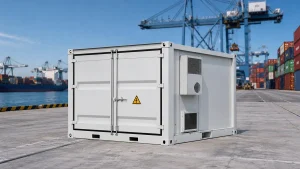
At HighJoule Group, we specialize in this third solution: foldable solar containers (HJ-FBESS and HJ-FESS series). Shipped as standard ISO containers, they deploy in hours — no roof penetrations, field assembly, or specialized mounting hardware required. This guide covers all three approaches, with extra focus on the pre-integrated container option that saves time, money, and frustration. For a quick overview, check the comparison table below.
At a Glance: Three Mounting Approaches
| Approach | Best For | Install Time | Roof Penetration | Relocatable | Upfront Cost |
| Clamp-based (standing seam) | Existing metal building roofs | 2–5 days | No | No | Low |
| Bracket penetration (corrugated/trapezoidal) | Warehouses, agricultural sheds | 3–7 days | Yes | No | Medium |
| Pre-integrated solar container (HighJoule) | Remote sites, disaster response, mining, off-grid operations | 30 min – 4 hours | N/A (factory-built) | Yes | Medium–High |
1. Know Your Metal Roof Type
Not all metal roofs are identical — using the wrong mounting hardware can cause leaks or loose connections. Here are the four most common metal roof profiles and how they work with solar:
Standing Seam Roofs
These roofs have vertical ribs with hidden fasteners under raised seams. They’re the easiest for solar installation: you can clamp directly to the seams with zero penetrations. The clamps grip the seam profile to hold rails or module frames securely. No holes, sealant, or leak risks — but the clamp must match the seam’s unique geometry (there are dozens of variations).
Corrugated Metal Roofs
The classic wavy profile found on barns, sheds, and older industrial buildings, with exposed fasteners on every crest. For solar, you’ll typically use L-feet or brackets that lag into roof purlins through the panel. EPDM or butyl gaskets seal each penetration, but every hole is a potential future leak — especially as the roof expands and contracts with temperature changes.
Trapezoidal Roofs
Flat-bottomed with angled sides, these are common on modern commercial buildings in Europe and Asia. Similar to corrugated roofs, brackets attach through the flat crown into purlins. The flat surface offers better contact than corrugated crests, but you still need to seal every fastener.
ISO Container Roofs
Shipping container roofs are corrugated steel structures designed to stack nine-high on cargo ships. While they can support solar panels, the smarter choice is to integrate PV arrays into the container at the factory. This turns the panels into part of a deployable system rather than an add-on to a static box.
2. The Hidden Costs of Traditional Metal Roof Solar Mounting
Most hardware manufacturers highlight a low price-per-watt, but this only covers about 30% of total costs. Here’s what really drives expenses for traditional mounting:
Engineering Reviews
Before installing, you need a structural engineer to confirm the roof can handle solar panels. Panels add 2.5–4.5 kg/m², and wind uplift (common in coastal or high-altitude areas) can multiply this load by 3–5x. If the roof wasn’t designed for this, you’ll pay for reinforcements.
Labor Costs
Mounting hardware is cheap, but labor isn’t. In the U.S., commercial solar installation labor runs 0.30–0.70 per watt, with mounting accounting for 40% of roof work hours. Each penetration requires careful drilling, fastening, and sealing — a time-consuming process.
Remote Site Logistics
For projects far from hardware stores, missing parts (like L-feet or rail splices) cause costly downtime. You’ll either over-order by 15–20% (wasting money) or risk delays if supplies run short.
Maintenance Access
After installation, panels need cleaning, inspection, and repairs. Walking on standing seam roofs requires caution to avoid damage, while corrugated roofs dent easily. Snow accumulation in cold climates adds recurring labor costs not included in initial quotes.
3. Common Mounting Failures
Field deployments across four continents have taught us the top issues that ruin metal roof solar installations:
Thermal Cycling Loosens Fasteners
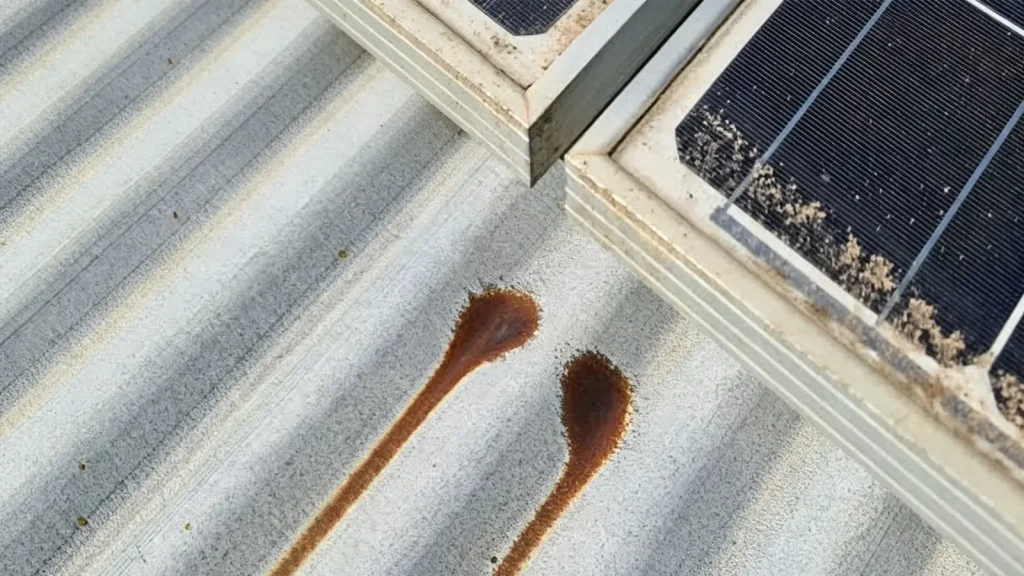
Metal roofs expand and contract daily. A 20-meter steel roof with a 30°C temperature swing moves ~7 mm per day. After three years (10,000 cycles), this movement loosens poorly torqued fasteners, cracks sealant, and creates water gaps — the #1 cause of post-installation leaks.
Galvanic Corrosion
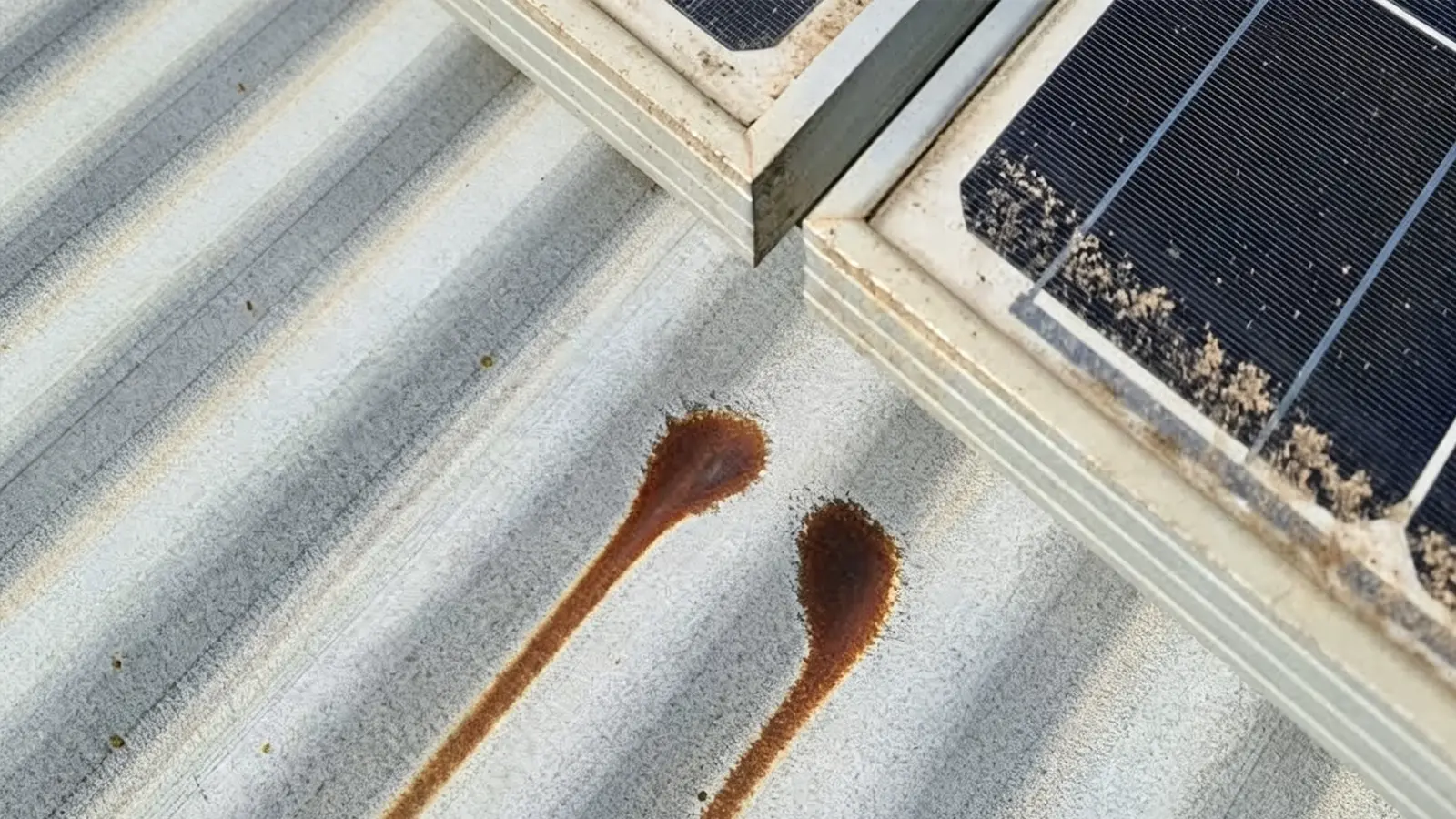
Mixing dissimilar metals (e.g., aluminum rails on zinc-coated steel roofs with stainless steel fasteners) creates a “battery effect.” Rainwater acts as an electrolyte, corroding the least durable metal. Coastal areas with salt spray speed this up 3–5x. Isolation pads and careful material selection prevent this, but budget installs often skip these steps.
Wind Uplift at Roof Edges
Roof edges and corners face 2–3x more wind load than the center. If mounting systems use uniform attachment density, edges fail first. Proper design adds 25–40% more fasteners within 1.5 meters of the perimeter — a lesson we learned at a 4,500-meter Tibetan Plateau deployment with 120 km/h gusts. Factory-engineered systems calculate these points precisely.
Sealant Degradation
Every penetration relies on gaskets or sealant to block water. EPDM lasts 10–15 years, butyl 8–12, and silicone bonds poorly to some metals. When sealant fails, water seeps through fastener threads. A roof with 200 penetrations has 200 future leak risks.
4. Skip the Headaches: Pre-Integrated Solar Containers
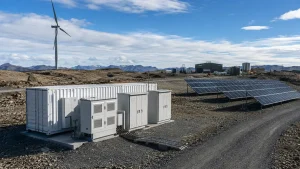
HighJoule’s core innovation solves traditional mounting problems: factory-integrated solar containers. Panels are mounted, wired, and tested before shipping, eliminating field-installed fasteners, penetrations, and assembly.
How HighJoule Solar Containers Work
Our HJ-FBESS series are standard ISO containers with foldable PV arrays. Key features include:
- N-Type TOPCon cells (22.5%+ efficiency, -0.29%/°C temperature coefficient for heat resistance)
- DC-coupled systems (88–95% round-trip efficiency)
- Liquid-cooled lithium batteries (314–350 Ah cells)
- Smart EMS/BMS with satellite and 4G/5G connectivity
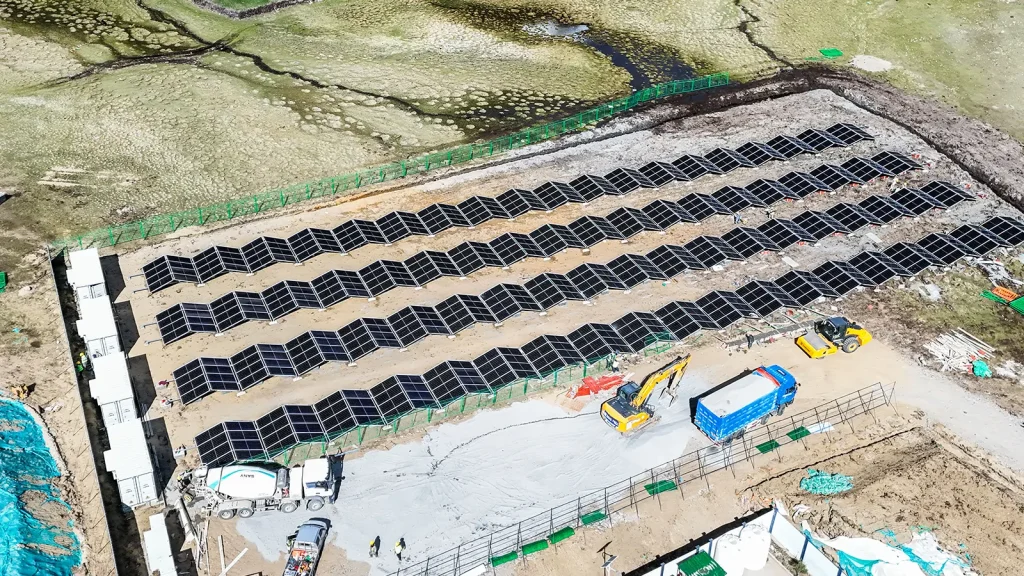
Deployment is simple: unfold the PV wings, connect loads to the pre-wired panel, and generate power. Small 8-ft systems (18 kWp / 30 kWh) deploy in 30 minutes, while 40-ft HC units (136 kWp / 482 kWh) take 2–4 hours — no crew of four needed for a week of roof work.
Model Range at a Glance
| Model | Container | PV Capacity | Storage | Inverter | Deploy Time |
| HJ-08G-P018E030 | 8 ft | 18 kWp | 30 kWh | 15 kW | ~30 min |
| HJ-10G-P024E040 | 10 ft | 24 kWp | 40 kWh | 20 kW | ~30 min |
| HJ-20G-P057E241 | 20 ft | 57 kWp | 241 kWh | 50 kW + 100 kW PCS | ~2 hours |
| HJ-20H-P068E241 | 20 ft HC | 68 kWp | 241 kWh | 60 kW + 100 kW PCS | ~2 hours |
| HJ-40G-P114E482 | 40 ft | 114 kWp | 482 kWh | 50 kW×2 + 100 kW PCS×2 | ~4 hours |
| HJ-40H-P136E482 | 40 ft HC | 136 kWp | 482 kWh | 60 kW×2 + 100 kW PCS×2 | ~4 hours |
All models are ISO/CSC-certified for global transport, IP55/IP65 rated, and meet UL 9540A / NFPA 855 fire safety standards. They also carry UN38.3, ISO 9001, RoHS, CCC, and CE certifications, with an operating range of -30°C to 50°C (extended with wide-temperature LFP chemistry).
5. When to Choose Solar Containers (and When Not To)
Solar containers excel in specific scenarios but aren’t one-size-fits-all. Here’s the breakdown:
Solar Containers Are Ideal For:
- Needing power in disaster response, military bases, temporary hospitals)
- Remote sites where missing hardware causes downtime
- Relocatable systems (mining camps, construction sites, seasonal operations)
- Off-grid or unreliable grid locations requiring integrated storage
- Extreme environments (high-altitude, deserts, coasts) where field mounts fail faster
- Simplified procurement (one PO, delivery, warranty, and vendor)
Traditional Mounting Makes Sense For:
- Existing large metal buildings with structurally sound roofs
- Permanent systems (10+ years) with trusted local installers
- Grid-tie setups without storage needs
- Small power requirements ( are overkill
6. Real-World Solar Container Deployments
Field results prove the value of factory-integrated systems:
Tibetan Plateau (4,500 Meters)
A foldable PV container with wide-temperature LFP batteries deployed in 4 hours. At 60% sea-level air density, liquid cooling outperformed air-cooled systems. The unit operated through -30°C nights with zero high-altitude fieldwork.
Xinjiang Desert, China
54 kWp bifacial + 36 kWp monofacial PV with 241 kWh storage deployed in 30 minutes. IP65 enclosure blocked sand and dust, eliminating the filter changes and seal inspections required for traditional systems.
Romania (1.075 MWh)
Four 46 kW PV-storage units delivered in 40 days. Pre-commissioned at the factory, on-site work only involved positioning containers and connecting cables.
USA (8 kW / 20 kWh Pod)
A compact modular unit with 23.2% efficiency (IP54/IP66 rated) demonstrated scalable solar architecture. Stackable pods allow expanding capacity without redesigning mounts.
7. Decision Checklist: Traditional Mounting vs. Solar Containers
Answer these questions to choose the right approach:
| Question | If YES → Traditional Mounting | If YES → Solar Container |
| Is the site permanent (10+ years)? | ✓ Existing metal building roof | ✗ |
| Do you need to relocate the system? | ✗ | ✓ |
| Is power needed in 8 hours? | ✗ | ✓ |
| Is the site >100 km from hardware suppliers? | ✗ | ✓ |
| Do you need integrated storage? | ✗ | ✓ |
| Will the system face extreme weather? | ✗ | ✓ |
| Is procurement simplicity a priority? | ✗ | ✓ |
| Do you need to scale up later? | ✗ | ✓ |
Frequently Asked Questions
Do I need to penetrate a metal roof for solar?
No. Standing seam roofs allow clamp-on mounts, while corrugated/trapezoidal roofs require penetrations. Pre-integrated solar containers (like HighJoule’s) eliminate roof contact entirely — the container itself is the structure.
How much weight can a metal roof support?
Most handle 2.5–4.5 kg/m², but engineers must factor in wind/snow loads. Solar containers avoid this: ISO frames support 30+ tonnes, making PV array weight negligible. No structural review needed.
Which is cheaper: traditional mounting or containers?
Traditional mounting has lower upfront hardware costs for simple grid-tie systems. But when adding labor, engineering, logistics, and maintenance, containers often have lower total ownership costs — especially for off-grid/temporary deployments. Containers also retain value as relocatable assets.
What certifications matter?
- Traditional mounting: UL 2703 (bonding/grounding) and wind-load test data.
- Solar containers: ISO/CSC, UL 9540A, NFPA 855, UN38.3, and IP65+ ingress protection. HighJoule meets all these standards.
How long do solar containers last?
- PV modules: 25–30 years (N-Type TOPCon degrades 0.4%/year vs. 0.55% for PERC).
- Batteries: 6,000+ cycles at 80% DoD (liquid-cooled LFP).
- Container structure: Decades (Corten steel, same as shipping containers).
- All components include warranties; the enclosure has a lifetime structural warranty.
Do solar containers need a concrete foundation?
No. They sit on level ground, compacted gravel, or simple concrete pads. Temporary deployments use timber cribbing under corner castings, while permanent setups benefit from gravel beds with drainage. Foldable PV wings don’t need separate foundations.
Spec Your System
Whether you’re installing on an existing metal roof or a greenfield site, HighJoule can size the right system. Share your location, power needs, and timeline for a custom spec, pricing, and deployment plan.
Visit solarcontainerkit.com/solutions to explore mining, emergency, and eco-destination applications, or contact our engineering team for a technical consultation.
Last Updated on 05/25/2026