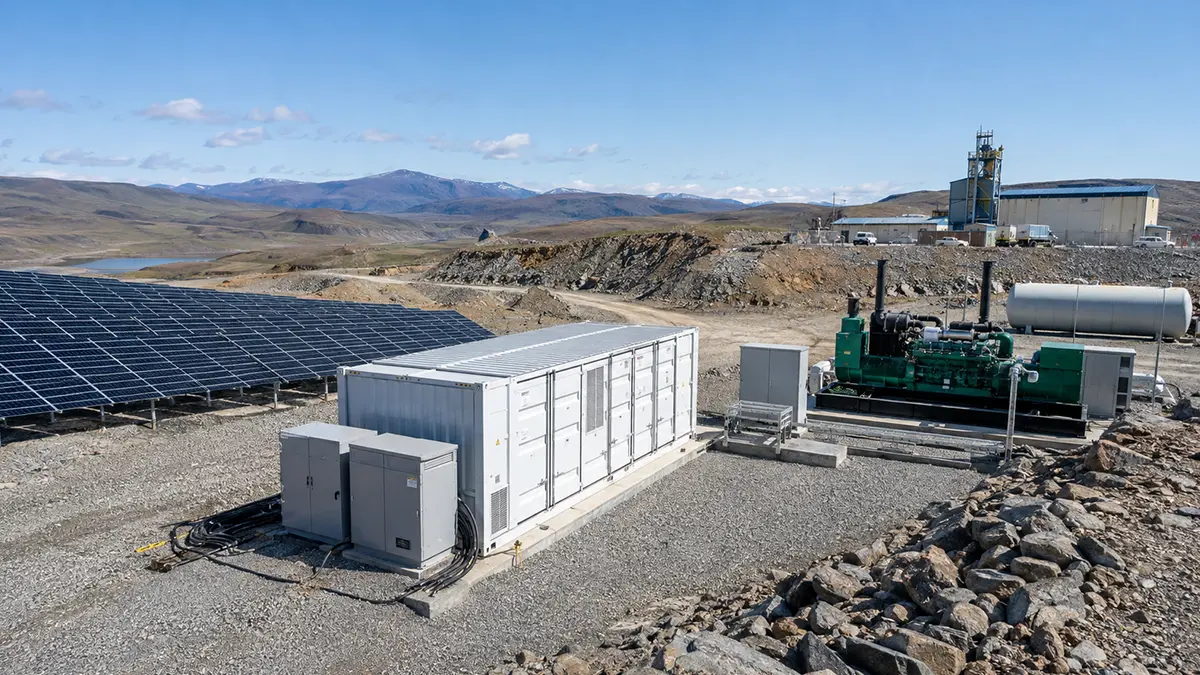
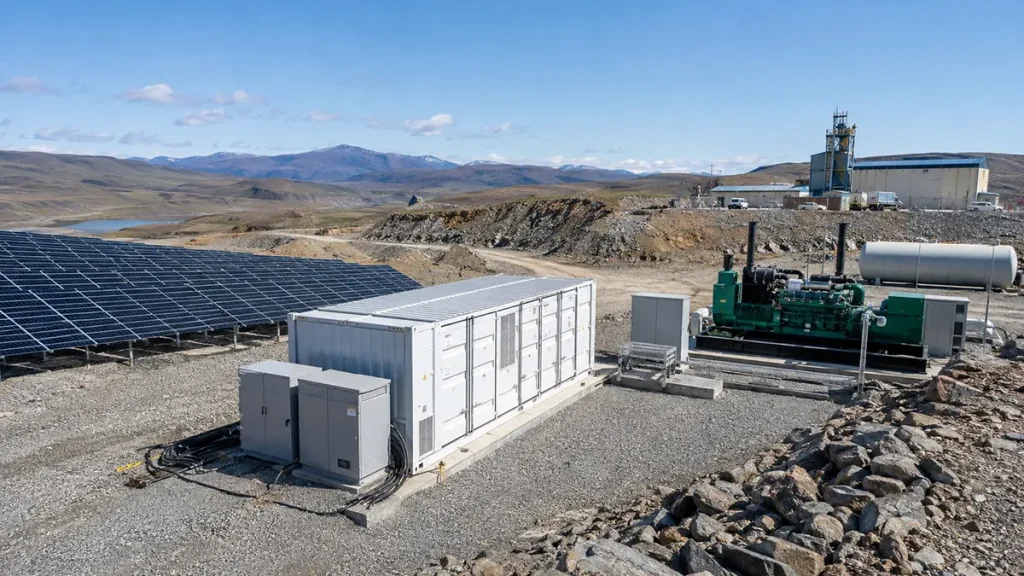
A gas generator can sit alongside photovoltaic (PV) and battery energy storage system (BESS) equipment at a remote industrial site, but the equipment list is the easy part. The hard part is deciding what each source is expected to do over a normal day, through a load change, and during an extended low-solar period.
This page helps buyers assess gas-generator, solar, and BESS integration at remote industrial sites. It addresses the PV-storage and interface questions around a third-party natural-gas, liquefied petroleum gas (LPG), or biogas generator; it is not an offer to supply fuel or generator equipment. Generator sizing and dispatch, fuel availability, site approvals, runtime, emissions, noise, savings, and performance outcomes remain project-specific matters for the responsible parties.
The project decision is whether a fuelled generator earns a defined role in the operating concept, with a verified fuel route and an owner for the interfaces it creates. If permanent power is still unresolved, begin with the broader industrial mobile-power route.
Start with the operating concept
Three operating concepts recur in early discussions. They are illustrations of how responsibilities may be divided, not design recommendations. Actual dispatch, equipment selection, protection, controls, and acceptance criteria depend on the load study, generator original-equipment manufacturer (OEM) requirements, project engineering, contracts, applicable rules, and responsible authorities.
| Illustrative concept | Possible source roles | Questions the buyer must close |
|---|---|---|
| Daytime PV-led operation | PV may support daytime loads and battery charging. BESS may cover short load changes and the transition into the evening. The generator may be reserved for an extended low-solar period or another defined operating condition. | Which loads are critical? What reserve is required? Who defines the start condition and verifies that the fuel route and generator duty support it? |
| Generator-led operating floor | The generator may carry a defined stable operating load. PV may reduce generator contribution when site conditions allow. BESS may absorb short changes or hold a reserve for a defined duty. | What generator operating constraints apply? What controls sequence is proposed? Who owns the generator-to-PV-storage interface and the evidence for it? |
| BESS-led short-duration duty | BESS may carry a short, defined operating period. The generator may start after a project-defined battery state, load condition, or other approved trigger. PV may contribute when available. | What duty is actually required? How are the trigger, reserve, transition, alarms, and site response procedure defined and tested? |
These concepts are deliberately incomplete. They show why a phrase such as “gas-solar hybrid” is not enough for an RFQ. A concept becomes a project architecture only after the parties agree the load boundary, fuel route, generator data, storage duty, controls responsibility, test evidence, and end state.
Read the load before selecting the source roles
Separate continuous load, variable load, short peak events, motor-starting duty, and critical-load tolerance. Power conversion system power, battery energy, connected load, and site operating time answer different questions. For the earlier storage decision, see whether a solar container needs battery storage.
A site with a stable daytime process load may examine a different concept from a site with large intermittent motors, night duty, or a narrow tolerance for interruption. The operating concept should be written against those conditions. It should not be inferred from a total connected-load number.
Gas-Hybrid Architecture Fit Test
This is an owner-led pre-award interface checklist. Mark each item Ready, Open, or Not applicable, and name the party responsible for closing it. The final technical design belongs with the parties appointed under the project contract.
| Decision area | Evidence to request | What remains open if the evidence is missing |
|---|---|---|
| Fuel route | Fuel type, source, supply condition, delivery or storage boundary, contracted party, and exception route | The project cannot confirm whether the proposed generator assumptions match the site. |
| Load boundary | Critical loads, continuous and variable loads, peak or starting events, interruption tolerance, and operating schedule | The source roles may have been selected from an incomplete demand picture. |
| PV and BESS duty | PV area, intended operating concept, battery reserve, control assumptions, and supporting-generation boundary | The expected contribution of PV or storage has no defined operating basis. |
| Generator interface | Generator data, control and protection interface, commissioning scope, maintenance boundary, and agreed records | Separate supplier data has not been reconciled at the project interface. |
| Site conditions | Layout, access, ventilation, exhaust, noise, emissions, safety, fire, and local-review questions | The site has not assigned the design and approval path for those conditions. |
| End state | Retain, remove, relocate, isolate, or transition-to-permanent-power decision with handover records | The temporary arrangement has no agreed route after the operating scenario changes. |
Fuel-system selection, hazardous-area classification where applicable, ventilation, exhaust, fire protection, emissions, noise, and site access require generator OEM documentation and project-specific review by appropriately qualified parties and the responsible authorities. This checklist helps identify the questions; it does not answer them for a particular site.
The U.S. Department of Energy’s BESS Procurement Checklist is an early project-development reference for commercial-scale lithium-ion BESS. It points to related technical, interconnection, and microgrid-development resources. It is useful for the procurement stage, but it is not gas-generator design guidance.
Who needs to close the interfaces?
The labels below are prompts for the project RACI, not default contract allocations. The contracts must identify deliverables, acceptance criteria, escalation paths, and liability.
| Potential party to confirm in the RACI | Interface that may need assignment | Useful handover record |
|---|---|---|
| Owner or developer | Fuel-commercial choice, critical-load tolerance, operating model, budget boundary, and end-state decision | Approved operating concept, load boundary, release decisions, and open-item register |
| EPC or site engineer | Layout, distribution, electrical interfaces, installation coordination, commissioning scope, and site records | Interface drawings, site-readiness evidence, commissioning records, and as-built updates |
| Fuel contractor | Fuel-supply specification and the contracted delivery or storage scope | Project-specific fuel information within the contracted scope |
| PV-storage supplier | Quoted configuration and electrical-interface evidence within the agreed supply scope | Configuration record, interface data, and controlled documents |
| Generator supplier or integrator | Generator data, controls interface, and contracted equipment scope | Controlled generator data and agreed interface documentation |
| Operator or O&M party | Operating records, maintenance plan, alarm response, and field procedures within accepted scope | Operating, maintenance, and escalation records |
| Authority, utility, or AHJ | Jurisdiction-specific statutory, utility, or local decisions | Any required determination, permit, or direction |
Keep evidence from different stages separate
A factory document can describe the scope of a supplied component. It cannot settle generator integration, site installation, fuel-system suitability, local approval, utility approval, or final operational acceptance. Where applicable, the project acceptance plan should distinguish factory evidence, shipment release, installation and commissioning evidence, site acceptance, authority decisions, and operator handover. The project specification, contract, and responsible authorities set the applicable gates and evidence owners. See the BESS factory acceptance testing guide for the factory-to-site evidence boundary.
Put these questions into the RFQ
- Which operating concept is being priced, and which loads, transitions, and fuel conditions does it assume?
- Which fuel type and supply boundary apply to the offered generator?
- Who defines the generator, PV, BESS, protection, communications, and commissioning interfaces?
- Which documents reconcile the quoted PV-storage configuration with the third-party generator data?
- Which site layout, ventilation, exhaust, noise, emissions, safety, access, and local-review items remain open?
- What evidence is needed before the project moves from factory scope to installation, commissioning, and operation?
- What happens when permanent power arrives, the site relocates, or the operating model changes?
Choose the architecture after the operating job is clear
The useful output from an early hybrid-power discussion is not a generic “gas and solar generator” label. It is an operating concept with named assumptions and owners. Once the site can show how PV, BESS, and generation will work through normal operation, transitions, and exceptional conditions, the team can decide whether the fuelled-generator route is appropriate.
Request a Hybrid Power Architecture Review
Share the site country and operating scenario, fuel type and supply boundary, load profile and critical-load definition, intended PV-storage configuration, generator data and control-interface assumptions, site restrictions, and permanent-power end state. The review covers PV-storage configuration and documentation inputs; generator or fuel supply, approvals, and commitments on site-specific runtime, savings, or performance sit outside that scope.
Request a Hybrid Power Architecture Review
Last Updated on 08/14/2026