A solar container should not use one universal monthly or annual maintenance interval. Build the plan from four layers: continuous monitoring, routine operator walkdowns, condition-triggered work and scheduled qualified service. Dust loading, internal temperature, rainfall, operating hours, battery duty, site access and spare-part lead time should shorten or extend the baseline intervals stated in the delivered equipment manuals.
The checklist must cover the complete system, not just the PV modules. A solar-powered shipping container can combine a deployable array, container enclosure, inverter or power conversion equipment, controls and, in some configurations, battery storage. Each layer has different inspection evidence, safety boundaries and service skills.
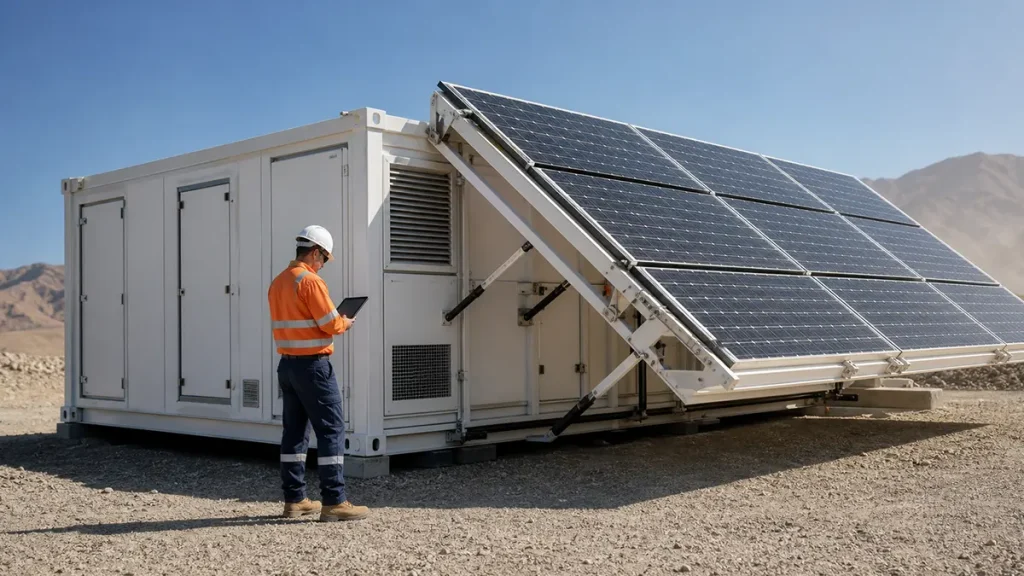
A Maintenance Plan Has Four Different Jobs
A useful maintenance plan separates observation from intervention. This prevents an operator walkdown from becoming unauthorized electrical work and prevents a remote dashboard from being treated as a complete maintenance program.
| Maintenance layer | Purpose | Typical evidence | Who acts |
|---|---|---|---|
| Continuous monitoring | Detect changes in production, temperature, alarms, communications and operating state | Trend data, alarm log, event timestamp and communications status | Named operator or monitoring team |
| Routine walkdown | Find visible soiling, blocked airflow, water, corrosion, damage, loose external items and access problems | Dated checklist, photographs and defect location | Trained site operator within the approved task boundary |
| Condition-triggered work | Respond to a measured change, alarm, contamination event or severe weather | Work order linked to the triggering data or event | Person authorized for the specified task |
| Scheduled qualified service | Complete tests, measurements, adjustments and component service required by project documents | Measurements, test results, replaced-part records and sign-off | Qualified technician under the approved safety procedure |
The U.S. Department of Energy recommends ongoing performance monitoring, documented O&M planning, trained staff and electrical inspection after inverter nuisance tripping rather than repeatedly restarting the equipment. Its current PV operation and maintenance guidance also separates preventive work, performance confirmation, pre-storm preparation and post-damage recovery.
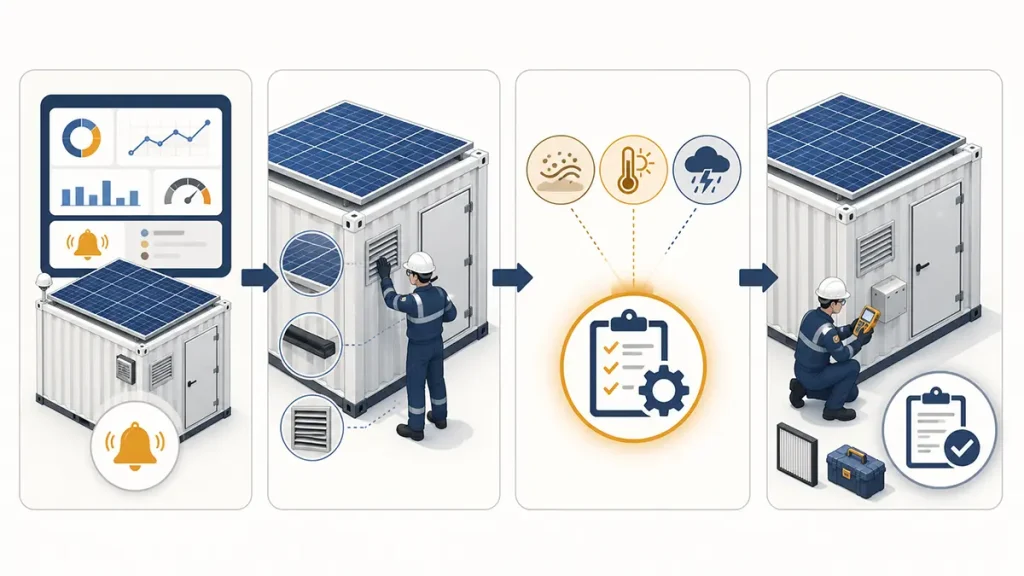
The Delivered Configuration Sets the Baseline
Pull the as-built drawings, commissioning records, component manuals, warranty conditions, operating procedure and alarm matrix into one controlled equipment register. Model and document revision matter: a checklist written for a PV-only unit cannot simply be carried over to a system that adds a battery, PCS and dedicated thermal-management equipment.
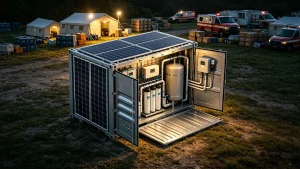
The distinction is visible in HighJoule’s published configuration tables. The HJ-FESS foldable PV container has no battery capacity in its published table. The HJ-FBESS PV-plus-storage container publishes battery capacity and lists inverter and PCS ratings separately on larger variants. That changes the first pass through the maintenance record:
| Published product route | First review priorities | Additional records to request |
|---|---|---|
| HJ-FESS foldable PV | Array state, deployment mechanism, module condition, inverter alarms and temperature, enclosure and external interfaces | Deployment inspection record, inverter log, module and cleaning instructions, mechanical service requirements |
| HJ-FBESS PV plus storage | Safe operating state and alarm history first, followed by battery and BMS temperature behavior, PCS and inverter logs, cooling path, enclosure and PV mechanism | Battery and BMS manuals, thermal-system service record, storage duty history, PCS settings and authorized return-to-service process |
This sequence is a configuration-based review method, not a published HighJoule service interval. The exact project manuals and accepted maintenance schedule still control the work.
The Condition-Based Solar Container Maintenance Matrix
Use the matrix to agree what will be observed, what triggers work and what evidence must remain afterward. The “baseline trigger” column points to the document or site study that sets the interval; it is deliberately not a universal calendar.
| System area | Observe or record | Baseline trigger | Additional event trigger | Required record |
|---|---|---|---|---|
| PV modules | Uneven soiling, cracks, discoloration, damaged glass, shading and abnormal production | Module manufacturer and site soiling study | Dust storm, bird contamination, nearby construction or unexplained production change | Photographs, affected module location and before/after performance data where available |
| Deployment structure | Alignment, locks, hinges or rails, visible deformation, corrosion and debris in movement paths | Deployment-system manual | Relocation, abnormal movement, impact, high wind or emergency stow | State of the array, defect location and authorization before next movement |
| Container exterior | Door seals, latches, water paths, corrosion, roof condition, drainage and pest entry | Enclosure and site O&M plan | Heavy rain, flooding, transport damage or standing water | Photographs, water-entry check and corrective action |
| Ventilation and cooling | Blocked intake or exhaust, filter condition, abnormal noise, leaks where applicable, and internal temperature trend | Cooling-equipment manual and measured site loading | Heatwave, dust storm, high-temperature alarm or repeated derating | Temperature trend, alarm code, filter or service action and replaced-part details |
| Inverter and PCS | Alarm history, operating temperature, output trend, enclosure condition and external cable condition | Manufacturer service schedule | Nuisance trip, repeated fault, abnormal heat, smell, sound or visible damage | Event logs, measurements by qualified personnel and return-to-service approval |
| Battery system when fitted | BMS alarms, temperature spread, state-of-charge behavior, cooling status and enclosure condition | Battery and BMS manuals plus project duty cycle | Safety-related alarm, abnormal temperature, water entry, impact or unexplained capacity change | BMS export, event timeline, isolation status and authorized service report |
| Monitoring and communications | Data continuity, clock accuracy, alarm delivery, local log storage and account access | Monitoring and cybersecurity plan | Communications loss, missing data or failed alarm notification | Outage duration, last valid data, recovery action and unresolved data gap |
| Site and access | Drainage, vegetation, debris, erosion, fencing, working clearance and road access | Site maintenance plan | Storm, flood, fire, vandalism or access-route damage | Site photographs, access status and hazard escalation |
Dust Is a Site Problem Before It Becomes a Cleaning Problem
Dust affects more than the module surface. It can accumulate on inverter heat-rejection surfaces, ventilation grilles, filters, seals, mechanical tracks and sensors. The useful question is where it comes from: an unpaved road, nearby construction, agriculture, mining activity, pollen, birds or diesel exhaust. A container beside a haul road will not share the same interval as one on a vegetated, low-traffic site.
The National Laboratory of the Rockies’ PV and energy-storage O&M guide recommends following the module manufacturer’s cleaning instructions and notes that cleaning may be interval-based or condition-based. It identifies local rainfall, dust characteristics, soiling rate, cleaning cost and the value of recovered energy as inputs to the decision. That supports a measured trigger rather than an unsupported “clean every month” rule.
Define a cleaning trigger from comparable production data, visual evidence or a dedicated soiling measurement where justified. Record rainfall and site activity so the team can explain a change. Use only the cleaning method approved for the delivered module and coating. Do not use an abrasive tool, harsh chemical or high-pressure process unless the manufacturer explicitly permits it.
High Internal Temperature Is a Symptom, Not a Diagnosis
Ambient temperature is only the first input. Read it alongside enclosure temperature, inverter or PCS temperature, battery temperature when fitted, cooling status, alarms, derating and auxiliary power. A high internal temperature can point to blocked airflow, a loaded filter, failed fan, cooling fault, control setting, sensor problem or the operating condition itself. The trend and alarm timeline narrow the diagnostic path.
Inspect accessible external intake and exhaust paths for dust, debris and obstruction. Keep the required clearances around heat rejection equipment. If the system records repeated over-temperature alarms or derating, preserve the logs and escalate under the project procedure instead of raising limits or bypassing protection.
The Hong Kong Electrical and Mechanical Services Department’s solar PV O&M framework separately lists module cleaning, structural inspection, inverter ventilation and operating-temperature checks, cable inspection, monitoring, battery-enclosure cleaning and ventilation checks. The published frequencies apply to its stated framework; use the categories as a completeness check and set project intervals from the applicable manuals, jurisdiction and site conditions.
Foldable Equipment Adds a Mechanical Maintenance Layer
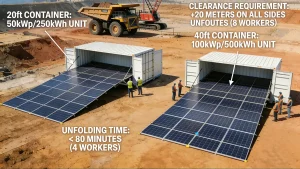
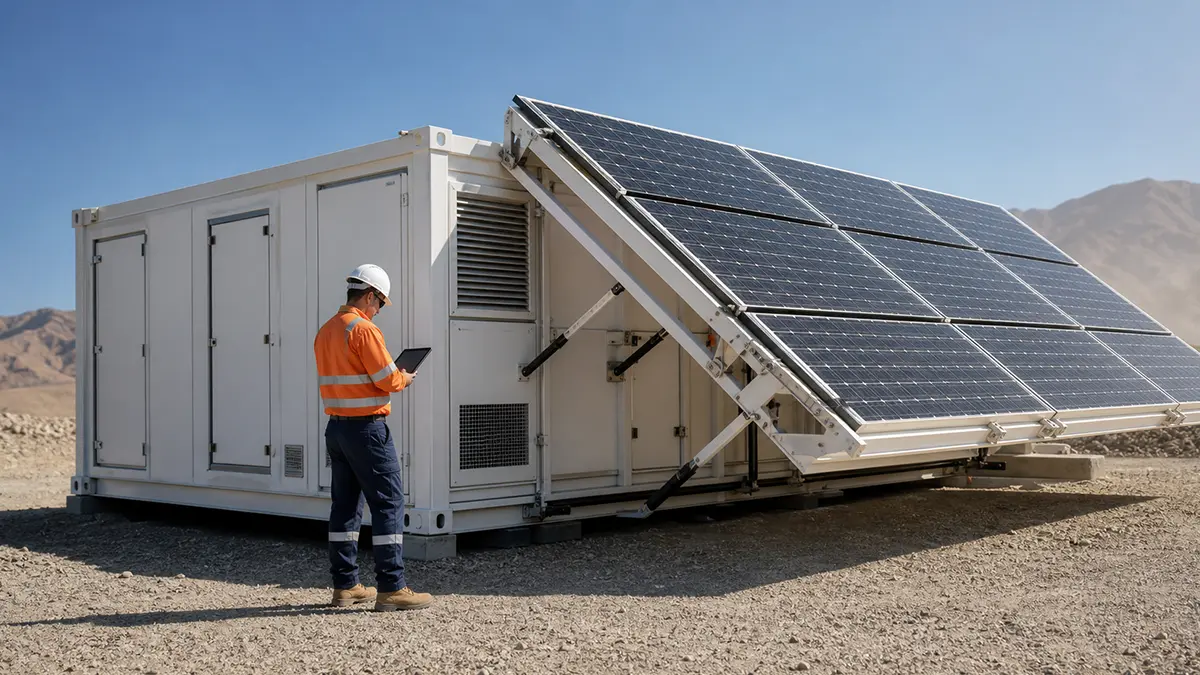
A foldable solar container changes state during deployment, operation, stowage and transport. Include the hinges, rails, actuators, locks, restraints and cable-management path in the equipment register. Before movement, remove obstructions and confirm that the permitted wind and site conditions are met. After relocation, impact or emergency stow, inspect the mechanism and external wiring before the next deployment.
For the enclosure, look for corrosion, damaged coating, failed seals, loose external hardware, blocked drains, pest entry and evidence of water. Do not open an electrical or battery compartment merely to complete a routine walkdown. The task boundary should state which doors a site operator may access, which require isolation, and which require an authorized service technician.
Site conditions remain part of maintenance. Standing water, erosion, vegetation, debris and loss of working clearance can undermine otherwise healthy equipment. The solar container site requirements guide covers ground, drainage, access and foundation inputs that the O&M team should preserve after commissioning.
At a Remote Site, the Spare-Part Route Is Part of the Design
Remote monitoring can identify a trend, alarm or communications failure. It cannot inspect a damaged seal, clear a blocked vent, isolate unsafe equipment or replace a failed part. Define the handoff from monitoring desk to local operator and from local operator to qualified technician. The existing remote BESS maintenance guide covers communications fallback, alarm ownership, cybersecurity, site support and escalation for storage systems.
At a remote site, a small consumable can control the length of an outage. Build the spares list from the supplied bill of materials, failure impact, permissible downtime, storage conditions, supplier lead time, customs route and required authorization. Separate:
- consumables such as approved filters, fuses and fastening hardware;
- owner-held critical spares with controlled part numbers and revisions;
- supplier-held or regional spares with a documented dispatch route;
- parts that must be installed, configured or released by authorized personnel.
Record shelf-life, storage temperature and humidity limits where applicable. A spare that is obsolete, incorrectly stored or incompatible with the installed revision is not operational protection.
When Monitoring Should Become an Intervention
| Observed condition | Immediate decision | Next evidence |
|---|---|---|
| Normal trend and no visible defect | Continue operation and retain the routine record | Next scheduled monitoring review or walkdown |
| Gradual production change with visible uniform soiling | Compare weather and operating data, then schedule an approved cleaning when the trigger is met | Before/after photographs and comparable production data |
| Blocked ventilation, abnormal temperature trend or repeated derating | Follow the approved operating response and escalate for inspection | Temperature history, alarms, ambient conditions and airflow observations |
| Water entry, damaged cable, burning smell, visible arcing, battery safety alarm or structural damage | Keep people clear and follow the project’s shutdown, isolation and emergency procedure | Authorized inspection and written return-to-service approval |
| Communications loss with unknown equipment state | Use the defined fallback channel and dispatch rule; do not assume normal operation | Last valid data, local status check and restored communications record |
This table is a decision boundary, not an electrical work instruction. Site personnel should perform only the tasks covered by their training, authorization and project safety procedure.
What the Handover Package Must Contain
Do not wait until commissioning to decide who maintains the system. Ask the supplier and EPC to deliver:
- an equipment register with model, serial number and document revision;
- manufacturer maintenance manuals and warranty conditions;
- a responsibility matrix for owner, operator, EPC, supplier and local service partner;
- an alarm matrix with recipients, response windows and authorized actions;
- baseline and event-triggered maintenance tasks for the site environment;
- a critical-spares and consumables schedule with storage and dispatch responsibilities;
- monitoring data, account, backup and handover requirements;
- checklist, photograph, test-result and return-to-service record templates.
The acceptance process should verify that the named people can obtain the data, receive the alarms, access the site, locate the documents and initiate the approved response. A dashboard demonstration alone does not prove that the maintenance chain works.
Request a Remote-Site O&M Scope Review
For a useful maintenance review, send the project country and site coordinates, selected product family and configuration, PV capacity, inverter or PCS power, battery energy when fitted, expected duty, dust sources, ambient conditions, rainfall pattern, site connectivity, permissible visit interval, local staff capability and critical-spares delivery constraints.
Request a remote-site solar container O&M scope review. Ask for the response to identify routine observations, condition triggers, qualified service tasks, responsible parties, required records and unresolved manufacturer inputs.
Solar Container Maintenance FAQ
How often should a solar container be serviced?
Use the equipment manufacturers’ baseline intervals, then adjust the plan for site dust, heat, rainfall, duty, alarm history, access and legal requirements. Continuous monitoring and event-triggered checks operate alongside scheduled service; they do not replace it.
How often should the PV modules be cleaned?
Set a site-specific trigger from soiling evidence, production comparison, rainfall, contamination sources and the approved cleaning method. A fixed monthly rule may clean too often at one site and too late at another.
Can remote monitoring replace site inspections?
No. Monitoring can reveal data trends and alarms when communications are available. Physical condition, blocked airflow, water, corrosion, damage, access hazards and many repairs still need a defined on-site response.
What changes when battery storage is included?
Add the battery and BMS manuals, thermal-management checks, duty and temperature records, storage-specific alarms, service authorization, emergency boundary and battery spare or replacement strategy. Keep battery energy in kWh and inverter or PCS power in kW distinct.
What should be checked after a dust storm or heatwave?
Use the project’s event checklist. It should cover safe access, module and mechanism condition, intake and exhaust obstruction, enclosure seals, temperature and derating history, alarms, communications and any criterion that requires shutdown or qualified inspection.
Last Updated on 08/10/2026