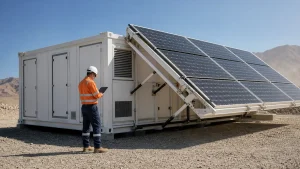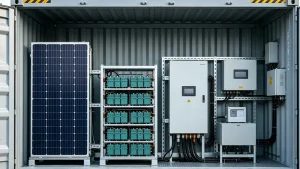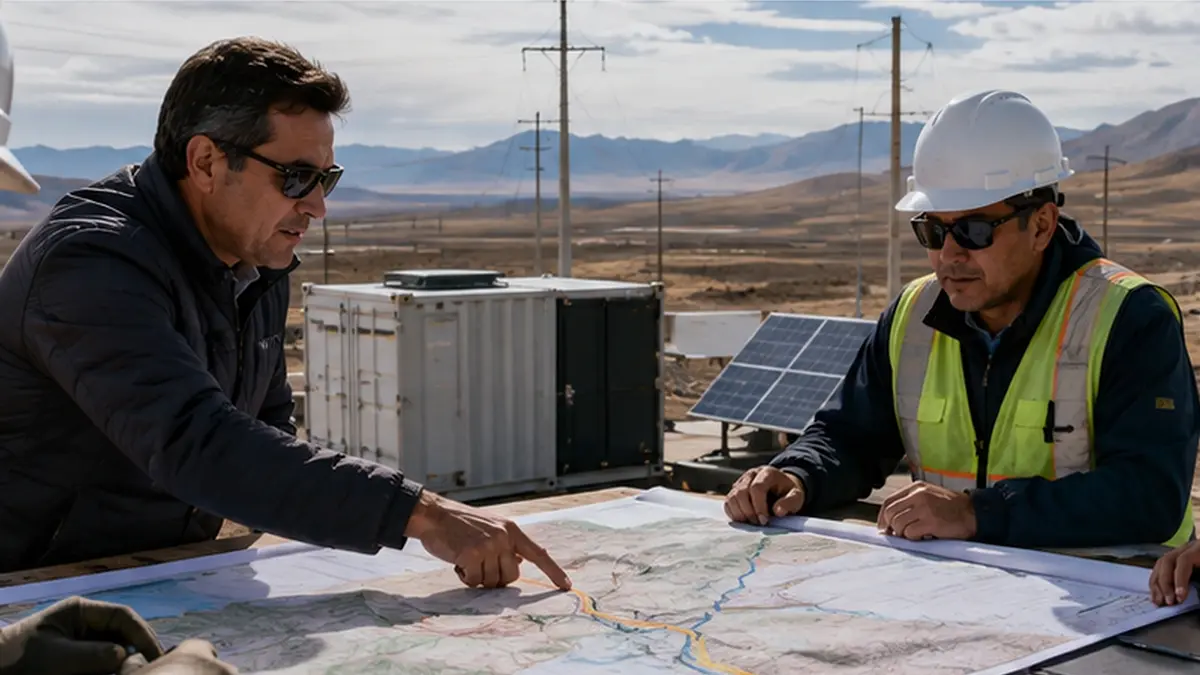
A remote project should continue with grid extension when the utility has confirmed the available capacity, point of connection, route, scope split, cost basis, energization conditions, and a schedule that fits the project. It should evaluate a containerized solar-storage or hybrid system when those grid inputs remain provisional, when construction or early operations need power before the grid is available, or when an on-site asset may retain a defined resilience, backup, peak-load, or relocation role after the grid arrives.
This is not a universal contest between “grid” and “off-grid.” A project may need both: temporary on-site power during construction, a hybrid system while grid work proceeds, and a different permanent arrangement after utility energization. The decision becomes credible only when the project compares equivalent service boundaries, named responsibilities, and open dependencies.
Do not compare an equipment quote with an unfinished grid idea
A supplier can quote a containerized system against a defined equipment and interface scope. A utility or network operator may provide an indicative extension concept before it has confirmed capacity, route, land rights, upstream work, design requirements, commercial contribution, and permission to energize. Treating an early indication as a complete grid option can make an on-site system appear expensive for the wrong reason. Treating a container as a ready-to-run replacement can create the opposite error.
Start with the same power-service question for both routes: which loads must be served, at what quality and availability target, during which project phase, and with which backup or curtailment rule? The answer may be different for a construction camp, a mine’s process loads, a telecom station, a water facility, or a permanent industrial site.
Run the Grid Extension Commitment Test
Before deciding that grid extension is the project baseline, classify every input below. Confirmed means it is documented by the party responsible for it. Allowance means a budget assumption remains. Dependency means another party, approval, study, or work package must act. Open decision means the owner has not yet selected a route or accepted the risk.
| Grid-extension input | What must be controlled | Typical responsible party | Status to record | What can change if it remains open |
|---|---|---|---|---|
| Available capacity and supply quality | Requested demand, confirmed available capacity, voltage level, expected operating envelope, and any limits on import or export. | Utility or network operator; owner manages the commercial relationship. | Confirmed / dependency | Project load plan, transformer and distribution scope, backup need, and on-site architecture. |
| Point of connection and ownership boundary | Physical connection point, metering, transformer boundary, switchgear, cable interfaces, and ownership after handover. | Owner with EPC electrical lead; utility confirms its own boundary. | Confirmed / open decision | Site electrical design, land access, interface cost, protection scope, and application inputs. |
| Route and land rights | Line corridor, road crossings, easements, landowner permissions, access for construction and maintenance, and environmental or planning constraints. | Owner / developer and appointed specialists; approvals remain with relevant authorities. | Dependency | Route feasibility, schedule, construction method, cost, and legal risk. |
| Upstream works | Feeder, transformer, substation, protection, communications, or network reinforcement required outside the site boundary. | Utility or network operator, subject to its process; owner may hold contribution obligations. | Dependency / allowance | Connection date, budget basis, scope split, and whether interim power is needed. |
| Commercial and delivery basis | Connection charges, contribution rules, site works, taxes, escalation, delivery rule, named place, and who carries each cost or risk. | Owner / developer with commercial and legal support. | Confirmed / allowance | Total project cost and whether the comparison uses equivalent boundaries. |
| Energization conditions | Design approvals, site construction prerequisites, testing, metering, protection, documentation, and utility authorization required before service begins. | EPC, owner, utility, and other parties according to contract and applicable process. | Dependency | Actual usable-power date, not just equipment-delivery or line-construction date. |
If several rows are still dependencies or open decisions, grid extension is a project route under development—not yet a fixed price, date, or service outcome. That does not make it a bad route. It means the owner should compare it with an on-site alternative using visible uncertainty rather than an assumed outcome.
Then map power by project phase
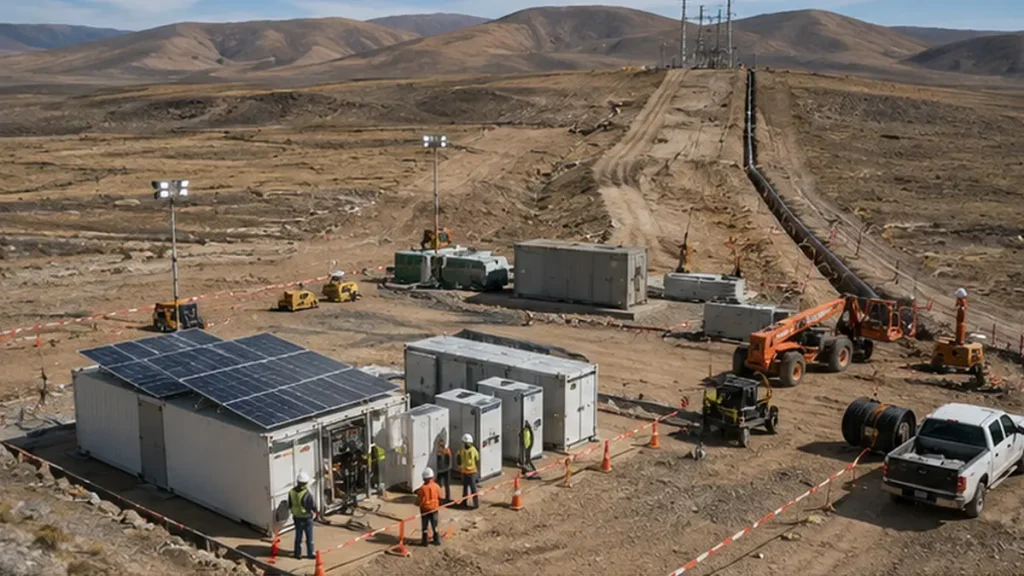
Remote projects commonly fail to distinguish construction power from permanent operating power. The grid may be the intended permanent source but unavailable when civil works, commissioning, accommodation, communications, dewatering, security, or early production require electricity. On-site power may therefore be a bridge asset, a permanent hybrid asset, or an emergency reserve; its role must be decided before equipment is selected.
| Project phase | Question for the owner | Possible route to evaluate | Decision that must not be assumed |
|---|---|---|---|
| Construction and site establishment | What loads need power before permanent infrastructure is available, and how mobile must that power be? | Existing generation, temporary utility supply, containerized solar-storage, or a hybrid arrangement. | That the permanent utility schedule will meet construction needs. |
| Early operations | Which critical loads must operate while demand, staffing, or utility work is still changing? | Grid extension with interim power, diesel-led hybrid, or solar-storage-led hybrid with defined backup. | That a preliminary grid connection can carry the final operating load. |
| Permanent operations | What is the expected project life, demand profile, growth path, and required continuity plan? | Grid supply, on-site hybrid, solar-storage with defined backup, or a controlled combination. | That a grid connection removes the need for resilience or operating reserves. |
| Grid arrival or operating change | What happens to the on-site asset after energization, expansion, relocation, or a change in operating profile? | Retain it for backup, peak support, critical loads, relocation, or planned end-of-life treatment. | That a temporary asset has no future cost, ownership, or disposal decision. |
This staging map is the article’s second decision tool. It prevents a false binary. A project can select grid extension for permanent supply while still requiring a separately justified temporary or hybrid power route. It can also select on-site power for early operations without representing that choice as a permanent rejection of the grid.
Compare equivalent boundaries, not headline prices
A grid-extension proposal and a solar-container proposal rarely start with the same inclusions. One may omit route works, land rights, upstream reinforcement, or site distribution. The other may omit foundations, cable runs, final electrical integration, fuel backup, maintenance access, and local approvals. Before comparing totals, put each line into a ledger with a source, owner, status, and exclusion.
For the on-site route, include equipment, PV deployment scope, storage, power conversion, controls, backup generation where retained, site works, electrical interfaces, transport, lifting, commissioning, service assumptions, replacement assumptions, and end-of-life responsibilities. For the grid route, include utility charges, owner-funded line and substation work, route and land costs, on-site distribution, interim generation, schedule exposure, and any on-site reserve required after energization.
Use the same commercial basis and time boundary for both routes. Our solar container total-cost comparison guide explains how to keep assumptions, allowances, contingencies, exclusions, and open items visible. The solar container ROI calculator can support preliminary on-site modeling after the location, load, and operating assumptions have been defined; it is not a project quotation, grid-extension estimate, or engineering approval.
Keep the grid application separate from the route decision
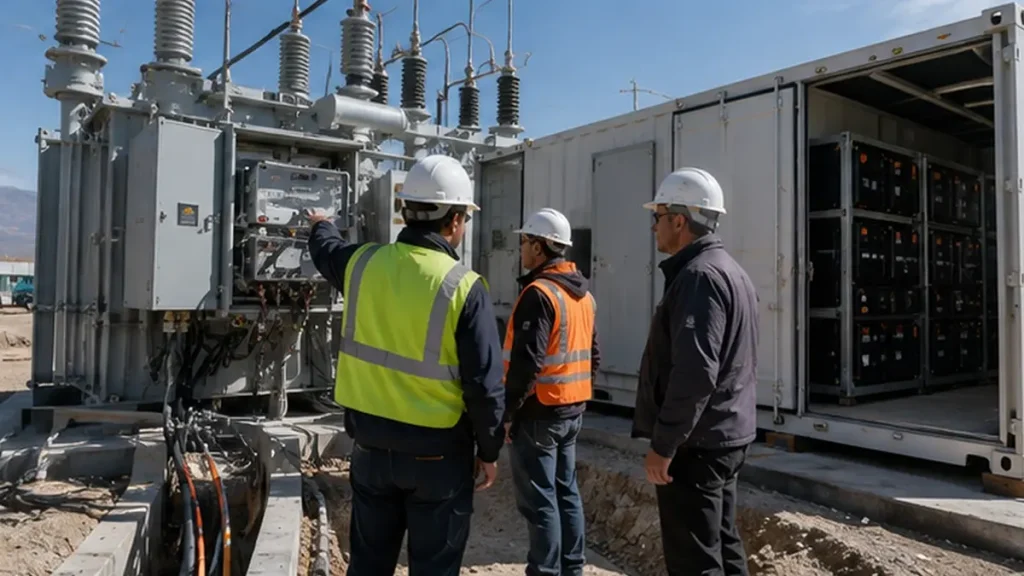
Once the owner decides to pursue an interconnection path, the project still needs controlled technical inputs for the utility process. The point of interconnection, ownership boundary, operating modes, protection, communications, equipment configuration, testing, and energization prerequisites require their own sequence. Our containerized BESS grid interconnection guide addresses that later-stage utility-application task.
Neither a solar container nor a grid connection is “approved” by a generic certificate or an indicative email. Applicable utility rules, local design requirements, land and construction permissions, and site-specific authority decisions remain separate from factory scope and equipment documentation. The owner, EPC, utility, supplier, and local specialists must have distinct responsibilities.
What the container changes—and what it does not
For this route decision, containerization can make an on-site power package a separate, transportable workstream while grid-extension dependencies are still being clarified. It may allow the project to define equipment, transport, deployment, and later relocation or retained-backup roles independently of the utility route. It does not make the package an automatic substitute for line design, foundations, electrical integration, environmental conditions, fire safety, commissioning, or site acceptance.
For configuration context only, our published Romania solar-container case records four 46 kWp foldable PV containers and five 215 kWh energy-storage cabinets. The case is not evidence of a grid-extension alternative’s cost, timeline, approval, performance, or fit for another project. It shows why a project should specify the exact configuration, interfaces, and operating role rather than buying against a generic “container” label.
Before the equipment is released, check the physical site boundary with our solar container site requirements guide and the route, lifting, and offloading boundary with our solar container delivery checklist. If diesel remains part of the interim or permanent plan, define its start logic, service scope, fuel basis, and load priority through the solar-container and diesel-generator integration guide.
Pause the route comparison when the key premise is missing
Do not authorize a final route selection when the project lacks a current load profile, a defined project life, a written utility position, a known connection boundary, a route basis, a site access review, or an owner-approved critical-load plan. The correct next step may be a controlled feasibility comparison—not a fixed equipment order or a promise that a utility date will hold.
The owner and EPC control the project basis, contracted site work, and configuration decisions assigned to them. The supplier’s scope is the contracted equipment and factory deliverables. The utility retains determinations over available capacity and authorization to energize through its applicable process; local authorities and other relevant bodies retain their own approvals.
Request a Remote-Site Power Route Review
Last Updated on 08/11/2026